Learning Journey
Free preview · Lesson 1
Understanding Collecting Data by Observation
Collecting Data by Observation: Becoming a Super Sleuth!
Hey there, young scientists and curious explorers! Have you ever wondered how we learn about the world around us? How do we know how many red cars pass by our house, or what kinds of birds visit our backyard? We do it by observing! Observing is like being a super sleuth or a clever detective, using your senses to gather clues.
What is Observation?
Imagine you're trying to figure out what your pet does all day. You wouldn't just guess, right? You'd watch them! You'd see when they nap, when they play, and when they eat. That's observation in action!
Observation means using your senses – your eyes, ears, nose, and even touch – to gather information about something. For collecting data, we mostly use our eyes (to see things) and our ears (to hear things). Sometimes we might use our sense of touch too, but usually, seeing and hearing are our main tools.
Think of your eyes like super-duper cameras and your ears like sensitive microphones. They help you record everything that's happening around you!
What is Data?
When you observe things, you collect information. This information is called data. Data is just a fancy word for facts or pieces of information that you collect. For example, if you watch cars go by and count the number of red cars, blue cars, and white cars, those counts are your data.
Analogy time! Data is like collecting all the ingredients for a delicious cake. You need flour, sugar, eggs, milk – these are all individual pieces of 'data' that you mix together to make something wonderful. In science, we collect data to help us understand bigger ideas.
Why Do We Observe and Collect Data?
We observe and collect data for many reasons, but the biggest reason is to answer questions! If you want to know which fruit your classmates like best, you can observe what they choose for snack time. If you want to know which day of the week the most birds visit your bird feeder, you can observe and count them each day.
Observation helps us to:
- Learn new things.
- Understand how things work.
- Solve problems.
- Make smart decisions.
How to Be a Great Observer
Being a good observer isn't just about looking; it's about looking carefully and smartly. Here are some tips:
1. Be Focused and Pay Attention!
It's easy to get distracted, but a good observer keeps their eyes and ears on what they are studying. If you're observing butterflies, don't start thinking about your lunch!
2. Be Objective (Just the Facts!)
This is super important! When you observe, you should only record what you actually see or hear, not what you think or feel about it. For example, don't say, "A really fast, happy red car drove by." Instead, say, "A red car drove by quickly." Your observations should be like a robot reporting facts, not like a poet sharing feelings.
3. Have a Plan
Before you start observing, think about: "What exactly am I looking for?" and "How will I write down what I see?" Having a plan makes your data collection much better. It's like having a map before you go on a treasure hunt!
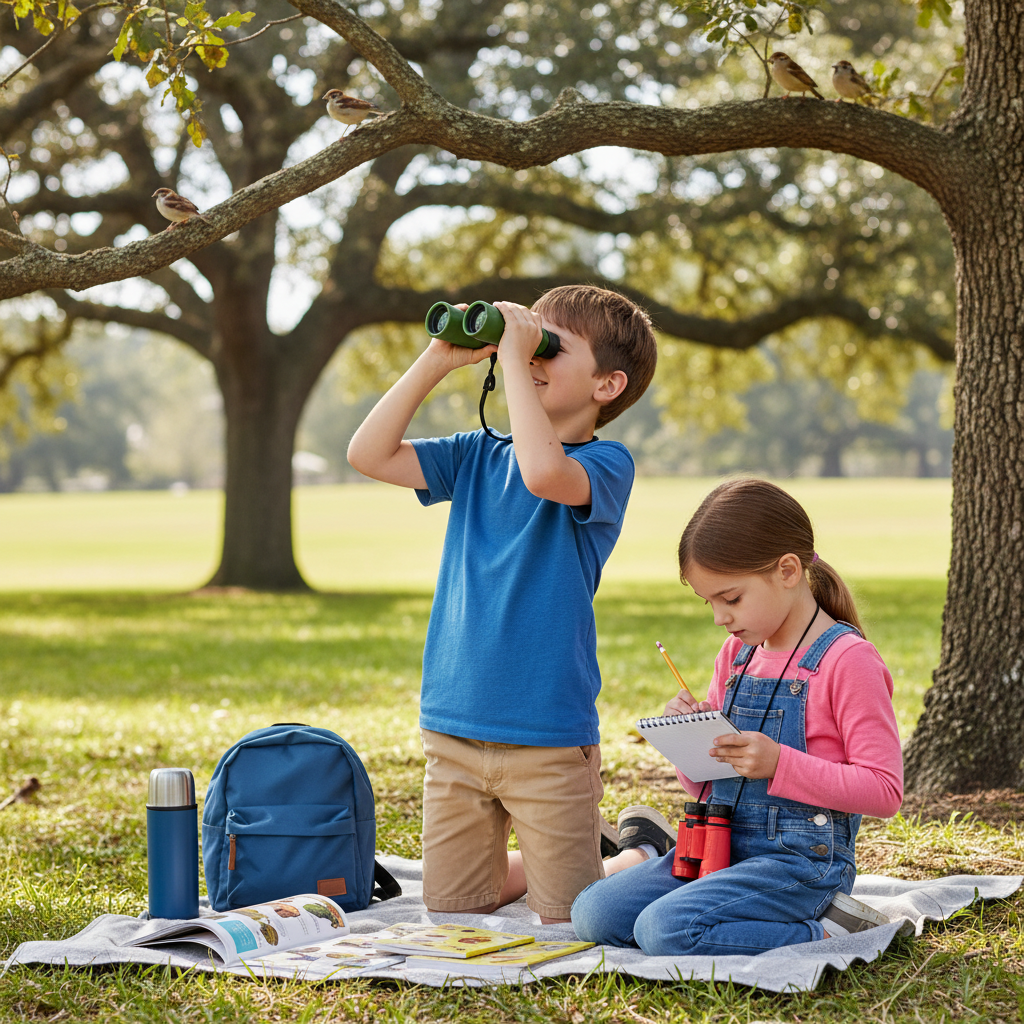 Tools for Collecting Data by Observation
Your best tools are your amazing senses! But to make sure you remember everything and keep your data organized, you'll need some extra help:
- A Notebook and Pencil: This is like your brain's backup memory! Write down everything you observe as it happens.
- Charts or Tables: These help you organize your data neatly.
- Tally Marks: This is a super easy way to count things! Every time you see something you're counting, you make a little line ( | ). When you get to four lines, the fifth one crosses them out ( |||| ), making a group of five. This makes counting much faster later on!
Let's Practice Tally Marks!
Imagine you're observing how many different types of animals you see in your backyard in 10 minutes. Let's say you see a squirrel, then another squirrel, then a bird, then a squirrel, then a bird, then a dog.
Your tally chart might look like this:
AnimalTally MarksTotalSquirrel|||3Bird||2Dog|1 Putting It All Together: An Example
Let's say your question is: "What is the most common color of car that passes my house between 2:00 PM and 2:10 PM?"
Here's how you'd collect data by observation:
- Plan: You know you're looking for car colors. You'll sit by your window for 10 minutes. You'll use tally marks for each color.
- Observe: You watch carefully. A red car goes by (tally for red). A white car (tally for white). Another red car (another tally for red). A blue car (tally for blue). And so on.
- Record: You keep making your tally marks in your notebook.
- Analyze (Look at your data): After 10 minutes, you count up your tallies for each color. You might find: Red: 7, White: 5, Blue: 3, Black: 2.
- Answer: You can now answer your question! The most common color of car was red.
The Power of Observation
By using your senses and recording what you see and hear carefully, you become a powerful data collector! You can learn amazing things about your classroom, your home, your neighborhood, and the whole world. So go ahead, put on your detective hat, and start observing!
Keep learning, free
Create a free Syllabax account to unlock practice questions and games for this topic.
Visual Learning Enhanced! 🚀
To help you master this topic, we use Advanced Syllabax AI to generate detailed diagrams and visual models.
Note on Visuals: The AI sometimes makes spelling errors in image labels. Please refer to the lesson text for the correct terminology.