Learning Journey
Watch this topic in 60 seconds
Free preview · Lesson 1
Understanding What is Data?
What is Data? The Building Blocks of Understanding!
Hey 8th graders! Have you ever wondered what makes the apps on your phone work, how your favorite streaming service knows what shows you like, or even how your teacher figures out your grades? The answer to all these questions, and so many more, starts with something called data. It might sound like a super technical, complicated word, but don't worry! We're going to break it down into simple, easy-to-understand pieces, using lots of examples and analogies.
Think of Data Like Ingredients in a Recipe!
Imagine you want to bake a delicious chocolate cake. What do you need? Flour, sugar, eggs, cocoa powder, milk, butter, and so on, right? Each of these items, by itself, is just an ingredient. It's a raw fact – a cup of flour, two eggs. These individual ingredients are like data.
Data is simply raw facts, figures, observations, or measurements. It's information in its most basic, unprocessed form. Just like a single egg isn't a cake, a single piece of data usually isn't enough to tell a whole story or make a big decision.
Where Do We Find Data? Everywhere!
Data is truly all around us, all the time. Let's look at some examples:
- Numbers: Your height (60 inches), the temperature outside (75 degrees Fahrenheit), the number of students in your class (28), your test score (85 points).
- Words: The name of your favorite band ("The Rockers"), the color of your shirt ("blue"), the type of pet you have ("dog"), a review you write about a movie ("It was awesome!").
- Pictures/Images: A photo of your friend, a drawing you made, a diagram in your science book.
- Sounds: A snippet of your favorite song, a recording of someone speaking, the sound of a bird chirping.
- Videos: A short clip from a basketball game, a tutorial on YouTube.
See? Data isn't just about boring numbers in a spreadsheet! It's rich, varied, and describes almost anything you can observe or measure in the world.
Data as Building Blocks
Another way to think about data is like building blocks. Each block, by itself, might not look like much. But when you gather many different types of blocks – squares, rectangles, triangles, different colors – and put them together in a meaningful way, you can build something amazing, like a castle or a spaceship! Similarly, individual pieces of data are the building blocks that, when combined and organized, help us build understanding and make sense of the world.
Two Main Types of Data (Keep it Simple!)
To keep things simple for now, let's think about data in two broad categories:
1. Quantitative Data (It's About QUANTITY!)
This type of data deals with numbers – things you can count or measure. Think "quantity" (how much, how many).
- Examples:
- The number of minutes you spent playing video games yesterday (e.g., 90 minutes).
- Your shoe size (e.g., 8).
- The height of a tree in feet (e.g., 25 feet).
- How many 'likes' a post gets (e.g., 157 likes).
- Analogy: In our cake recipe, the quantitative data would be "2 cups of flour," "3 eggs," or "1 teaspoon of vanilla." These are exact amounts you can measure.
2. Qualitative Data (It's About QUALITY!)
This type of data deals with descriptions, characteristics, and qualities that cannot be easily counted or measured with numbers. Think "quality" (what kind, what color, what feeling).
- Examples:
- The color of your eyes (e.g., "blue," "brown").
- The feeling you get when you listen to your favorite song (e.g., "happy," "excited").
- The type of music you like (e.g., "pop," "hip-hop," "classical").
- The texture of a fabric (e.g., "soft," "rough").
- Analogy: In our cake recipe, the qualitative data might be describing the cake as "fluffy," "chocolatey," or "sweet." You can't put a number on "fluffy," but it's a description of a quality.
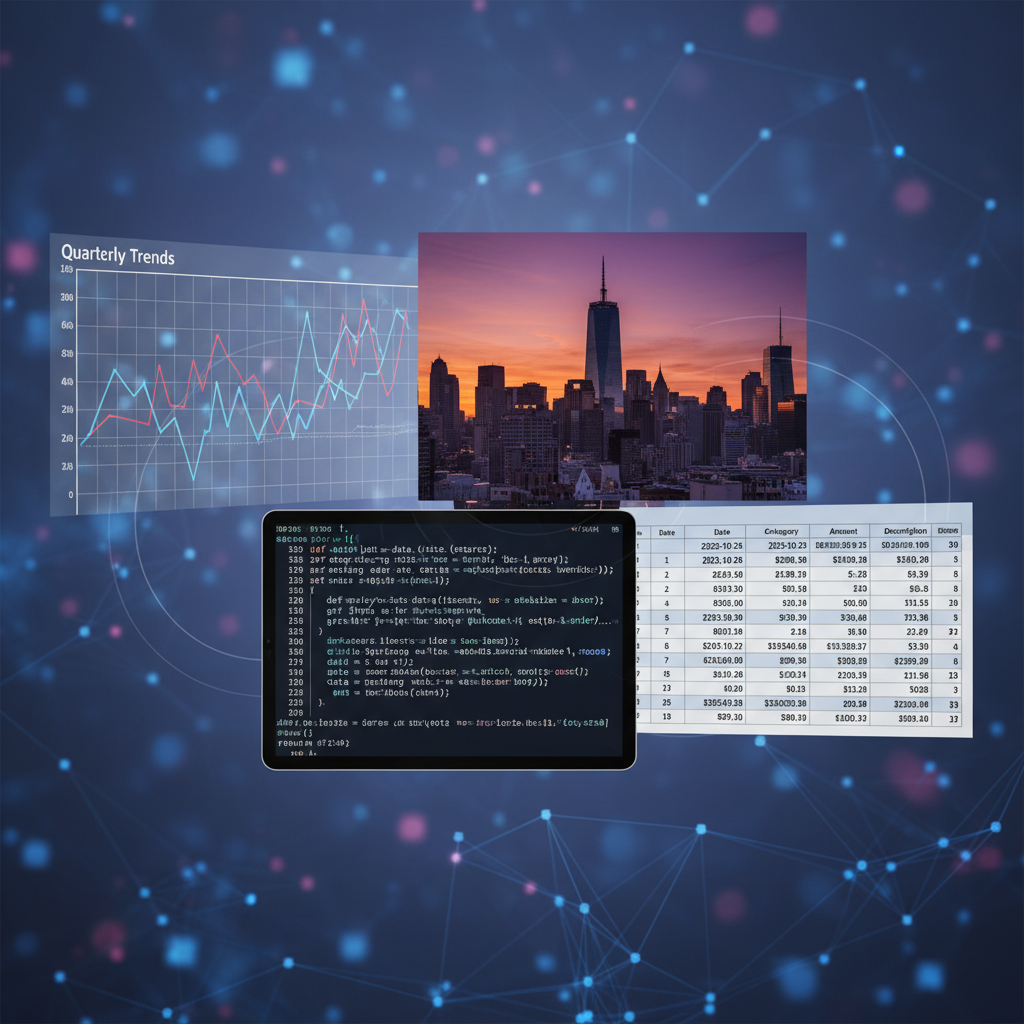
Why is Data So Important? Data as Clues!
Think of data like clues in a mystery. If a detective only has one clue, it's hard to solve the case. But if they gather many clues – fingerprints, witness statements, a broken window, a footprint – they can start to piece together what happened and solve the mystery. Data works the same way!
We collect and analyze data to:
- Understand the World: Weather data helps us predict if it will rain. Survey data helps schools understand what students want.
- Make Better Decisions: Businesses use sales data to decide what products to sell more of. Sports teams use player performance data to make strategic plays.
- Solve Problems: Scientists use experimental data to find cures for diseases. Engineers use design data to build safer bridges.
From Data to Information: The Power of Organization
Remember our cake ingredients (data)? If you just have a pile of flour, eggs, and sugar, it's not very useful. But when you follow a recipe and combine them in the right way, you get a delicious cake! This "cake" is like information.
Information is data that has been processed, organized, structured, or presented in a given context to make it meaningful and useful. It's the "so what?" of data. When you look at your report card, the individual grades (A, B, C – data) become useful when combined to show your overall academic performance (information).
Analogy: Think of data as all the individual pieces of a jigsaw puzzle scattered on a table. Information is what you get when you put those pieces together to reveal the complete, clear picture. The individual pieces are raw and don't make much sense alone. The finished picture tells a story.
Data in Your Everyday Life: More Examples!
- Your Phone: Every time you tap an icon, type a message, or take a picture, you are creating and interacting with data. Your phone uses data to know which app to open, who you're texting, and where to save your photos.
- School: Your grades, attendance records, and even the schedule of your classes are all forms of data. Your school uses this data to track your progress and manage operations.
- Video Games: The score you get, the items you collect, the levels you complete, and even the characters' movements are all managed by data within the game's system.
- Weather Apps: They collect temperature, humidity, wind speed, and precipitation data from sensors all over the world to predict tomorrow's weather.
Conclusion: Data is Your Superpower!
So, what is data? It's the fundamental building blocks of everything we observe, measure, and interact with in the digital world and beyond. It's raw facts and figures that, when gathered, organized, and understood, turn into powerful information that helps us learn, make decisions, and shape our future. You interact with data constantly, and understanding it is a key skill for navigating our modern world. Now you know that data isn't just for scientists or computer experts; it's for everyone!
Keep learning, free
Create a free Syllabax account to unlock practice questions and games for this topic.
Visual Learning Enhanced! 🚀
To help you master this topic, we use Advanced Syllabax AI to generate detailed diagrams and visual models.
Note on Visuals: The AI sometimes makes spelling errors in image labels. Please refer to the lesson text for the correct terminology.