Simple mixtures (CHEMISTRY)
Watch this topic in 60 seconds
Free preview · Lesson 1
Understanding Simple mixtures (CHEMISTRY)
Understanding Simple Mixtures: A 5th Grade Chemistry Adventure!
Hey there, young scientists! Have you ever helped make a yummy fruit salad? You take different fruits like apples, bananas, and grapes, chop them up, and put them all together in a bowl. Voila! You have a fruit salad. Now, when you eat a piece of apple from the salad, does it suddenly taste like a banana? No way! The apple still tastes like an apple, and the banana still tastes like a banana. Even though they are mixed, each fruit keeps its own special taste and look. Guess what? You've just understood the main idea of a mixture in chemistry!
What is a Mixture?
In science, a mixture is simply when you put two or more different things (called substances) together in the same place, but they don't chemically change each other. Think of it like a playroom with different toys: blocks, cars, and dolls. When you dump them all into one toy box, you've made a mixture of toys! The blocks are still blocks, the cars are still cars, and the dolls are still dolls. They didn't magically turn into one super toy. They just happen to be together.
Let's use another analogy: Imagine you have a bowl of yummy M&M's and a bowl of crunchy Skittles. If you pour them both into one big bowl, you've created a mixture of candies! You can still see the individual M&M's and Skittles, and they still taste like M&M's and Skittles. They haven't become a new, weird candy. This is the superpower of mixtures: the individual parts keep their original properties!
 ⚠️ This picture may have spelling mistakes. Trust the words in the lesson.
Pure Substances vs. Mixtures
To understand mixtures even better, let's quickly think about something called a pure substance. A pure substance is made of only ONE type of thing. For example, a glass of pure water (just H₂O molecules) is a pure substance. A lump of pure sugar (just sugar molecules) is a pure substance. But when you put sugar IN water, you're making a mixture! It's like having a box of only red Lego bricks (pure substance) versus a big bin with red, blue, and yellow Lego bricks all together (a mixture).
Different Kinds of Simple Mixtures
Mixtures are all around us, and they can be made by combining different types of substances:
1. Solid-Solid Mixtures
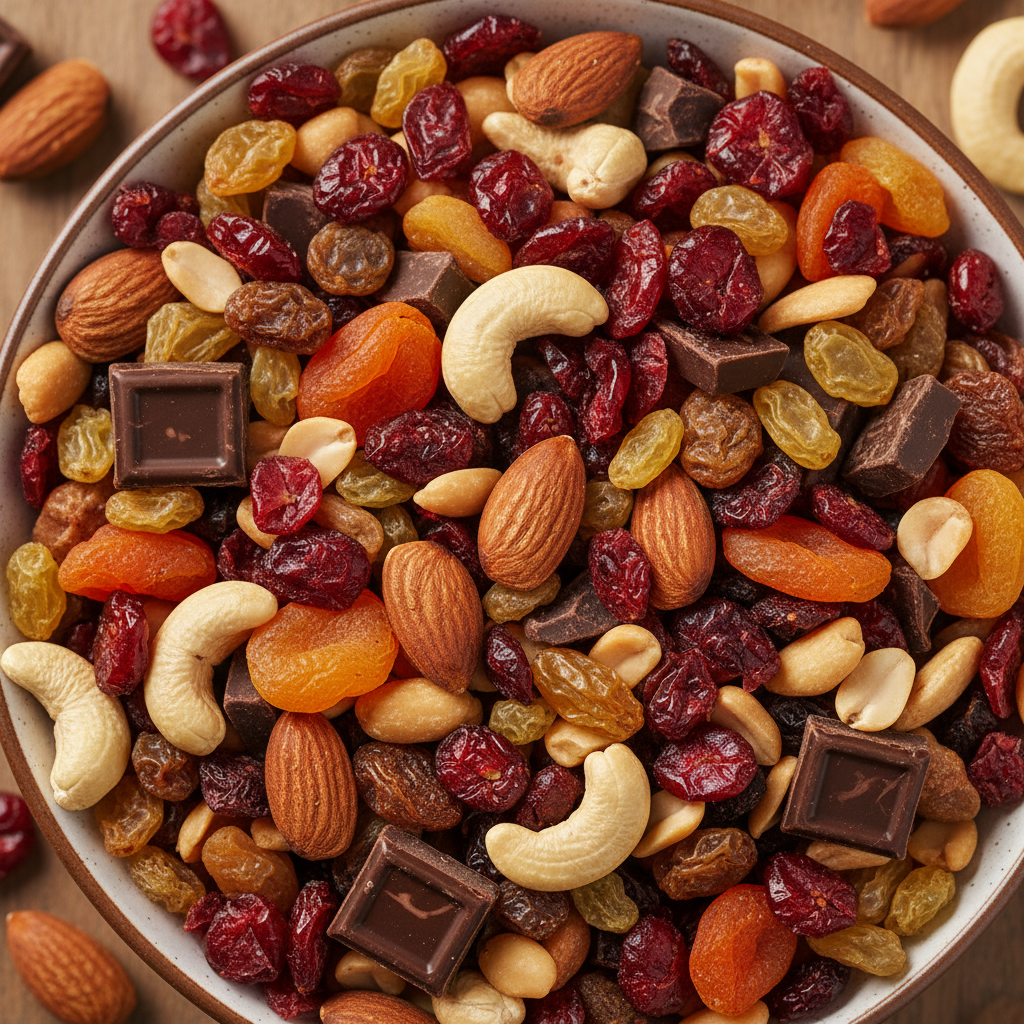
This is when you mix two or more solid things together. Our fruit salad and candy bowl examples are perfect for this! Another great example is trail mix. You have nuts, seeds, dried fruit, and maybe some chocolate chips, all mixed together. Each part is still solid, and you can easily see and pick out the different pieces. Another one is mixing sand and pebbles – you can clearly see the tiny grains of sand and the larger pebbles.
2. Solid-Liquid Mixtures
This is when you mix a solid with a liquid. There are two main ways this can happen in simple mixtures:
- Things that disappear (dissolve): Think about putting a spoonful of sugar into a glass of warm water and stirring it. What happens? The sugar seems to disappear! It's still there, mixed evenly throughout the water, but it's so tiny that you can't see the individual sugar grains anymore. This is called dissolving. The sugar and water have formed a special kind of mixture where the parts are very well blended.
- Things that don't disappear: Now, what if you put a spoonful of sand into water? No matter how much you stir, the sand just settles to the bottom, right? You can still clearly see the sand, and if you stop stirring, it separates from the water. This is still a mixture, but the solid part doesn't dissolve.
3. Liquid-Liquid Mixtures
This is when you mix two or more liquids together.
- Liquids that mix well: If you mix a little bit of juice into water, they blend together perfectly, and you can't tell where the juice ends and the water begins. They become one uniform liquid.
- Liquids that don't mix well: Have you ever seen what happens when you try to mix oil and water? No matter how much you shake them, the oil always separates and floats on top of the water! It's like they're two shy friends who just don't want to hug. This is because they have different properties that keep them from blending together. Still, it's a mixture!
4. Gas-Gas Mixtures
You can't see them, but gases mix all the time! The air we breathe is a fantastic example of a gas-gas mixture. It's made up of many different gases, like nitrogen, oxygen (the gas we need to breathe!), carbon dioxide, and others, all mixed invisibly together. You can't see the individual gases, but they are definitely all there, forming the air around us.
The Superpower of Separation!
Because the different parts of a mixture keep their original properties, it's often easy to separate them! Think about our toy box again. If you wanted to play only with the cars, you could easily pick out all the cars from the blocks and dolls, right? That's separation!
- Hand-picking: Like picking out the peanuts from a trail mix.
- Sieving: If you have a mixture of sand and pebbles, you can use a sieve (a tool with small holes, like a strainer) to separate them. The sand falls through the holes, and the pebbles stay behind.
- Filtering: If you have sand mixed in water, you can pour it through a coffee filter. The water goes through, and the sand stays in the filter.
- Evaporation: If you have salt dissolved in water, you can let the water sit out in the sun. Over time, the water will turn into a gas and float away (evaporate), leaving the solid salt behind!
Why are Mixtures Important?
Mixtures are everywhere! From the food we eat, to the air we breathe, to the drinks we enjoy, and even the clothes we wear (which are often mixtures of different fibers). Understanding mixtures helps us understand the world around us and how to create new things, like medicines or new materials, by putting different substances together in just the right way!
Keep learning, free
Create a free Syllabax account to unlock practice questions and games for this topic.
Visual Learning Enhanced! 🚀
To help you master this topic, we use Advanced Syllabax AI to generate detailed diagrams and visual models.
Note on Visuals: The AI sometimes makes spelling errors in image labels. Please refer to the lesson text for the correct terminology.