Correct Spelling
Watch this topic in 60 seconds
Free preview · Lesson 1
Correct Spelling (Foundational)
Correct Spelling (Foundational)Correct Spelling: Getting Started!
Hi there, super spellers! This lesson is all about learning how to spell words correctly. Spelling is important because it helps us communicate clearly when we write. Let's get started!
Why is Spelling Important?
- Clear Communication: Correct spelling helps others understand what you're trying to say.
- Good Impressions: Spelling well shows that you care about your work and makes a good impression.
- Confidence: Knowing you can spell correctly gives you confidence in your writing.
Basic Spelling Rules
Here are some basic rules to help you become a better speller:
- Look, Say, Cover, Write, Check: A useful way to learn spellings.
- Word Endings: Pay attention to common word endings like -ing, -ed, -s, and -es.
- Silent Letters: Some words have silent letters that you need to remember (like the 'k' in 'knife').
- Homophones: These are words that sound the same but have different meanings and spellings (like 'there', 'their', and 'they're').
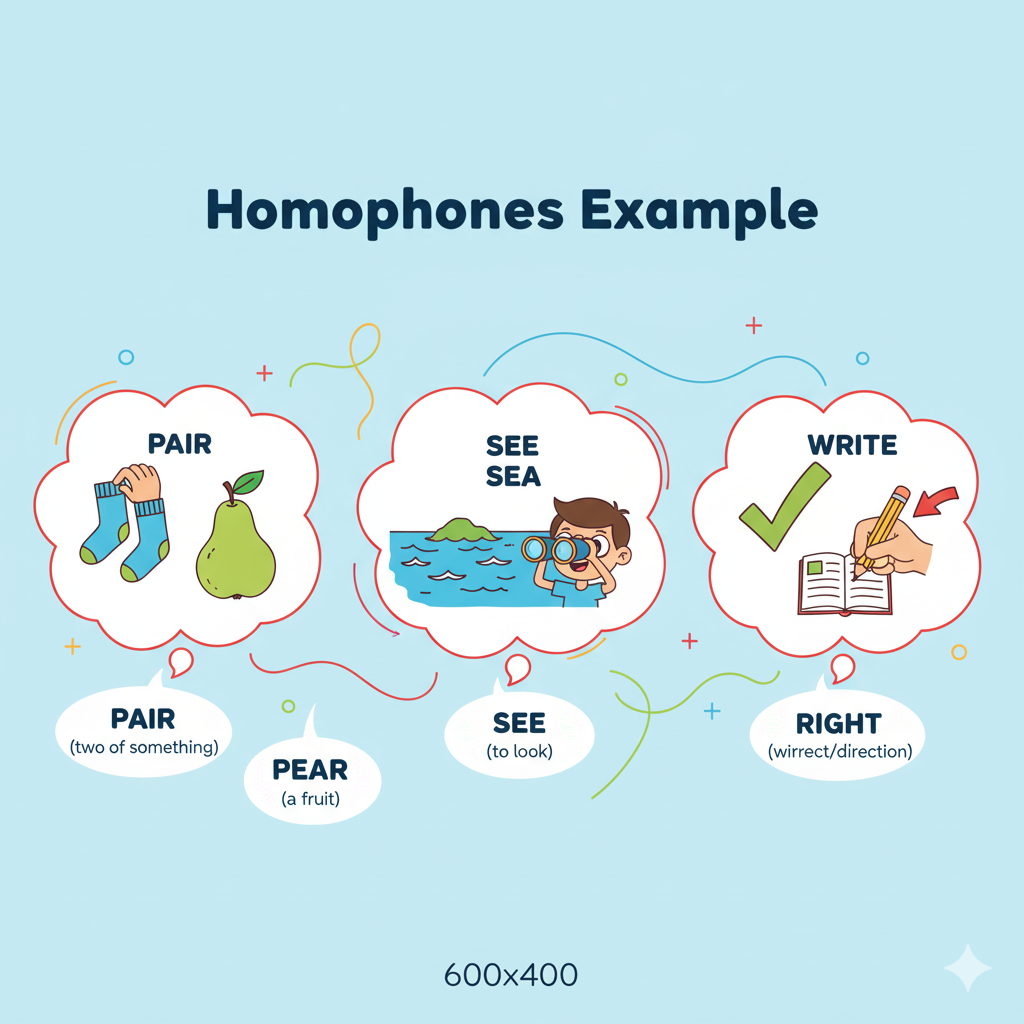 ⚠️ This picture may have spelling mistakes. Trust the words in the lesson.
Tips for Improving Your Spelling
- Read a Lot: Reading exposes you to different words and how they are spelled.
- Use a Dictionary: Look up words you're not sure how to spell.
- Practice Regularly: The more you practice, the better you'll become.
- Ask for Help: Don't be afraid to ask a teacher, parent, or friend for help.
Important Words to Know
- Definition: A statement that explains what something means.
- Homophone: Words that sound alike but have different meanings and spellings.
- Silent Letter: A letter in a word that is not pronounced.
Keep learning, free
Create a free Syllabax account to unlock practice questions and games for this topic.
Visual Learning Enhanced! 🚀
To help you master this topic, we use Advanced Syllabax AI to generate detailed diagrams and visual models.
Note on Visuals: The AI sometimes makes spelling errors in image labels. Please refer to the lesson text for the correct terminology.