Learning Journey
Watch this topic in 60 seconds
Free preview · Lesson 1
Understanding Fertilizers, manure[BIOLOGY]
Fertilizers and Manure: Feeding Our Plants!
Welcome, budding biologists! Today, we're going to explore something super important for life on Earth: how plants get their food. Just like you need a balanced diet to grow strong and healthy, plants need the right nutrients from the soil to thrive. Where do these nutrients come from? That's where fertilizers and manure come in! Think of them as plant vitamins or a special meal plan designed just for our green friends.
Why Do Plants Need Nutrients?
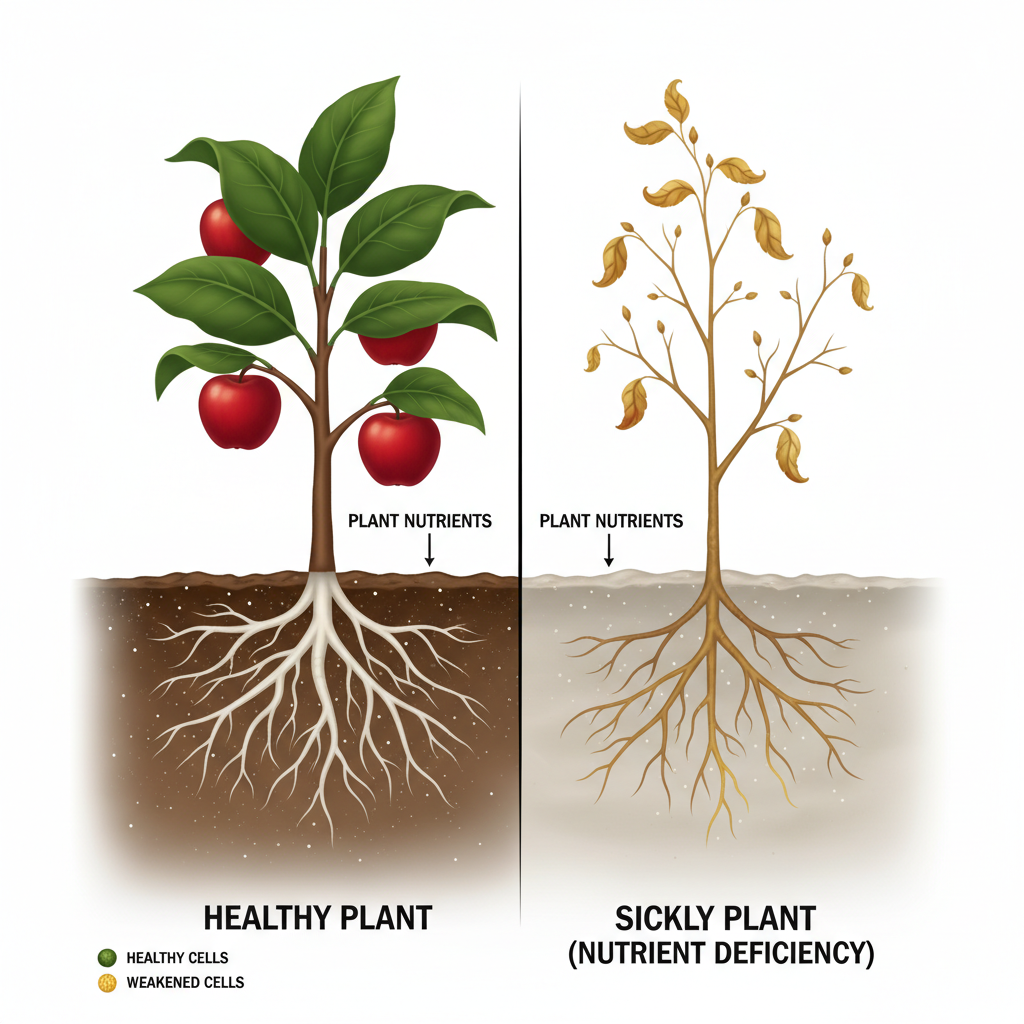
Plants are amazing living things. They don't eat pizza or burgers like we do. Instead, they make their own food through a process called photosynthesis. This happens mainly in their leaves, using sunlight, water, and a gas from the air called carbon dioxide. But to do this amazing job and to grow their roots, stems, and leaves, plants need a variety of nutrients. These are like the building blocks and energy sources for their growth.
Imagine trying to build a house without bricks, wood, or cement. It would be impossible! Similarly, without essential nutrients, plants can't grow properly. They might become stunted, their leaves might turn yellow, or they might not produce fruits or flowers. The most important nutrients for plants are often called macronutrients because plants need them in larger amounts. The top three are:
- Nitrogen (N): This nutrient is like the 'leafy green' builder. It helps plants produce chlorophyll (the stuff that makes leaves green and helps with photosynthesis) and is essential for leafy growth. Think of nitrogen as the protein in a plant's diet – it helps build new tissues.
- Phosphorus (P): This is the 'root and flower' booster. Phosphorus is crucial for root development, flowering, and fruiting. It's like the energy bar for a plant, providing the power for reproduction and strong foundations.
- Potassium (K): This is the 'all-around health' nutrient. Potassium helps plants fight off diseases, use water efficiently, and develop strong stems. It's like the immune system and hydration manager for a plant, keeping everything running smoothly.
Besides these big three, plants also need micronutrients (like iron, zinc, and manganese), but in smaller quantities. However, even a small amount is vital!
What is Soil Depletion?
Now, imagine you have a garden, and you keep harvesting all the delicious vegetables. Every time you pick a tomato or pull up a carrot, you're removing nutrients from the soil. Over time, if you don't replace these nutrients, the soil becomes 'tired' or depleted. It's like using up all the good ingredients in your pantry – eventually, you won't have anything left to cook with!
This is a big problem for farmers and gardeners. If the soil is depleted, plants won't grow well, and we won't have enough food. So, we need ways to replenish these essential nutrients. This is where fertilizers and manure come in!
Manure: Nature's Gift
Let's start with manure. What is it? Simply put, manure is animal waste – think cow dung, chicken droppings, or horse manure. It might sound a bit yucky, but it's actually fantastic for the soil!
Why is manure so good? Because it's packed with nutrients that plants need, like nitrogen, phosphorus, and potassium. But it's not just about the nutrients. When manure breaks down in the soil (thanks to tiny organisms like bacteria and fungi), it also improves the soil's structure. Think of it like adding compost to a cake mix – it makes the whole mixture better. Good soil structure means:
- Better aeration: More air can get to the plant roots, which they need to breathe.
- Better water retention: The soil can hold onto water more effectively, so plants don't dry out as quickly.
- Easier root growth: Roots can spread out more easily to find water and nutrients.
Manure is a natural and organic way to feed your plants and improve your soil. It's like giving your plants a slow-release, healthy meal that also makes their home (the soil) much more comfortable and nutritious.
Fertilizers: The Plant's Power-Up
Fertilizers are substances, either natural or synthetic (man-made), that are added to soil or plants to supply one or more essential nutrients. They are like concentrated vitamin supplements for plants.
Fertilizers come in many forms:
- Organic Fertilizers: These are derived from plant or animal matter. Examples include compost (decomposed organic material), bone meal, and fish emulsion. Manure is also a type of organic fertilizer!
- Inorganic (Synthetic) Fertilizers: These are manufactured chemicals. They are often very concentrated and provide specific nutrients quickly. You'll often see them listed with three numbers, like 10-10-10.
The N-P-K Numbers: What do they mean?
If you look at a bag of fertilizer, you'll almost always see three numbers separated by dashes, like 5-10-5 or 20-20-20. These numbers tell you the percentage by weight of the three major macronutrients:
- The first number is for Nitrogen (N).
- The second number is for Phosphorus (P).
- The third number is for Potassium (K).
So, a 10-10-10 fertilizer means it contains 10% nitrogen, 10% phosphorus, and 10% potassium. A farmer or gardener chooses a fertilizer based on what nutrients their soil or plants need most. If a plant is looking a bit yellow and leggy (meaning it's growing lots of stems but weak ones), it might need more nitrogen. If it's not flowering well, it might need more phosphorus.
Fertilizers vs. Manure: A Quick Comparison
Think of it this way:
- Manure is like a hearty, home-cooked stew. It provides a wide range of nutrients, improves soil health over time, and releases nutrients slowly. It's great for long-term soil building.
- Fertilizers (especially synthetic ones) are like fast-acting energy drinks or specific vitamin pills. They deliver concentrated nutrients quickly to address immediate needs. Synthetic fertilizers are great for a quick boost but don't significantly improve the soil's structure on their own.
Both have their place! Many gardeners use a combination, using manure to build healthy soil year after year and fertilizers to give plants an extra boost when needed.
The Importance of Balance
It's crucial to remember that more is not always better! Just like eating too much of any one food can be unhealthy for us, too much of a specific nutrient can harm plants or pollute the environment.
Over-fertilizing can:
- Burn plant roots: The high concentration of salts in some fertilizers can draw water out of plant roots, essentially drying them out.
- Cause nutrient imbalances: Too much of one nutrient can prevent the plant from absorbing others.
- Pollute water: Excess nutrients that aren't absorbed by plants can wash off into rivers and lakes, causing problems like algal blooms (where algae grow excessively, choking out other aquatic life).
Therefore, it's important to use fertilizers and manure according to instructions and to consider what your soil and plants actually need. Soil testing can be a great way to figure this out!
Conclusion
So, fertilizers and manure are essential tools for ensuring our plants get the food they need to grow, produce oxygen, and provide us with food and materials. Manure is a natural wonder that feeds plants and improves soil structure, while fertilizers offer targeted nutrition for a quick boost. By understanding these concepts, we can become better gardeners and appreciate the complex needs of the plants that sustain life on our planet!
Keep learning, free
Create a free Syllabax account to unlock practice questions and games for this topic.
Visual Learning Enhanced! 🚀
To help you master this topic, we use Advanced Syllabax AI to generate detailed diagrams and visual models.
Note on Visuals: The AI sometimes makes spelling errors in image labels. Please refer to the lesson text for the correct terminology.