Water contamination[BIOLOGY]
Watch this topic in 60 seconds
Free preview · Lesson 1
Understanding Water contamination[BIOLOGY]
Water Contamination: Keeping Our Water Clean and Healthy!
Imagine your favorite juice box. It's yummy because it's just juice, right? Now, imagine someone accidentally poured a little bit of yucky, muddy water into it. Suddenly, your delicious juice isn't so delicious anymore, and you probably wouldn't want to drink it! Water contamination is kind of like that, but for the water we need to live – the water in our rivers, lakes, and even the water that comes out of our taps.
What is Water Contamination?
Simply put, water contamination happens when unwanted or harmful substances get into water bodies. These substances are called contaminants. When these contaminants mix with water, they make the water unsafe or unhealthy to drink, use for cooking, bathing, or even for the plants and animals that live in it.
Where Do Contaminants Come From?
Contaminants can sneak into our water from many different places. Think of them like different kinds of "unwanted guests" crashing a water party!
1. Natural Sources (The "Oops, Nature Happens" Guests)
Sometimes, contamination happens naturally. For example:
- Volcanoes: When volcanoes erupt, they can release tiny particles and chemicals into the air that eventually fall into water.
- Algae Blooms: Sometimes, certain tiny plants in water called algae can grow really, really fast. When they die and decompose, they can use up a lot of oxygen in the water, which is bad for fish. Some algae can also produce toxins (poisons). It's like when too many people go to a party and use up all the snacks and drinks, making it hard for others to enjoy themselves.
- Minerals from Rocks: Rocks naturally contain minerals. When rainwater flows over rocks, it can pick up small amounts of these minerals. Usually, this isn't a problem, but sometimes, rocks can have minerals that are harmful in large amounts, like arsenic or lead.
2. Human Activities (The "Uh Oh, We Did That" Guests)
A lot of water contamination comes from things people do. These are like the guests who don't know how to behave at the party!
- Sewage and Wastewater: When we flush toilets or drain sinks, the dirty water (wastewater) goes to a treatment plant. But sometimes, pipes can leak, or treatment plants can't handle all the waste, and untreated sewage can get into rivers and lakes. This is like having a leaky garbage can that spills its contents everywhere! This wastewater can contain bacteria, viruses, and chemicals that make people and animals sick.
- Industrial Waste: Factories and industries often use chemicals in their processes. Sometimes, they release these chemicals, often without treating them properly, into nearby water. These chemicals can be very toxic, like poison to the water ecosystem. Imagine a factory dumping a bottle of paint thinner into a pristine pond – it would instantly harm everything in it.
- Agricultural Runoff: Farmers use fertilizers and pesticides to help crops grow and protect them from bugs. When it rains, these chemicals can wash off the fields and flow into streams and rivers. This is like rinsing your plate after eating and letting the dirty water go straight into a drinking fountain. These chemicals can harm aquatic life and even end up in our drinking water.
- Trash and Litter: We've all seen trash floating in rivers or washed up on beaches. Plastic bottles, wrappers, and other garbage don't just look bad; they can break down into tiny pieces called microplastics, which are harmful to animals that might eat them, thinking they are food. Imagine a bird trying to eat a plastic bag – it can get stuck in its stomach and make it very sick.
- Oil Spills: Accidents can happen, and large amounts of oil can spill from ships or pipelines into oceans or rivers. Oil is very harmful to marine animals like fish, birds, and mammals, coating their feathers and fur, making it impossible for them to survive.
Types of Contaminants
Contaminants can be many different things. Let's look at the main types:
- Biological Contaminants: These are tiny living things like bacteria, viruses, and parasites. They often come from sewage or animal waste. If you drink water with these, you can get very sick with diseases like cholera or dysentery. Think of them as invisible germs that can cause a tummy ache or worse.
- Chemical Contaminants: These are substances like pesticides, herbicides, industrial chemicals, and heavy metals (like lead and mercury). They can come from farms, factories, or old pipes. Some can cause long-term health problems, even if you don't feel sick right away. Imagine a tiny, silent saboteur slowly weakening your body.
- Physical Contaminants: These are things you can sometimes see or feel, like dirt, sand, plastic pieces, or sediment. While not always as dangerous as biological or chemical ones, they can make water cloudy (turbid), affect taste and smell, and harm aquatic life by covering their habitats. Think of it like having grit in your drink – it doesn't taste good and can be unpleasant.
- Nutrient Contaminants: These are usually chemicals like nitrogen and phosphorus, often from fertilizers. While plants need nutrients, too much in water can cause problems like rapid algae growth (algal blooms), which we talked about earlier. It's like feeding a plant way too much food; it gets overgrown and unhealthy.
Why is Water Contamination a Problem?
Contaminated water is a big problem for several reasons:
- Human Health: Drinking or using contaminated water can make people very sick. Diseases spread through water can cause sickness, hospitalization, and even death.
- Environment and Wildlife: Fish, birds, and other animals that live in or drink from polluted water can get sick or die. Pollution can destroy their homes and food sources.
- Economy: Cleaning up polluted water is expensive. Also, if a water source is too polluted, communities might have to find new, more expensive ways to get clean water.
- Recreation: Swimming, fishing, and boating in polluted water can be dangerous and unpleasant.
Keeping Water Clean: What Can We Do?
The good news is that we can all help keep our water clean!
- Proper Waste Disposal: Never pour grease, chemicals, or trash down drains or toilets. Use designated bins for trash and follow local guidelines for disposing of hazardous waste.
- Reduce, Reuse, Recycle: Using fewer products, especially those with lots of packaging, means less waste to dispose of.
- Be Careful with Chemicals: When using fertilizers or pesticides at home, use them sparingly and follow instructions carefully. Consider natural alternatives.
- Report Pollution: If you see someone dumping waste or notice a spill, report it to the authorities.
- Conserve Water: Using less water means less wastewater needs to be treated.
By understanding where contaminants come from and the harm they cause, we can all be better guardians of our precious water resources. Clean water is essential for all life on Earth!
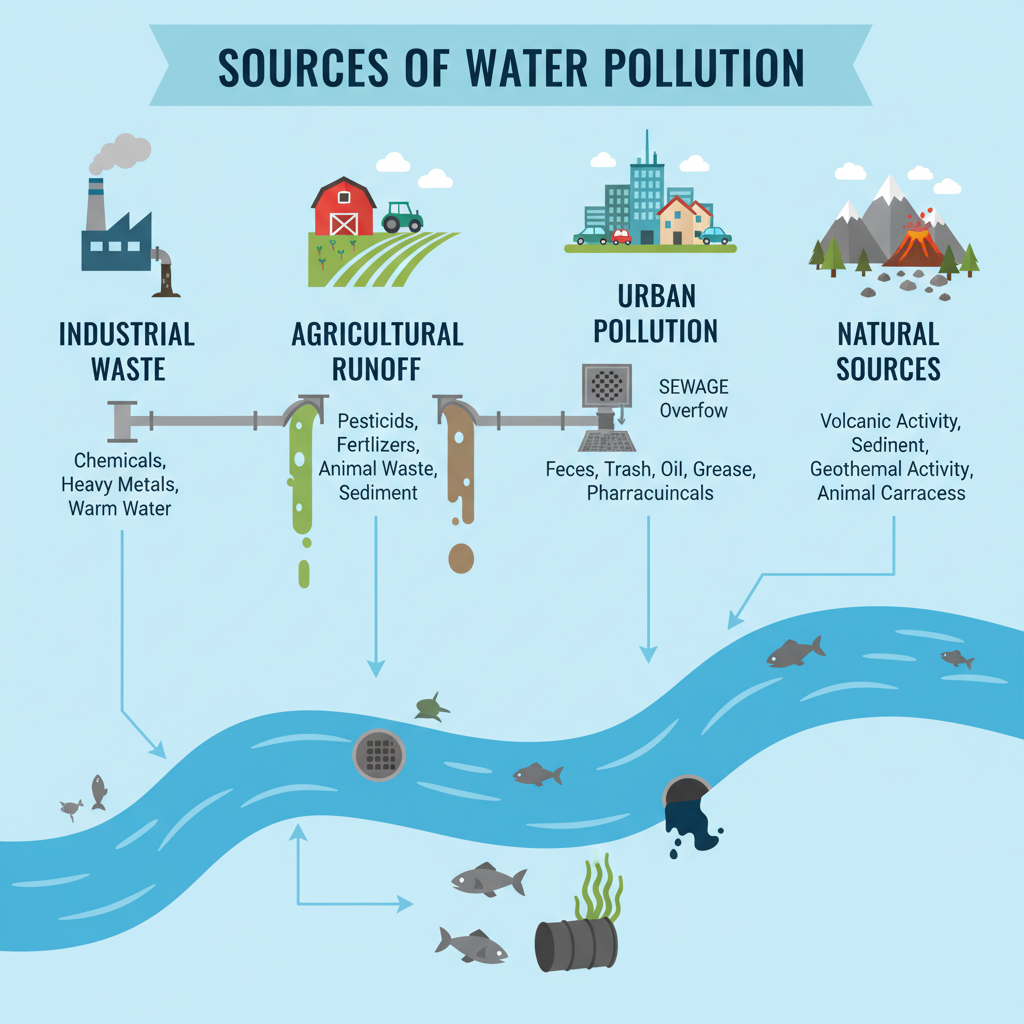 ⚠️ This picture may have spelling mistakes. Trust the words in the lesson.
Keep learning, free
Create a free Syllabax account to unlock practice questions and games for this topic.
Visual Learning Enhanced! 🚀
To help you master this topic, we use Advanced Syllabax AI to generate detailed diagrams and visual models.
Note on Visuals: The AI sometimes makes spelling errors in image labels. Please refer to the lesson text for the correct terminology.