Gathering Outdoor Data
Watch this topic in 60 seconds
Free preview · Lesson 1
Understanding Gathering Outdoor Data
Exploring Our World: Gathering Outdoor Data!
Hello, young adventurers! Have you ever wondered what the weather will be like tomorrow? Or what kind of bird makes that funny sound in your backyard? When we ask questions like these and look for answers, we are actually doing something super cool called gathering data!
What is Data? (It's Like Collecting Clues!)
Imagine you're a detective, and your job is to figure out what happened in your garden. You might look for footprints, a dropped feather, or a half-eaten berry. All those little pieces of information are like data! Data is simply information or facts that we collect to learn more about something. When we gather outdoor data, we're like nature detectives, collecting clues about the world around us.
Why do we do this? Because collecting data helps us understand things better! It helps us know if we need a coat or sunscreen, where animals live, or how plants grow. It's like putting together pieces of a puzzle to see the whole picture!
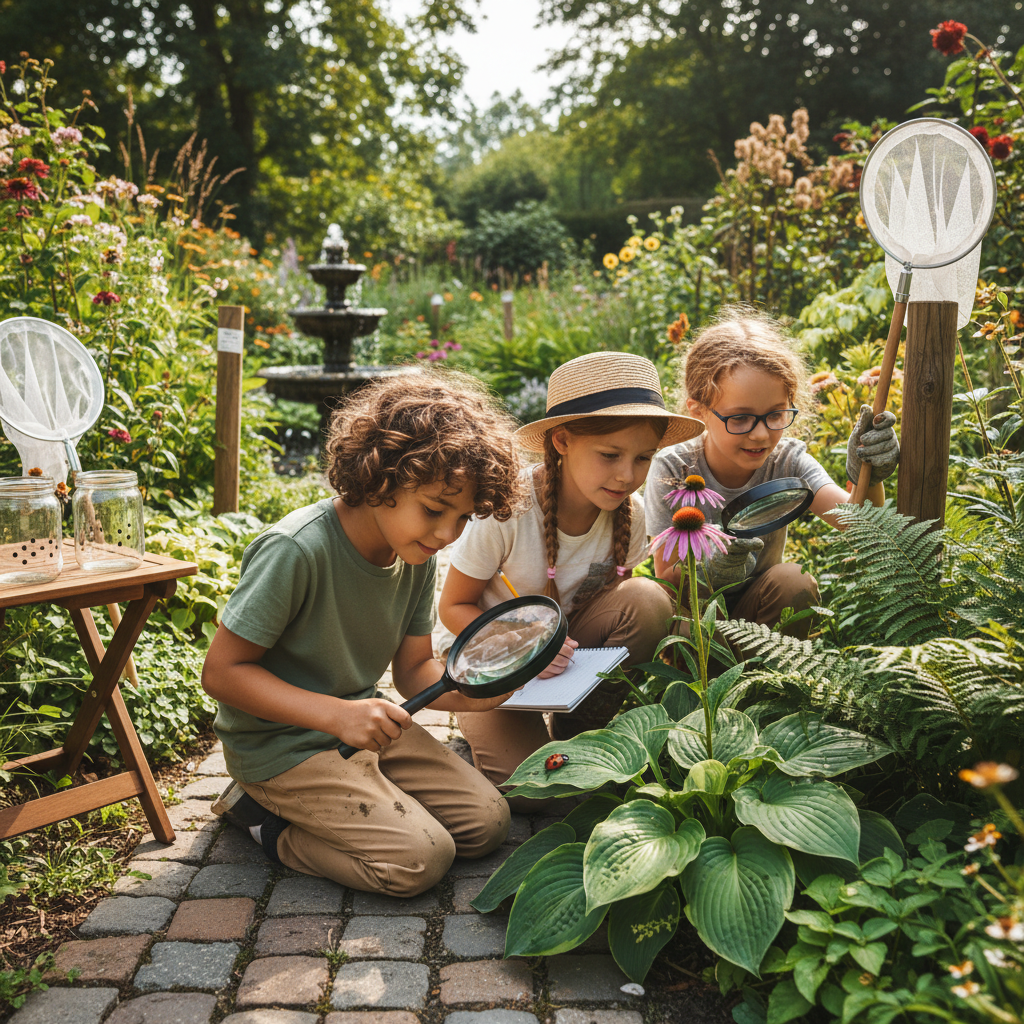 ⚠️ This picture may have spelling mistakes. Trust the words in the lesson.
Our Tools for Data Collection (Nature's Toolbox!)
Just like a builder needs tools, we have tools (and our senses!) to help us gather outdoor data.
1. Weather Data: What's the Sky Telling Us?
The weather changes all the time! We can collect data about it using special tools or just by looking and feeling:
- Temperature: How Hot or Cold Is It?
We use a thermometer to measure temperature. Think of a thermometer as a tiny helper that tells us if it's warm enough for ice cream or if we need a cozy sweater. If the red line goes up, it's getting warmer! If it goes down, it's getting colder.
- Rainfall: How Much Water Falls?
A rain gauge is like a special measuring cup for rain. It helps us see how much rain has fallen in a certain amount of time. If you leave a bucket outside during a rain shower, you're making your own simple rain gauge!
- Wind Direction: Which Way is the Wind Blowing?
A wind vane (or weather vane) is like an arrow that spins and points in the direction the wind is coming from. If the wind vane points north, it means the wind is blowing from the north. You can also feel the wind on your face or watch leaves move to get a clue!
- Cloud Cover: How Many Clouds?
This is easy! Just look up! Are there lots of clouds (cloudy), a few clouds (partly cloudy), or no clouds at all (sunny)?
2. Plant Data: What's Growing Around Us?
Plants are everywhere! We can collect data about them just by looking closely:
- Types of Plants: Are they Trees, Flowers, or Bushes?
Look at different plants. Do they have big trunks (trees), colorful petals (flowers), or lots of branches close to the ground (bushes)? You can draw them or describe their leaves and colors.
- Plant Height: How Tall Are They?
You can use a ruler or even a piece of string to measure how tall a plant is. Is it taller than you? Shorter than your pet?
- Colors and Shapes: What Do They Look Like?
Are the leaves green, yellow, or red? Are they heart-shaped, pointy, or round? This data helps us identify different plants, like sorting different colored blocks into piles.
3. Animal Data: Who Lives Here?
Sometimes it's hard to see animals, but they often leave clues!
- Animal Sightings: What Animals Do You See?
Did you see a squirrel scampering up a tree? A bird singing on a branch? A butterfly fluttering by? Write down what animals you see and where you saw them. It's like making a guest list for your garden!
- Animal Tracks: What Footprints Did They Leave?
After it rains, look for footprints in the mud! These are called tracks, and they are like tiny signatures telling you who walked by. A bird's track looks different from a dog's or a cat's.
- Sounds: What Do You Hear?
Close your eyes and listen. Do you hear birds chirping, crickets rubbing their legs together, or bees buzzing? These sounds are also valuable data!
How to Be a Great Data Gatherer (Tips for Nature Detectives!)
- Be Observant: Use your eyes, ears, nose, and even your sense of touch (carefully!) to notice things. Look for details, just like searching for hidden treasure.
- Be Patient: Nature doesn't always show its secrets right away. Sometimes you need to wait quietly to see an animal or notice a change.
- Record Your Findings: Write down or draw what you see! A notebook and a pencil are great tools. You can make a chart or a nature journal. This helps you remember your data and share it with others.
- Be Safe: Always explore with an adult, and don't touch plants or animals you don't recognize.
Gathering outdoor data is an exciting way to learn about the world and become a super smart nature explorer. Every time you step outside, you have a chance to discover something new!
Keep learning, free
Create a free Syllabax account to unlock practice questions and games for this topic.
Visual Learning Enhanced! 🚀
To help you master this topic, we use Advanced Syllabax AI to generate detailed diagrams and visual models.
Note on Visuals: The AI sometimes makes spelling errors in image labels. Please refer to the lesson text for the correct terminology.