Learning Journey
Watch this topic in 60 seconds
Free preview · Lesson 1
Ecosystems & Biomes – Environment & Ecology (Foundational)
Introduction to Ecosystems
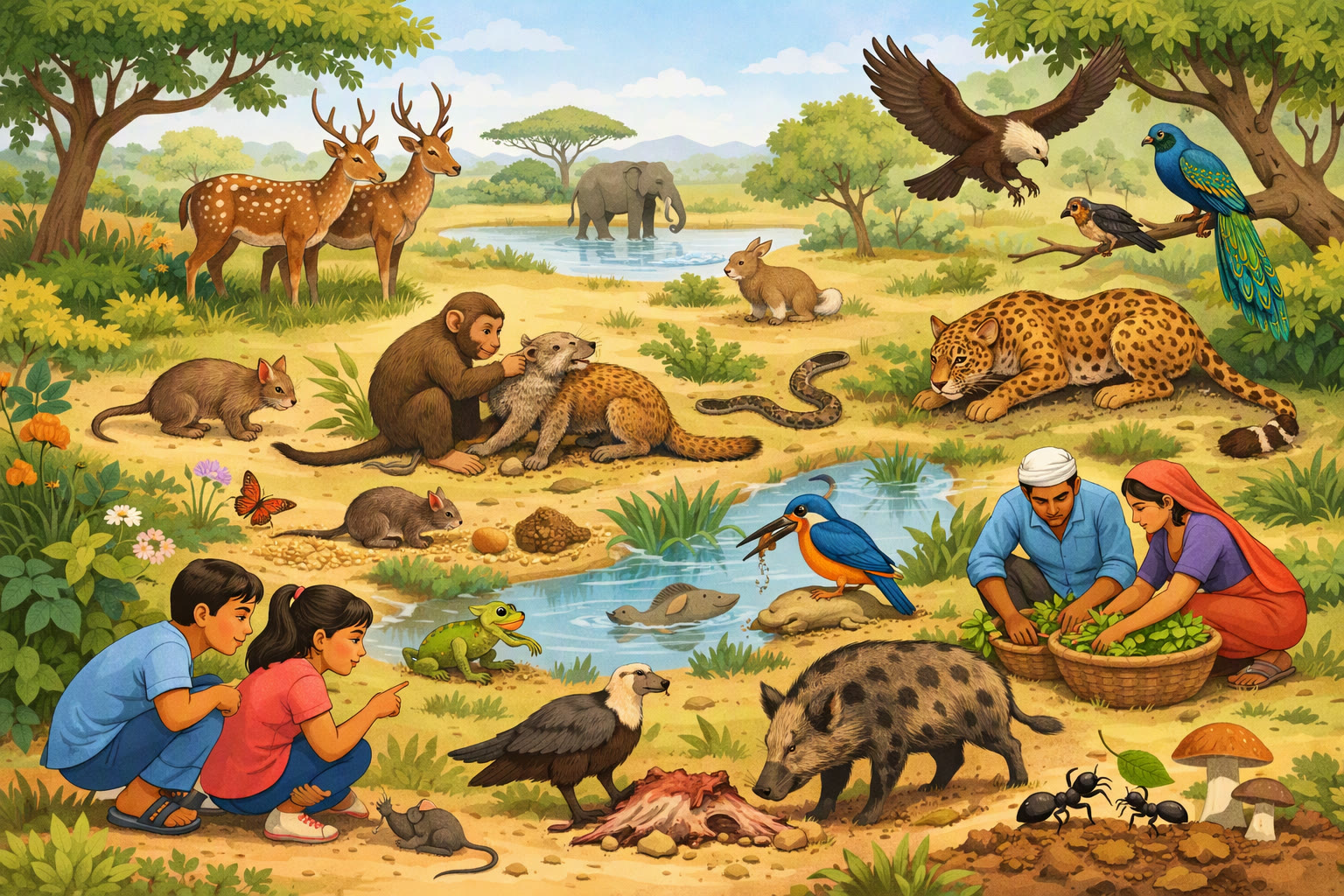
An ecosystem is a community of living things (plants, animals, and microorganisms) that interact with each other and with their non-living environment (weather, earth, sun, soil, climate, atmosphere). Ecosystems can be as small as a puddle or as large as an ocean.
Components of an Ecosystem
Ecosystems are made up of two main components:
- Biotic Factors: These are the living parts of an ecosystem, such as plants, animals, fungi, and bacteria.
- Abiotic Factors: These are the non-living parts of an ecosystem, such as sunlight, water, temperature, soil, and air.
Interactions within an Ecosystem
Living things in an ecosystem interact in many ways. These interactions include:
- Food Chains and Food Webs: Show how energy flows from one organism to another. Plants get energy from the sun. Animals eat plants or other animals.
- Competition: Occurs when different organisms need the same resources, like food or water.
- Symbiosis: A close relationship between two different species. This can be beneficial, harmful, or neutral.
Introduction to Biomes
A biome is a large geographic area characterized by specific climate conditions, animal populations, and plant populations. Biomes are larger than ecosystems.
Types of Biomes
Some major types of biomes include:
- Tundra: Cold, treeless regions with low-growing plants.
- Taiga (Boreal Forest): Cold forests with coniferous trees.
- Temperate Deciduous Forest: Forests with trees that lose their leaves in the fall.
- Grassland: Areas dominated by grasses, with few trees.
- Desert: Dry areas with very little rainfall.
- Tropical Rainforest: Warm, wet forests with high biodiversity.
Factors Determining Biomes
The distribution of biomes is mainly determined by:
- Climate: Temperature and rainfall are the most important factors.
- Latitude: Distance from the equator affects temperature and sunlight.
- Altitude: Height above sea level affects temperature.
Environment and Ecology
Environment refers to all the physical, chemical, and biological factors surrounding an organism. Ecology is the study of how organisms interact with each other and their environment.
Importance of Ecosystems and Biomes
Ecosystems and biomes are essential for:
- Providing Resources: Food, water, and raw materials.
- Regulating Climate: Forests absorb carbon dioxide, which helps regulate the Earth's temperature.
- Supporting Biodiversity: Maintaining a variety of different species.
Keep learning, free
Create a free Syllabax account to unlock practice questions and games for this topic.
Visual Learning Enhanced! 🚀
To help you master this topic, we use Advanced Syllabax AI to generate detailed diagrams and visual models.
Note on Visuals: The AI sometimes makes spelling errors in image labels. Please refer to the lesson text for the correct terminology.