Sources of water (Water)
Watch this topic in 60 seconds
Free preview · Lesson 1
Understanding Sources of water (Water)
Welcome to the Amazing World of Water!
Imagine you're a tiny plant reaching for the sun, or a thirsty puppy panting after a playful run, or even just you after running around on a hot day. What's the one thing you absolutely need? Water! Water is super important for everyone and everything on Earth. It's like the special fuel that keeps us going and helps our planet stay healthy. Without water, life as we know it couldn't exist! Every living thing, from the smallest ant to the biggest whale, needs water to survive.
What is Water?
Water is a clear, tasteless, and odorless liquid that we drink, wash with, and see all around us in nature. It's everywhere! But where does all this amazing water come from? Let's go on an adventure to discover its secret hideouts and major sources!
Source 1: Rain – Nature's Shower!
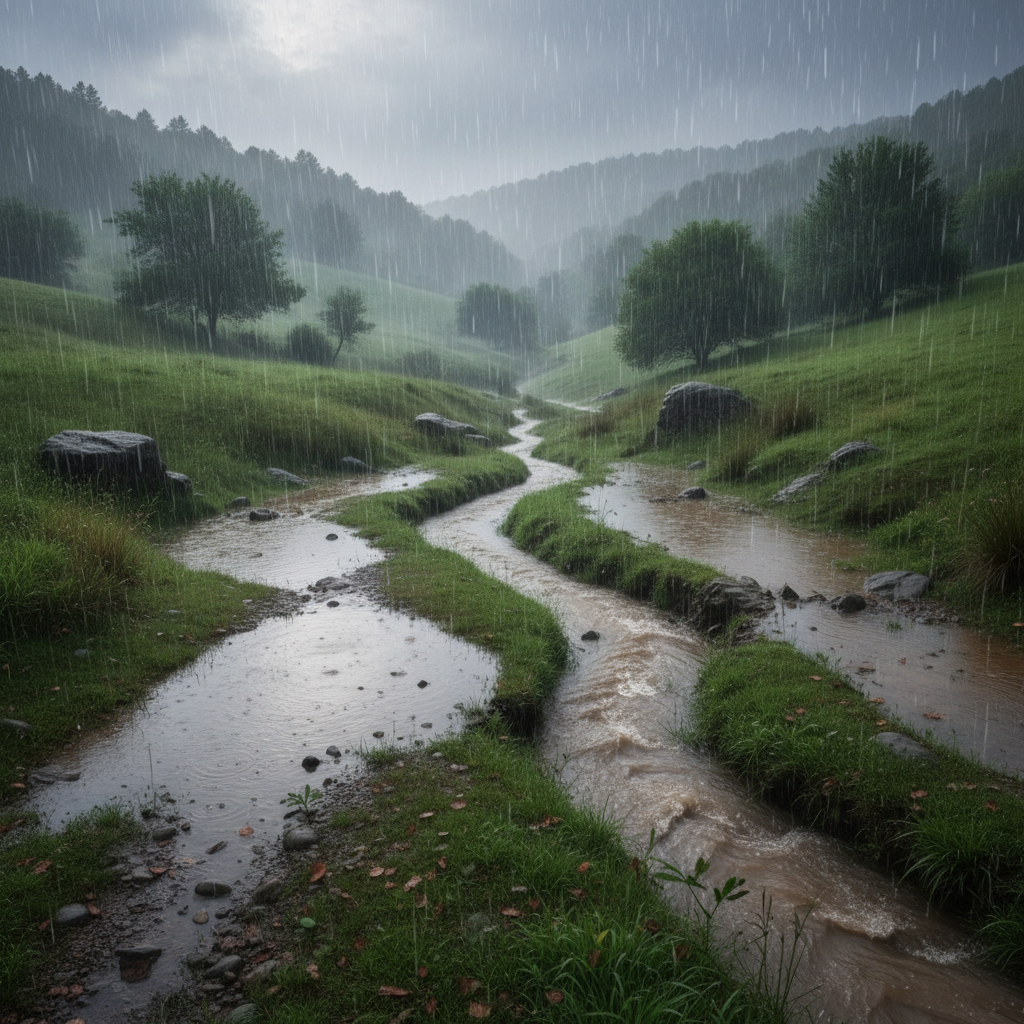
Think about a rainy day. Where does all that water come from? The sky, of course! Rain is like nature's very own shower. Here's how it works: The sun heats up water on Earth (from oceans, lakes, and rivers). This water turns into tiny, invisible bits of water vapor (water that has turned into a gas, like steam from a boiling kettle). These tiny bits float up high into the sky, where they get cold and join together to make clouds. The clouds get bigger and bigger, holding more and more water. When the clouds get too heavy, they can't hold any more water, and *plink, plonk!* Rain falls down to Earth.
Rain is one of the most important sources of fresh water. It's the starting point for much of the water we use every day. It fills up our rivers, lakes, and even soaks into the ground, providing water for plants and animals.
 ⚠️ This picture may have spelling mistakes. Trust the words in the lesson.
Source 2: Rivers – Earth's Flowing Veins!
Have you ever seen a river? Rivers are like long, winding paths of water that flow across the land. They often start high up in mountains from melting snow or lots of rain. As they flow downhill, they collect more water from smaller streams, getting bigger and stronger. Imagine a river as Earth's veins, carrying precious fresh water from one place to another, just like your veins carry blood around your body.
Rivers are super important because they bring fresh water to towns, cities, farms (where we grow our food), and homes. Many animals drink from rivers, and countless fish and other creatures live in them. They are bustling highways of life!
Source 3: Lakes and Ponds – Earth's Water Bowls!
Lakes and ponds are like big, still bowls or puddles of water nestled in the land. Lakes are generally larger and deeper than ponds. They are filled by rain, by rivers flowing into them, or by water that seeps up from the ground. They are like giant reservoirs nature has made for us.
These calm bodies of fresh water are very valuable. People use them for fishing, swimming, and boating. Animals like ducks, frogs, and various fish make their homes in lakes and ponds. They store a lot of fresh water that we can use, and they create beautiful places for nature to thrive.
Source 4: Oceans and Seas – Earth's Giant Salty Bathtub!
Now, imagine the biggest body of water on Earth – so big you can't see the other side! That's the ocean. Oceans and seas are enormous – they cover almost three-quarters of our planet! Think of them as Earth's giant bathtub, but with a twist: the water is very, very salty! If you tried to drink ocean water, it would make you even thirstier and sick.
Even though we can't drink it directly, oceans are incredibly important. They are home to millions of amazing sea creatures, from tiny plankton to giant whales. They also help control the Earth's weather and climate. Scientists are even working on ways to take the salt out so we might be able to drink ocean water in the future!
Source 5: Groundwater – The Hidden Treasure!
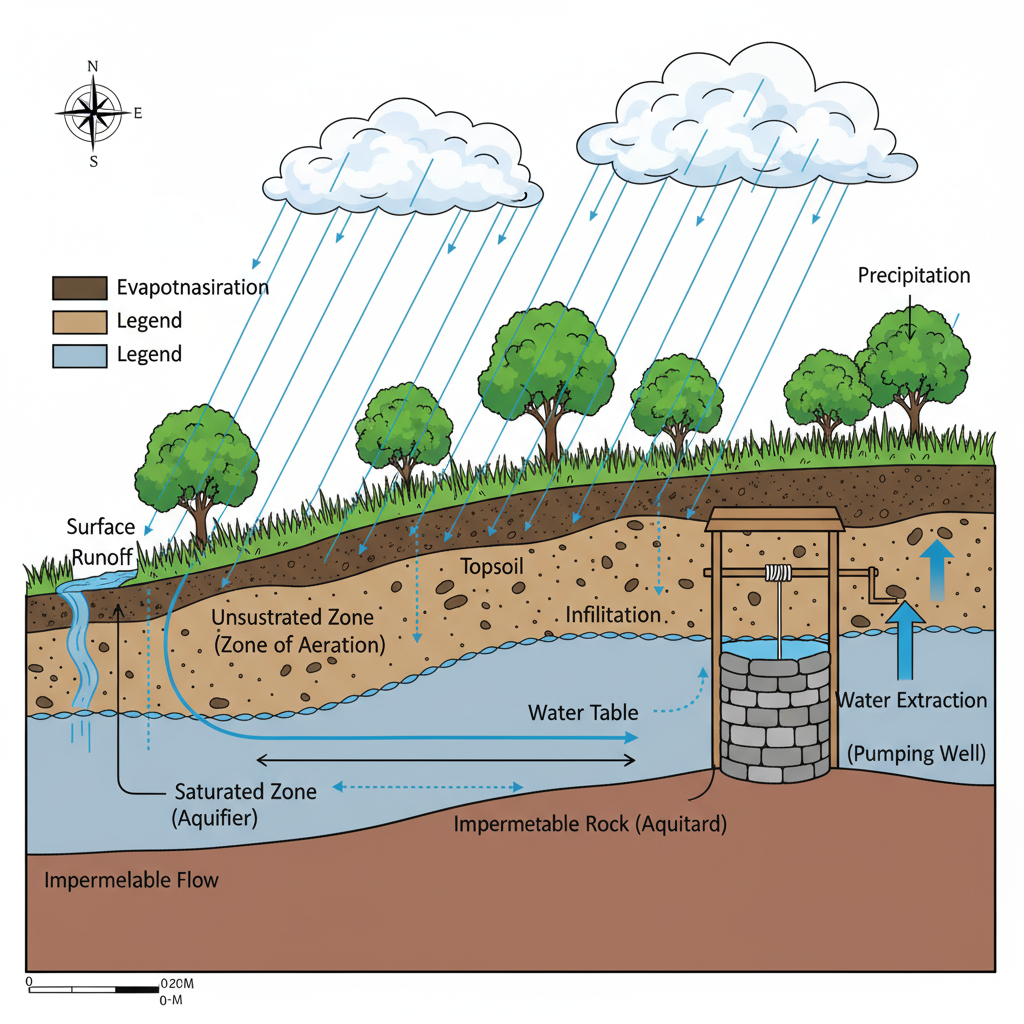
Have you ever wondered where the water in a well comes from? It comes from right under your feet! When rain falls, some of it soaks into the soil and keeps going down, down, down, through cracks in rocks, until it hits a layer it can't pass through. This water collects underground and is called groundwater.
Think of groundwater as a hidden treasure chest of water beneath our feet. People dig wells to reach this water, and it's an important source for many homes and farms, especially in places far from rivers or lakes. It's like having a secret, natural water tank just waiting to be tapped!
 ⚠️ This picture may have spelling mistakes. Trust the words in the lesson.
Source 6: Melted Snow and Glaciers – Giant Ice Cubes!
In very cold places, like the tops of tall mountains or near the North and South Poles, water freezes into huge amounts of ice and snow. These giant blocks of ice are called glaciers. They are like enormous, ancient ice cubes sitting on the land.
When the weather gets warmer, this snow and ice melts, turning back into liquid water. This melted water then flows down the mountains, feeding rivers and filling lakes. It's a natural way for fresh water to be released and become available for us to use.
The Water Cycle: Water's Endless Journey (A Quick Peek!)
All these sources are connected by something amazing called the Water Cycle. It's like water taking an endless, magical journey around our planet:
- The sun heats water in oceans, lakes, and rivers, turning it into vapor (Evaporation).
- This vapor rises into the sky and gets cold, forming clouds (Condensation).
- The clouds release water back to Earth as rain or snow (Precipitation).
- This water then falls back to Earth, filling rivers, lakes, oceans, or soaking into the ground (Collection).
And then the journey starts all over again! This means the water we use today might have been rain or river water many years ago, traveling through this incredible cycle!
Why Protecting Our Water Sources is Super Important!
Since water is so vital for all life, it's really important to protect all these amazing sources. We need to make sure we don't pollute them with trash or harmful chemicals. We also need to use water wisely and not waste it so there's enough clean water for everyone and everything to survive and thrive, now and in the future.
Remember, every drop counts!
Keep learning, free
Create a free Syllabax account to unlock practice questions and games for this topic.
Visual Learning Enhanced! 🚀
To help you master this topic, we use Advanced Syllabax AI to generate detailed diagrams and visual models.
Note on Visuals: The AI sometimes makes spelling errors in image labels. Please refer to the lesson text for the correct terminology.