Parallel & intersecting lines (intro) (Lines & Angles)
Watch this topic in 60 seconds
Free preview · Lesson 1
Understanding Parallel & intersecting lines (intro) (Lines & Angles)
Parallel Lines and Intersecting Lines: Meeting and Not Meeting!
Welcome, super mathematicians! Today, we're going to become detectives of lines. We'll learn about two special ways lines can behave when they meet or don't meet on a flat surface, like a piece of paper or a table. These special behaviors are called parallel and intersecting.
What are Lines?
Before we talk about parallel and intersecting lines, let's remember what a line is. Imagine a perfectly straight path that goes on forever and ever in both directions. That's a line! It has no beginning and no end. We often draw a small part of a line to help us understand it, but remember, real lines keep going!
Intersecting Lines: The Friendly Handshake!
Have you ever shaken someone's hand? When two people shake hands, their arms cross for a moment. Intersecting lines are a lot like that! Intersecting lines are two lines that cross each other at exactly one point. That special crossing point is called the point of intersection.
Analogies for Intersecting Lines:
- A T-junction on a road: Imagine a road going straight and another road meeting it from the side. Where the two roads meet is an intersection point.
- Scissors: The blades of a pair of scissors cross each other to cut.
- An 'X' mark: Two lines drawn to make an 'X' intersect in the middle.
- Crossing your arms: If you cross your arms in front of you, your arms intersect.
Look at the picture below. You can see two lines crossing each other. The spot where they cross is the point of intersection.
 ⚠️ This picture may have spelling mistakes. Trust the words in the lesson.
In this example, the two lines meet at a single spot. If they kept going, they would continue to cross at that same spot.
Parallel Lines: The Best of Friends Who Never Meet!
Now, imagine two train tracks. They run side-by-side, and no matter how far they go, they never, ever get closer or farther apart. They always stay the same distance from each other. These train tracks are like parallel lines!
Parallel lines are two lines that are always the same distance apart and will never, ever intersect (cross). They run alongside each other, forever and ever, without ever touching.
Analogies for Parallel Lines:
- Train tracks: As we said, train tracks are a perfect example!
- The sides of a ladder: The two long sides of a ladder are parallel. They are the same distance apart all the way up and down.
- Lines on ruled paper: The horizontal lines on your notebook paper are parallel.
- The edges of a ruler: The two long edges of a straight ruler are parallel.
Think about it: If the train tracks ever met, the train would crash! So, they must stay perfectly parallel.
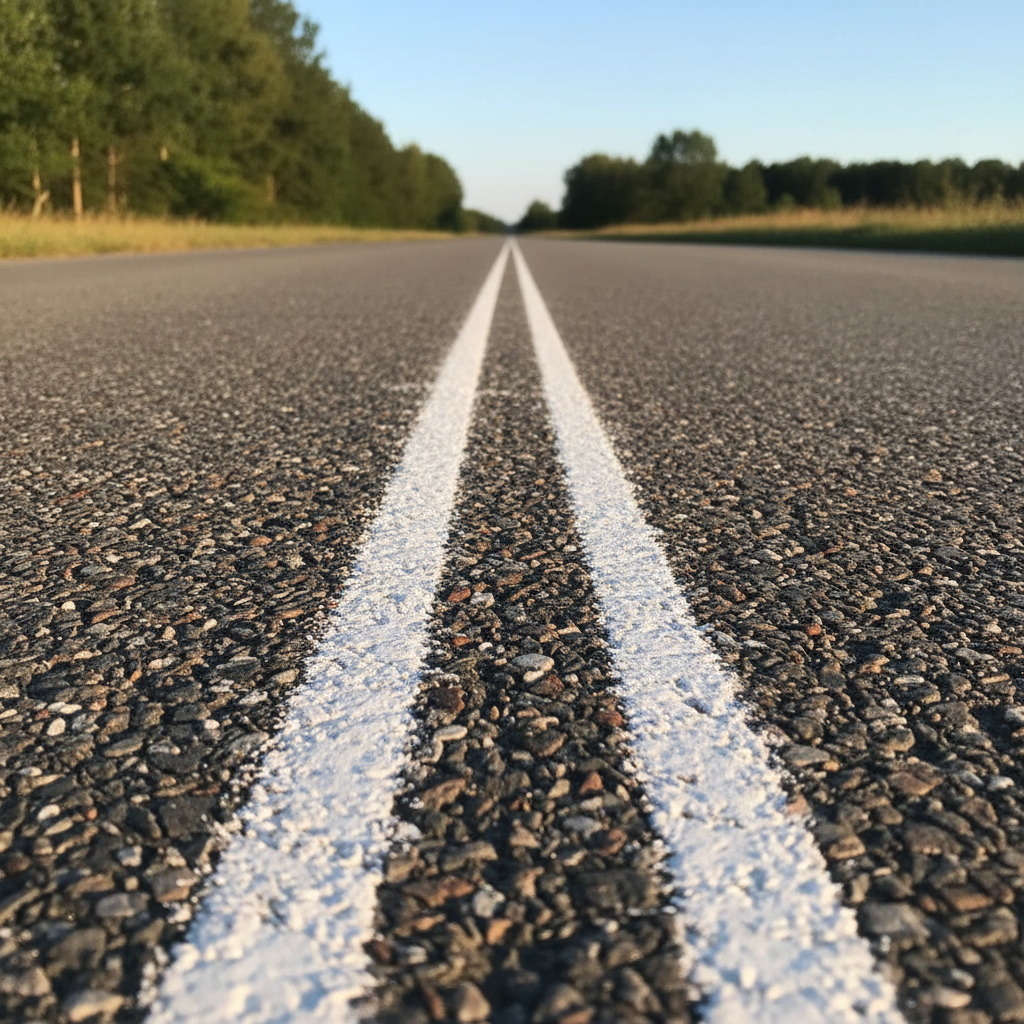 ⚠️ This picture may have spelling mistakes. Trust the words in the lesson.
In this picture, you can see two lines that look like they will never meet. They are perfectly spaced apart.
Key Differences: Meeting vs. Not Meeting
The biggest difference between intersecting and parallel lines is simple: intersecting lines cross, and parallel lines never cross.
- Intersecting lines meet at one point.
- Parallel lines never meet; they stay the same distance apart.
It's like being in a race. If you are running on a track, you might run next to someone (parallel), but you won't crash into them! If you are running in a maze, you might cross paths with someone (intersecting).
Let's Practice Being Line Detectives!
Now that you know the difference, you can start spotting parallel and intersecting lines everywhere! Look around your classroom, your home, or outside. Can you see examples of these special lines?
Remember:
- If lines cross, they are intersecting.
- If lines are side-by-side and will never cross, they are parallel.
You are doing great! Keep practicing, and you'll be a line expert in no time!
Keep learning, free
Create a free Syllabax account to unlock practice questions and games for this topic.
Visual Learning Enhanced! 🚀
To help you master this topic, we use Advanced Syllabax AI to generate detailed diagrams and visual models.
Note on Visuals: The AI sometimes makes spelling errors in image labels. Please refer to the lesson text for the correct terminology.