Direction sense (intro) (Logical Reasoning)
Watch this topic in 60 seconds
Free preview · Lesson 1
Understanding Direction sense (intro) (Logical Reasoning)
Understanding Directions: A Beginner's Guide!
Hello young explorers! Have you ever wondered how to find your way around? Or how to tell someone where to go? That's what we're going to learn about today – something called Direction Sense! It's like having a secret superpower that helps you navigate the world around you. Think of it as learning the language of 'left,' 'right,' 'up,' and 'down'!
What is Direction Sense?
Direction sense is your ability to understand and use directions. It helps you figure out where things are in relation to where you are. Imagine you have a favorite toy hidden in your room. To find it, you need to know if it's on the left side of your bed, or under your desk, or maybe to the right of your closet. That's using your direction sense!
The Four Main Directions: North, South, East, and West
The world is a big place, and to help us understand where things are, we use four main directions. They are like the four best friends of directions!
- North (N): Think of North as 'up' on a map. If you're standing and facing North, then South is directly behind you.
- South (S): South is the opposite of North. If North is 'up,' then South is 'down.'
- East (E): East is like moving to your right if you are facing North.
- West (W): West is the opposite of East. It's like moving to your left if you are facing North.
These four directions always stay in the same order: North, then East, then South, then West. They form a circle!
The Magic of Opposites
The most important thing to remember about these directions is that they are opposites:
- North is opposite to South.
- East is opposite to West.
This means if you know where North is, you automatically know where South is – it's the other way around! And if you know where East is, West is just behind you.
How Do We Know Which Way is Which?
You might be thinking, "But how do I know which way is North?" That's a great question! We use special tools and natural clues.
1. The Magical Compass
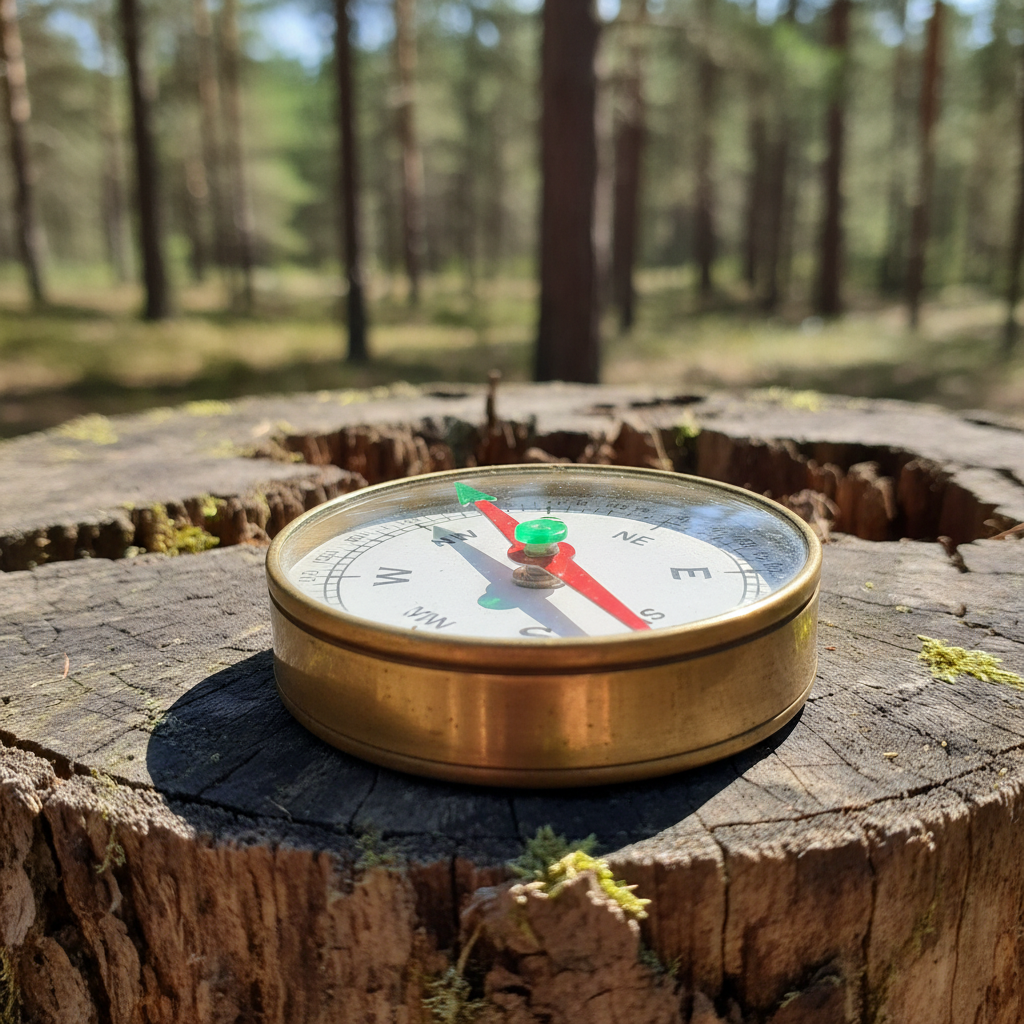
A compass is a tool that helps us find directions. It has a needle that always points towards North. Imagine a tiny arrow on a spinning wheel – that arrow is always pointing to the North pole. So, if you have a compass, you can find North, and then you can easily figure out South, East, and West!
 ⚠️ This picture may have spelling mistakes. Trust the words in the lesson.
Imagine a compass is like a special map that tells you exactly which way is North, no matter where you are! It's super helpful when you're exploring new places or even just trying to find your way in a big park.
2. The Sun! Our Big Bright Friend
The sun can also be a great clue for directions, especially during the day!
- Sunrise (Morning): The sun rises in the East. So, in the morning, if you look towards where the sun is coming up, you're looking East!
- Sunset (Evening): The sun sets in the West. In the evening, when the sun is going down, you're looking West.
- Midday (Noon): Around noon, the sun is usually high in the sky. If you stand so the sun is directly in front of you, then North is behind you, South is in front of you, West is to your left, and East is to your right. (This can be a little trickier!)
Think of the sun as a giant clock in the sky that tells us the time and also helps us with directions!
3. Stars at Night (For Older Explorers!)
At night, some stars can help us find North, but that's a bit more advanced. For now, let's stick to the compass and the sun!
Left and Right: Our Personal Directions
Besides North, South, East, and West, we also use 'left' and 'right'. These are directions relative to YOU!
- Left: Usually the direction of your left hand.
- Right: Usually the direction of your right hand.
Imagine you're walking. If you turn left, you move in the direction your left arm is pointing. If you turn right, you move in the direction your right arm is pointing.
Let's say you are facing North. Your right hand points East, and your left hand points West! See how they connect?
Putting It All Together: Finding Your Way!
Direction sense helps us with so many things:
- Following Instructions: When someone says, "Turn left at the big tree and then go straight," you use your direction sense!
- Reading Maps: Maps show us where things are, and understanding directions helps us read them.
- Playing Games: Many games, like 'Simon Says' or treasure hunts, involve directions.
- Being Safe: Knowing directions can help you find your way back if you ever get a little lost.
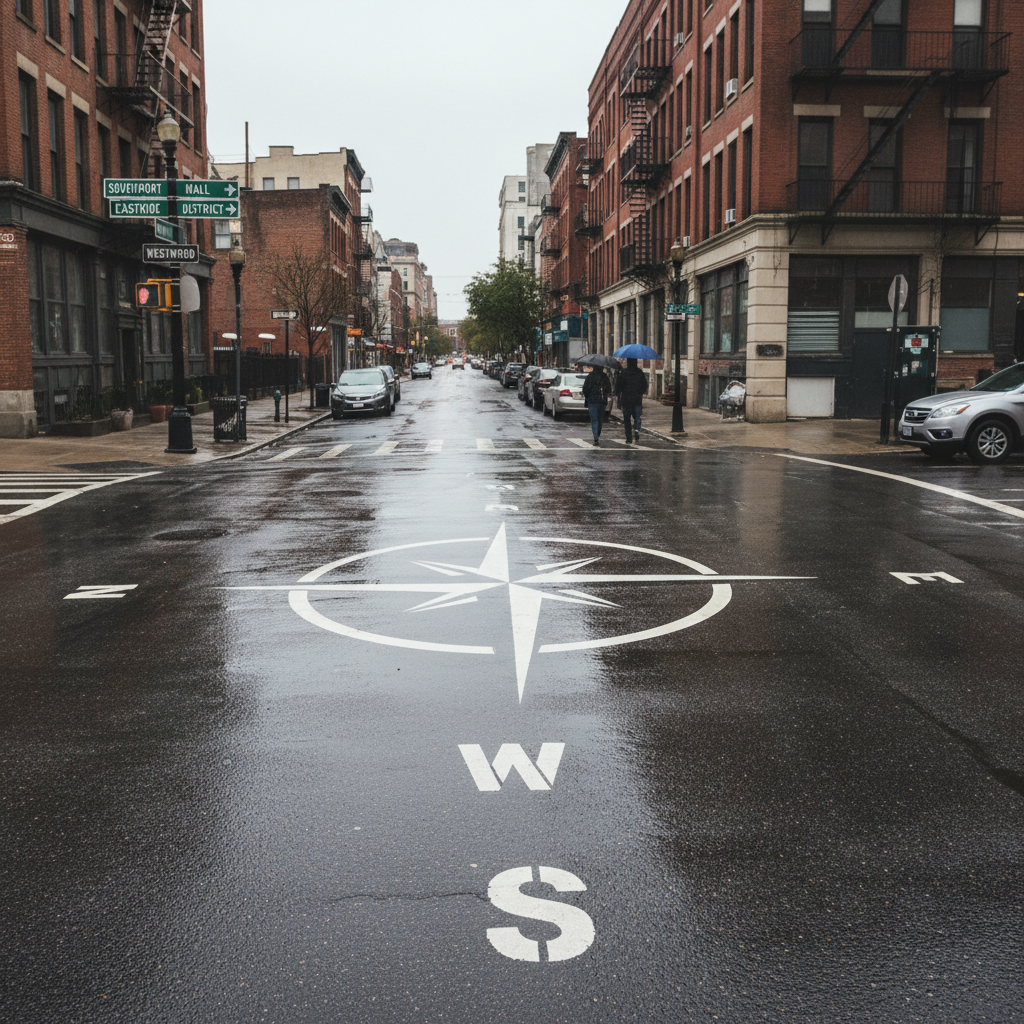
Let's look at an example. Imagine you are standing at your front door and want to go to the park.
- First, you step out. Let's say the park is to your East. So, you turn East (to your right if you're facing North).
- You walk East for a while.
- Then, maybe you need to turn South (away from North) to reach the park entrance.
 ⚠️ This picture may have spelling mistakes. Trust the words in the lesson.
See? It's like following a trail of clues! The more you practice understanding directions, the better you'll become at navigating your world.
Quick Recap!
Remember these key ideas:
- Direction Sense helps you understand where things are.
- The four main directions are North, South, East, and West.
- North and South are opposites. East and West are opposites.
- A compass and the sun can help you find directions.
- Left and right are directions related to your own body.
Keep practicing, and soon you'll be a direction expert!
Keep learning, free
Create a free Syllabax account to unlock practice questions and games for this topic.
Visual Learning Enhanced! 🚀
To help you master this topic, we use Advanced Syllabax AI to generate detailed diagrams and visual models.
Note on Visuals: The AI sometimes makes spelling errors in image labels. Please refer to the lesson text for the correct terminology.