Learning Journey
Free preview · Lesson 1
Understanding Concentration (basic) [CHEMISTRY]
Understanding Concentration: How Much Stuff is in a Mixture?
Imagine you're making a delicious lemonade. You mix lemon juice, sugar, and water. The taste of your lemonade depends on how much lemon juice and sugar you put in compared to the water. This idea of "how much stuff is in a mixture" is exactly what we talk about in chemistry when we use the word concentration.
What is Concentration?
In simple terms, concentration tells us how much of a substance (called a solute) is mixed into another substance (called a solvent). Think of the solute as the "flavor" ingredients in your lemonade (lemon juice and sugar) and the solvent as the liquid base (water).
When you have a lot of solute dissolved in the solvent, we say the solution is concentrated. If you have only a little bit of solute, the solution is dilute.
Analogies for Concentration
Let's explore this with some everyday examples:
1. Making Hot Chocolate
Imagine you're making hot chocolate. You have hot milk (the solvent) and you can add cocoa powder and sugar (the solutes).
- Highly Concentrated Hot Chocolate: If you add a lot of cocoa powder and sugar, the drink will be very rich, dark, and taste strongly of chocolate. This is a concentrated solution.
- Dilute Hot Chocolate: If you only add a tiny bit of cocoa powder and sugar, the drink will be light brown and taste a bit weak. This is a dilute solution.
2. Perfume or Cologne
Perfume and cologne are liquids that have fragrant oils (solutes) dissolved in alcohol or water (solvent).
- Concentrated Perfume: A perfume that has a high amount of fragrant oils will smell very strong, and you only need a little spray to notice it.
- Dilute Cologne: A cologne with fewer fragrant oils will have a lighter scent.
3. Saltwater
If you dissolve salt in water:
- Concentrated Saltwater: A cup of water with several tablespoons of salt dissolved in it will taste very salty.
- Dilute Saltwater: A cup of water with just a pinch of salt will taste only slightly salty.
Why is Concentration Important?
Concentration is a very important concept in chemistry and in many other fields:
- Medicine: The amount of medicine in a liquid dosage (like cough syrup) needs to be just right. Too much or too little could be harmful.
- Cooking and Baking: Recipes rely on specific amounts of ingredients to get the right taste and texture.
- Environment: The concentration of pollutants in water or air tells us how safe they are.
- Industrial Processes: Factories use chemicals at specific concentrations for manufacturing products.
Measuring Concentration (Basic Ideas)
Chemists have ways to measure concentration more precisely than just saying "a lot" or "a little." For basic understanding, we often think about concentration in terms of how much solute is in a certain amount of solution.
For example, we could say:
- "There are 10 grams of sugar in every 100 milliliters of water."
- "There is 1 teaspoon of salt in this glass of water."
The more solute you pack into the same amount of solvent, the higher the concentration. If you keep the same amount of solute but add more solvent, the concentration goes down (it becomes more dilute).
Visualizing Concentration
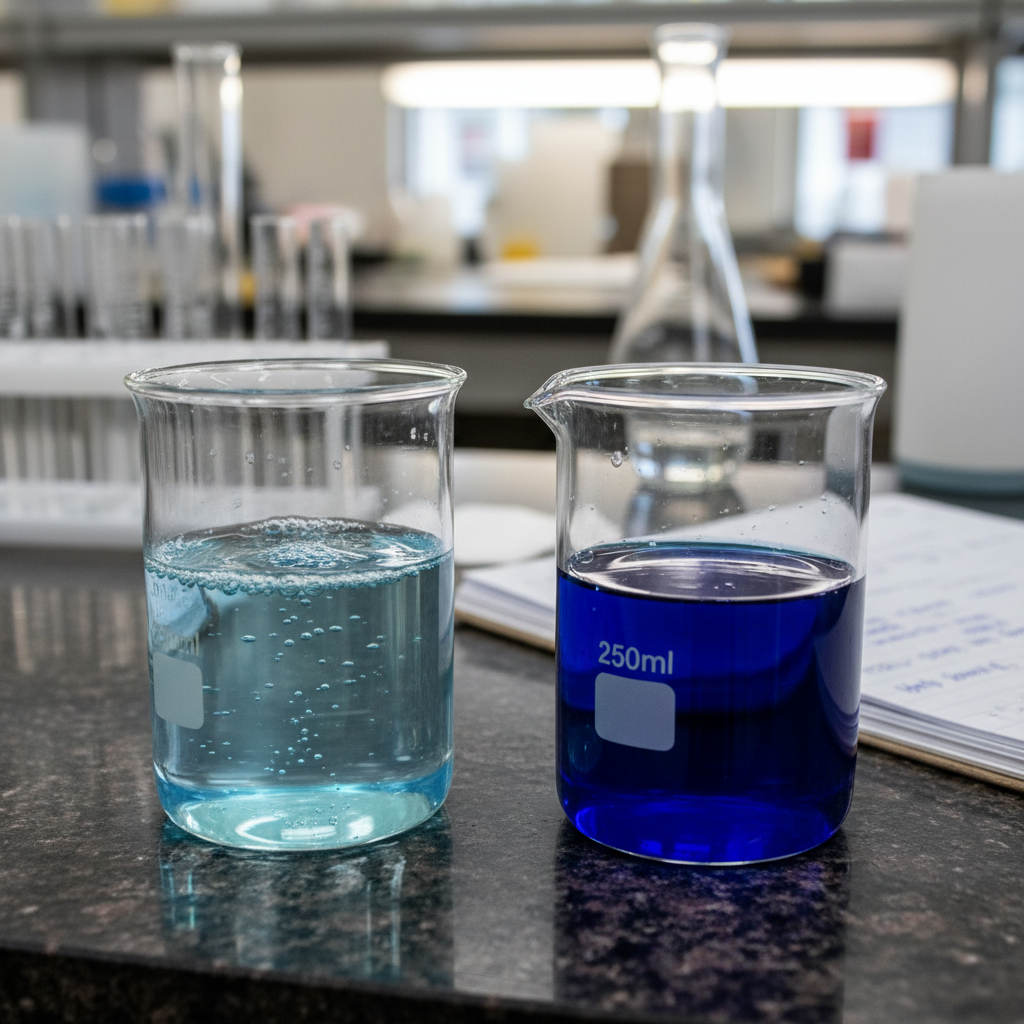
Imagine we have two glasses of water, and we add blue food coloring (the solute) to both.
Glass A: We add 1 drop of food coloring to 1 cup of water. The water will be very lightly colored. This is a dilute solution.
Glass B: We add 10 drops of food coloring to the same 1 cup of water. The water will be a deep, dark blue. This is a concentrated solution.
In both glasses, the amount of water (solvent) is the same, but the amount of food coloring (solute) is different. Glass B has more solute in the same amount of solvent, so it is more concentrated.
Key Terms Recap
- Concentration: How much of a substance (solute) is dissolved in another substance (solvent).
- Solute: The substance that gets dissolved (e.g., sugar, salt, food coloring).
- Solvent: The substance that does the dissolving (e.g., water, alcohol).
- Solution: The mixture of solute and solvent (e.g., saltwater, sweetened tea).
- Concentrated: A solution with a large amount of solute.
- Dilute: A solution with a small amount of solute.
Understanding concentration helps us understand how different mixtures behave and why the amounts of ingredients matter so much!
Keep learning, free
Create a free Syllabax account to unlock practice questions and games for this topic.
Visual Learning Enhanced! 🚀
To help you master this topic, we use Advanced Syllabax AI to generate detailed diagrams and visual models.
Note on Visuals: The AI sometimes makes spelling errors in image labels. Please refer to the lesson text for the correct terminology.