Natural Vegetation & Wildlife -Indian Geography
Watch this topic in 60 seconds
Free preview · Lesson 1
Natural Vegetation & Wildlife -Indian Geography (Foundational)
Natural Vegetation & Wildlife - Indian Geography (Foundational)
This lesson introduces the basic concepts of natural vegetation and wildlife found in India. We will explore different types of forests and animal species, understanding their importance and distribution.
What is Natural Vegetation?
Natural vegetation refers to plant life that grows naturally without human intervention. This includes forests, grasslands, and other plant communities. The type of natural vegetation in a region depends on factors like climate, soil, and rainfall.
Types of Natural Vegetation in India
India has a diverse range of natural vegetation due to its varied climate and topography. Here are some major types:
- Tropical Evergreen Forests: Found in areas with heavy rainfall, like the Western Ghats and Northeast India. These forests are dense and green throughout the year.
- Tropical Deciduous Forests: Also known as monsoon forests, these are the most widespread forests in India. Trees shed their leaves during the dry season to conserve water.
- Thorn Forests and Scrubs: Found in arid and semi-arid regions like Rajasthan and parts of Gujarat. Vegetation consists of thorny trees and shrubs.
- Montane Forests: Found in mountainous regions like the Himalayas. Vegetation changes with altitude, from deciduous forests to coniferous forests and alpine grasslands.
- Mangrove Forests: Found in coastal areas, especially in the deltas of rivers like the Ganga and Brahmaputra. These forests are adapted to saline conditions.
Wildlife in India
India is rich in wildlife, including a variety of animal species. The country has established national parks and wildlife sanctuaries to protect these species.
Important Animal Species
- Tiger: India is home to a significant population of tigers, found in various national parks and reserves.
- Elephant: Elephants are found in forests of South India and Northeast India.
- One-Horned Rhinoceros: Found in the Brahmaputra valley, especially in Kaziranga National Park.
- Deer: Various species of deer, like the spotted deer and sambar deer, are found in forests across India.
- Birds: India is home to a wide variety of birds, including peacocks, parrots, and migratory birds.
Importance of Natural Vegetation and Wildlife
Natural vegetation and wildlife play a crucial role in maintaining the ecological balance. They provide essential resources like timber, fuel, and medicines. They also help regulate climate, prevent soil erosion, and support biodiversity. Protecting these resources is essential for sustainable development.
Keep learning, free
Create a free Syllabax account to unlock practice questions and games for this topic.
Visual Learning Enhanced! 🚀
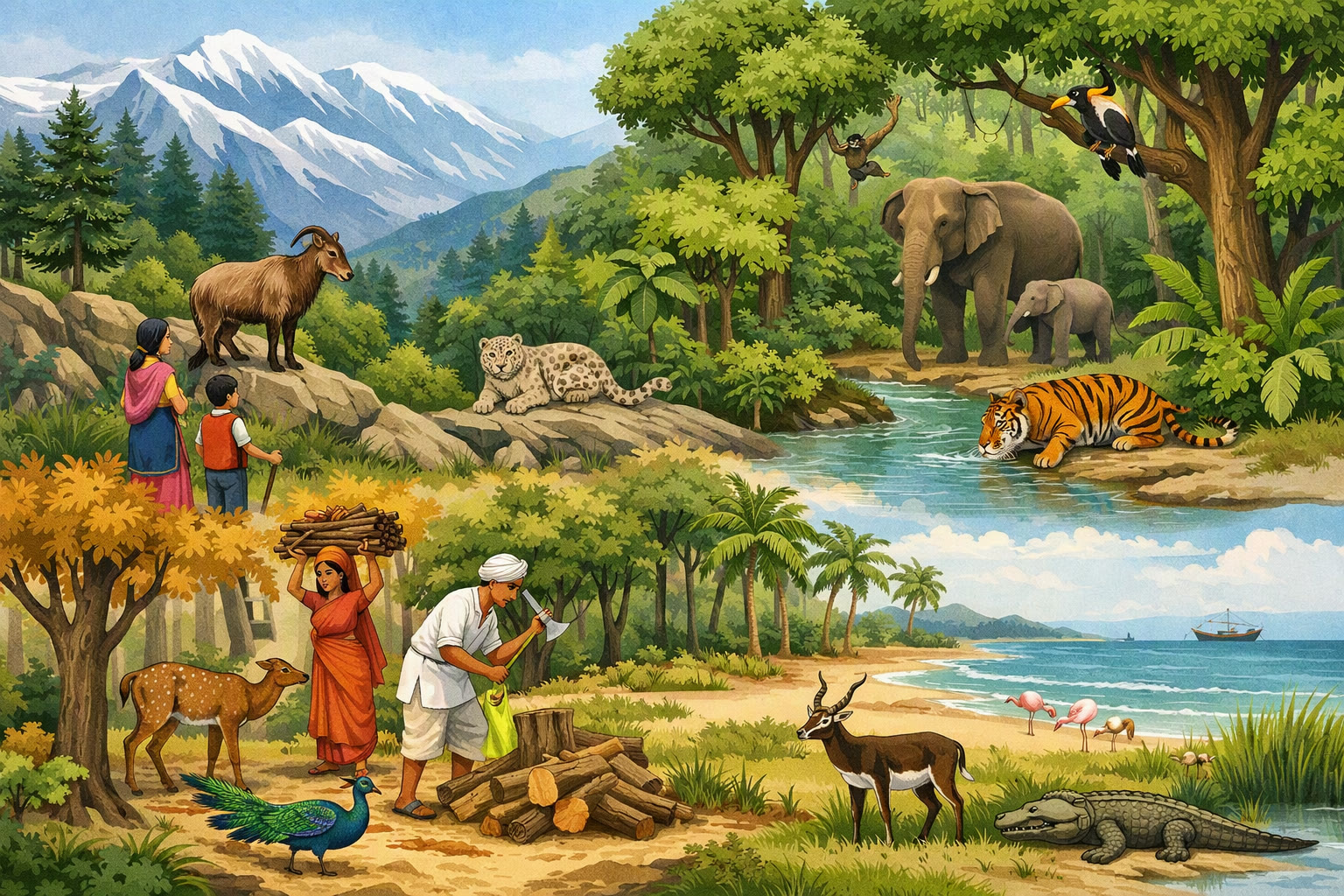
To help you master this topic, we use Advanced Syllabax AI to generate detailed diagrams and visual models.
Note on Visuals: The AI sometimes makes spelling errors in image labels. Please refer to the lesson text for the correct terminology.