Indian Classical Music (Hindustani/Carnatic – basics) – Arts, Culture & Literature
Watch this topic in 60 seconds
Free preview · Lesson 1
Indian Classical Music (Hindustani/Carnatic – basics) – Arts, Culture & Literature (Foundational)
Indian Classical Music: A Journey into Sound
Welcome, young music explorer! Today, we're embarking on a fascinating journey into the world of Indian Classical Music. Imagine a world of beautiful sounds, intricate melodies, and rhythms that tell stories. That's what awaits us!
What is Indian Classical Music?
Indian Classical Music is a rich tradition with two main styles: Hindustani (mostly found in North India) and Carnatic (mostly found in South India). Think of them as two branches of the same musical tree, sharing roots but growing in slightly different ways.
Key Differences at a Glance:
- Hindustani: More emphasis on improvisation, with instruments like the sitar and tabla.
- Carnatic: More structured compositions, with instruments like the veena and mridangam.
Core Concepts: Building Blocks of Sound
Let's look at some basic elements that make up Indian Classical Music:
- Raga (Melody): A raga is like a musical mood or a color palette. It's a framework of notes that musicians use to create melodies.
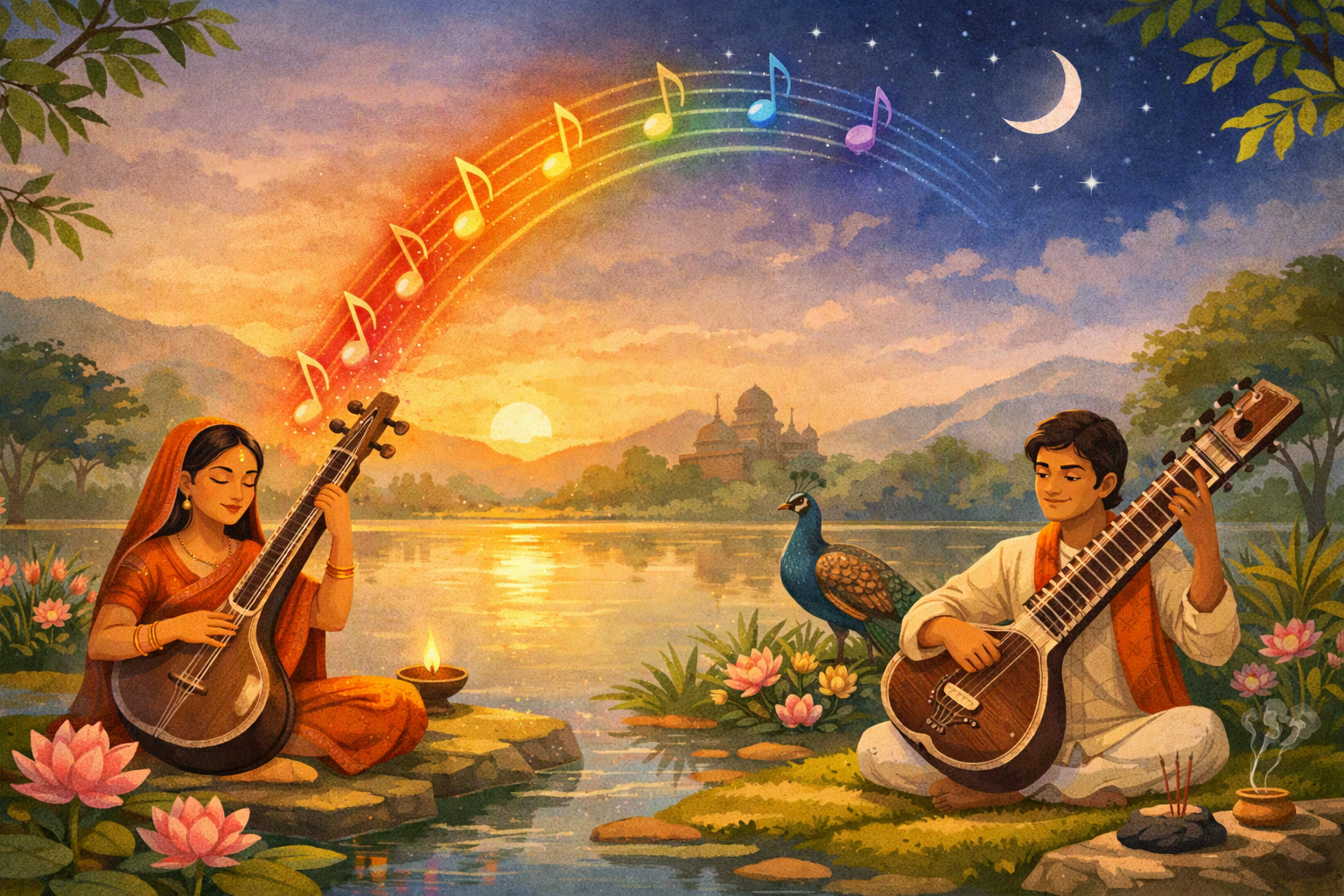
- Tala (Rhythm): Tala is the rhythmic cycle or the heartbeat of the music. It's like a pattern of beats that repeats. Different talas create different feels.
- Swara (Notes): Swaras are the basic musical notes. In Indian music, we have seven main swaras: Sa, Re, Ga, Ma, Pa, Dha, Ni. These are similar to Do, Re, Mi, Fa, So, La, Ti in Western music.
- Drone: A continuous sound, usually 'Sa', which provides a reference point for the melody. Think of it as a musical anchor.
Instruments: Voices of the Music
Many beautiful instruments bring Indian Classical Music to life. Here are a few examples:
Hindustani Instruments:
- Sitar: A plucked string instrument with a long neck.
- Tabla: A pair of drums played with the hands.
- Sarangi: A bowed string instrument that sounds like the human voice.
Carnatic Instruments:
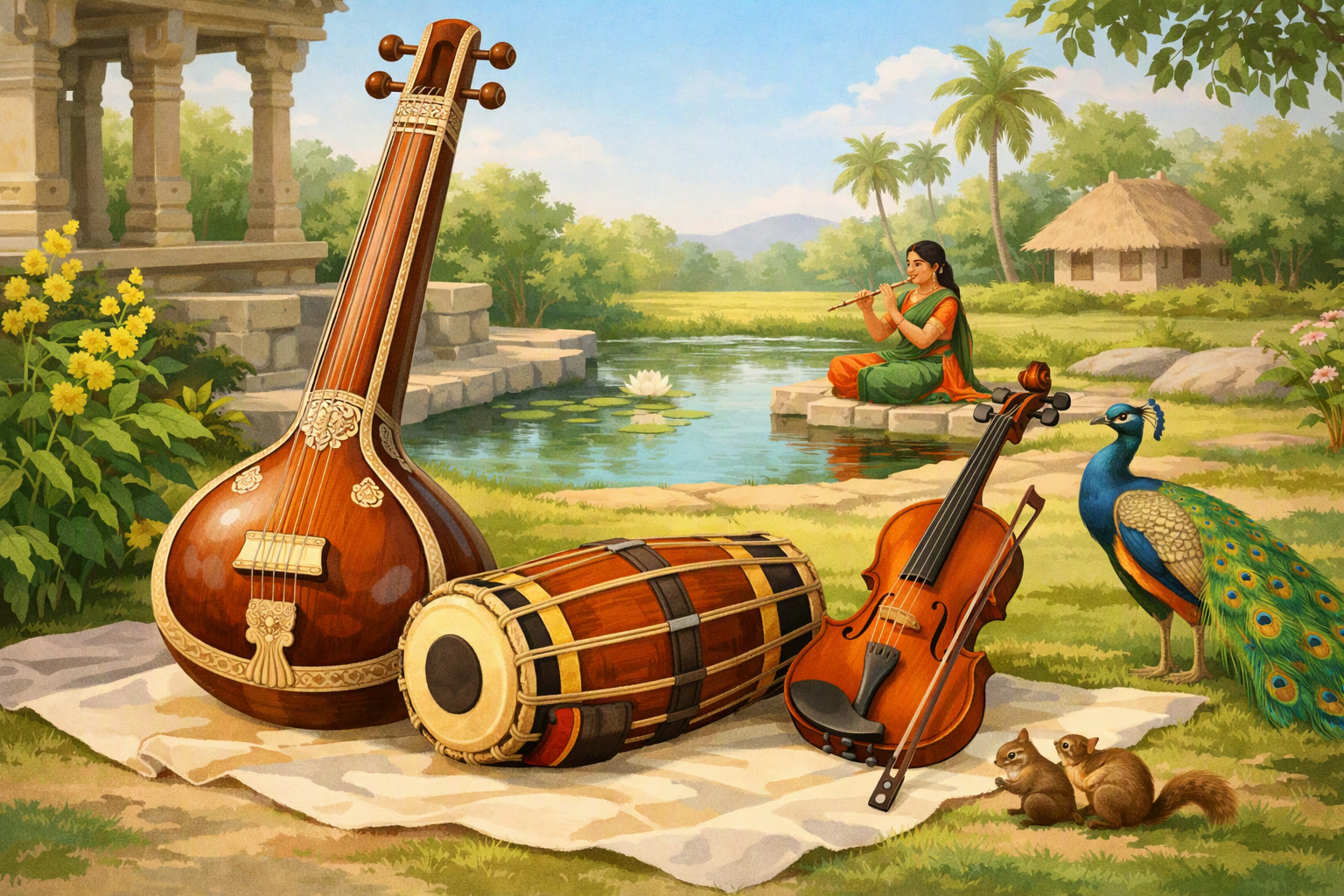
- Veena: A large plucked string instrument considered the "queen" of Carnatic music.
- Mridangam: A double-sided drum played with the hands.
- Violin: Yes, the Western violin is also adapted for Carnatic music!
Why is Indian Classical Music Important?
It's more than just music; it's a part of Indian culture and history. It connects us to our traditions, tells stories, and expresses emotions. Listening to it can be calming and inspiring!
Keep learning, free
Create a free Syllabax account to unlock practice questions and games for this topic.
Visual Learning Enhanced! 🚀
To help you master this topic, we use Advanced Syllabax AI to generate detailed diagrams and visual models.
Note on Visuals: The AI sometimes makes spelling errors in image labels. Please refer to the lesson text for the correct terminology.