Classical Music – Ragas & Instruments – Arts, Culture & Literature
Watch this topic in 60 seconds
Free preview · Lesson 1
Classical Music – Ragas & Instruments – Arts, Culture & Literature (Foundational)
Classical Music – Ragas & Instruments – Arts, Culture & Literature (Foundational)
Welcome to the world of Classical Music! This lesson introduces you to some basic concepts, focusing on Ragas and Instruments.
What is Classical Music?
Classical music is a type of music that follows established rules and traditions. It's often complex and requires skilled musicians to perform. Classical music comes from different cultures all around the world. In this lesson, we will focus on aspects of Indian Classical Music.
Ragas: The Melodic Framework
A Raga is like a musical framework or a set of rules for creating a melody. It's not just a tune, but a whole system of musical ideas. Imagine a Raga as a specific recipe for a musical dish. It tells you which notes to use, how to emphasize them, and how to move between them.
Key aspects of a Raga:
- Arohana (Ascending scale): The notes used when going up the scale.
- Avarohana (Descending scale): The notes used when going down the scale.
- Vadi (Main Note): The most important note in the Raga.
- Samay (Time): Ragas are often associated with specific times of day or seasons.
Common Instruments in Classical Music
Many instruments are used in classical music. Here are a few common examples:
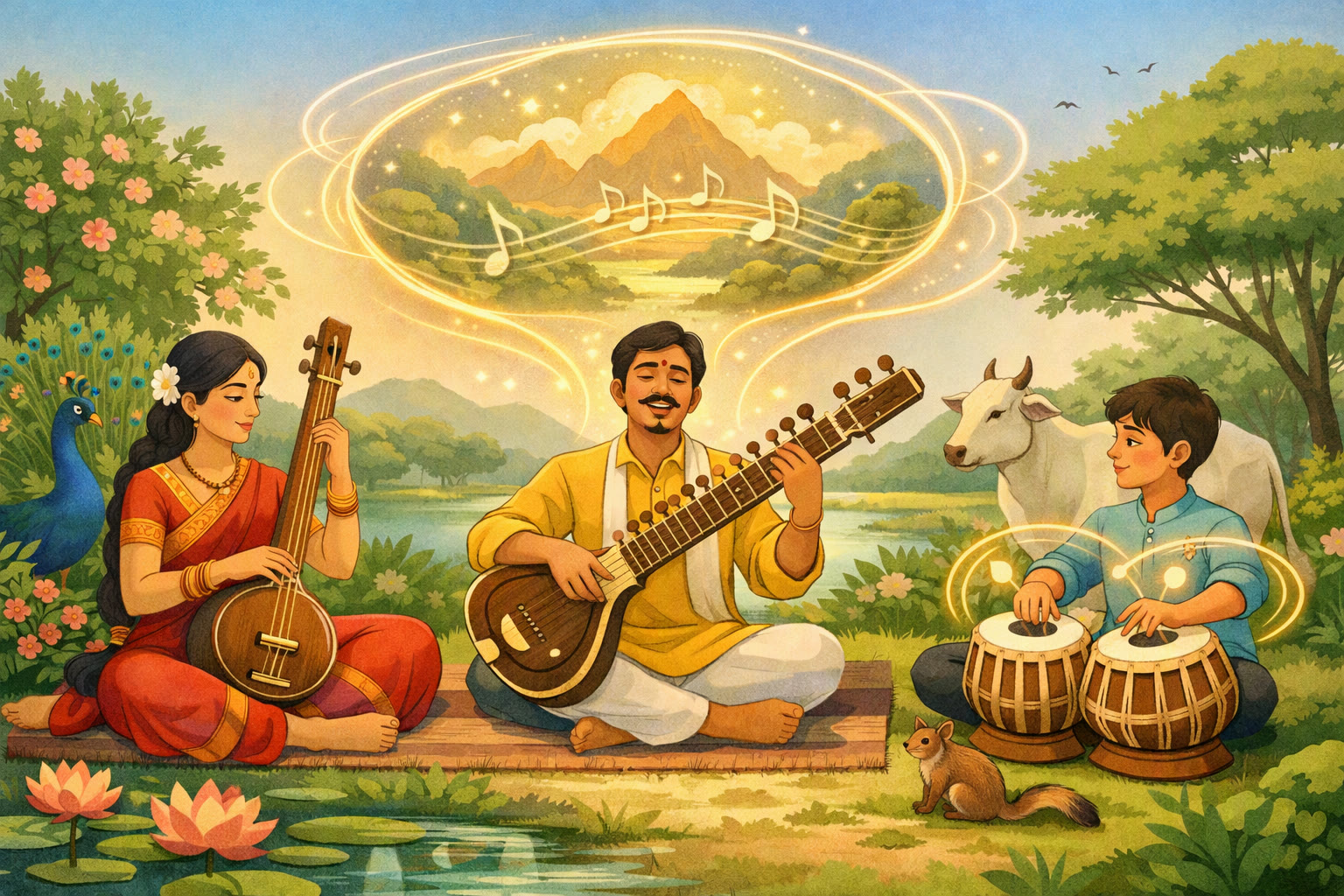
- Sitar: A stringed instrument with a long neck and many sympathetic strings. It's known for its beautiful, resonant sound.
- Tabla: A pair of drums played with the hands. It provides the rhythm and beat for the music.
- Tanpura: A drone instrument that provides a constant, harmonizing sound. It has four or five strings.
- Violin: While originating from the West, the violin has been adapted to Indian classical music and plays melodic lines.
- Flute (Bansuri): A bamboo flute that produces a sweet, mellow sound.
How Ragas and Instruments Work Together
The instruments are used to play the Raga. The musician uses the rules of the Raga to create a melody on their instrument. The Tabla provides the rhythmic accompaniment, and the Tanpura provides the drone. Together, they create a complete and beautiful musical experience. The artist has the creative freedom to create and play the Raga based on its foundation.
Keep learning, free
Create a free Syllabax account to unlock practice questions and games for this topic.
Visual Learning Enhanced! 🚀
To help you master this topic, we use Advanced Syllabax AI to generate detailed diagrams and visual models.
Note on Visuals: The AI sometimes makes spelling errors in image labels. Please refer to the lesson text for the correct terminology.