Solving Puzzles with Computers
Watch this topic in 60 seconds
Free preview · Lesson 1
Understanding Solving Puzzles with Computers
Solving Puzzles with Our Super Smart Computer Friends!
Hello, young explorers! Have you ever played with a puzzle? Maybe a jigsaw puzzle where you fit pieces together to make a picture, or a maze where you try to find your way out? Puzzles are so much fun because they make us think! Our brains get to be detectives, looking for clues and trying out different ideas until we find the answer.
Imagine you have a big box of LEGOs. You want to build a cool spaceship, but all the pieces are mixed up! That's a kind of puzzle, right? You need to find the right shapes and colors to build your spaceship. It takes time and careful looking.
What is a Computer? Our Helpful Robot Friend!
Now, let's talk about computers. What is a computer? Is it a magical box? Not quite, but it's super close! A computer is like a very, very smart helper, or a friendly robot. It can do many things very fast, like counting, remembering things, and even helping us solve puzzles!
Think of your favorite toy robot. If you tell it to pick up a blue block, it tries to find a blue block and pick it up. A computer is like that, but even smarter! It doesn't have arms and legs, but it has a super-fast brain inside.
How Can Computers Help Us Solve Puzzles?
This is where it gets exciting! Computers are amazing at solving puzzles because they are very good at two things:
- Following Rules: Just like when you play a board game, there are rules. Computers are fantastic at remembering all the rules of a puzzle and making sure they follow them perfectly, every single time. They never forget a rule!
- Trying Many Things Very Quickly: Imagine you have a jigsaw puzzle with 100 pieces. If you try to fit every piece into every possible spot, it would take a long, long time! A computer can 'try' millions of different ways to fit pieces or find a path in a maze in just a few seconds. It’s like having a super speedy friend helping you!
Let's use an analogy: Imagine you lose your favorite teddy bear in a very big park. You want to find it! You might walk around and look in a few places. A computer, if you told it where to look and what your bear looks like, could 'think' about every single spot in the park much, much faster than you can walk. It could remember all the places it already looked so it doesn't waste time looking there again!
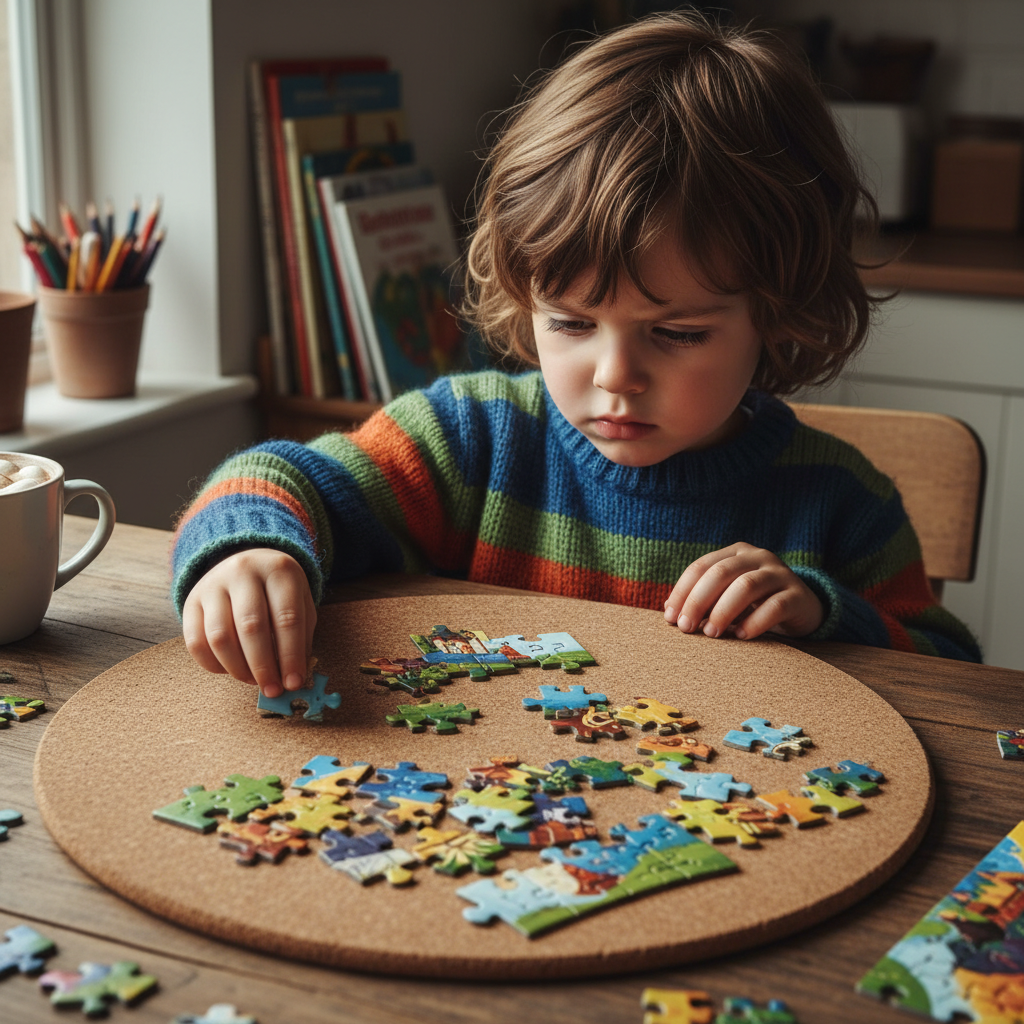
Look at this picture of someone thinking about a puzzle. It shows how our brains work hard!
Giving Instructions to Our Computer Friends
Computers are smart, but they are not mind-readers! We need to tell them exactly what to do. This is called 'giving instructions' or 'programming'. Think of it like giving a recipe to a chef:
- Recipe for a computer: "Take this puzzle piece. Look at its shape. Try to fit it with other pieces that have a matching shape. If it fits, keep it there! If it doesn't, try a different piece."
- Recipe for a chef: "Take flour. Add water. Mix well. Bake in oven."
If we give clear, step-by-step instructions, the computer can help us solve even very tricky puzzles. It won't get tired, it won't get bored, and it won't make silly mistakes by forgetting a rule!
What kind of puzzles can computers help with? Lots! Like finding the shortest path through a maze, figuring out how to stack blocks in a certain order, or even finding matching pairs in a memory game. They are amazing puzzle-solving machines!
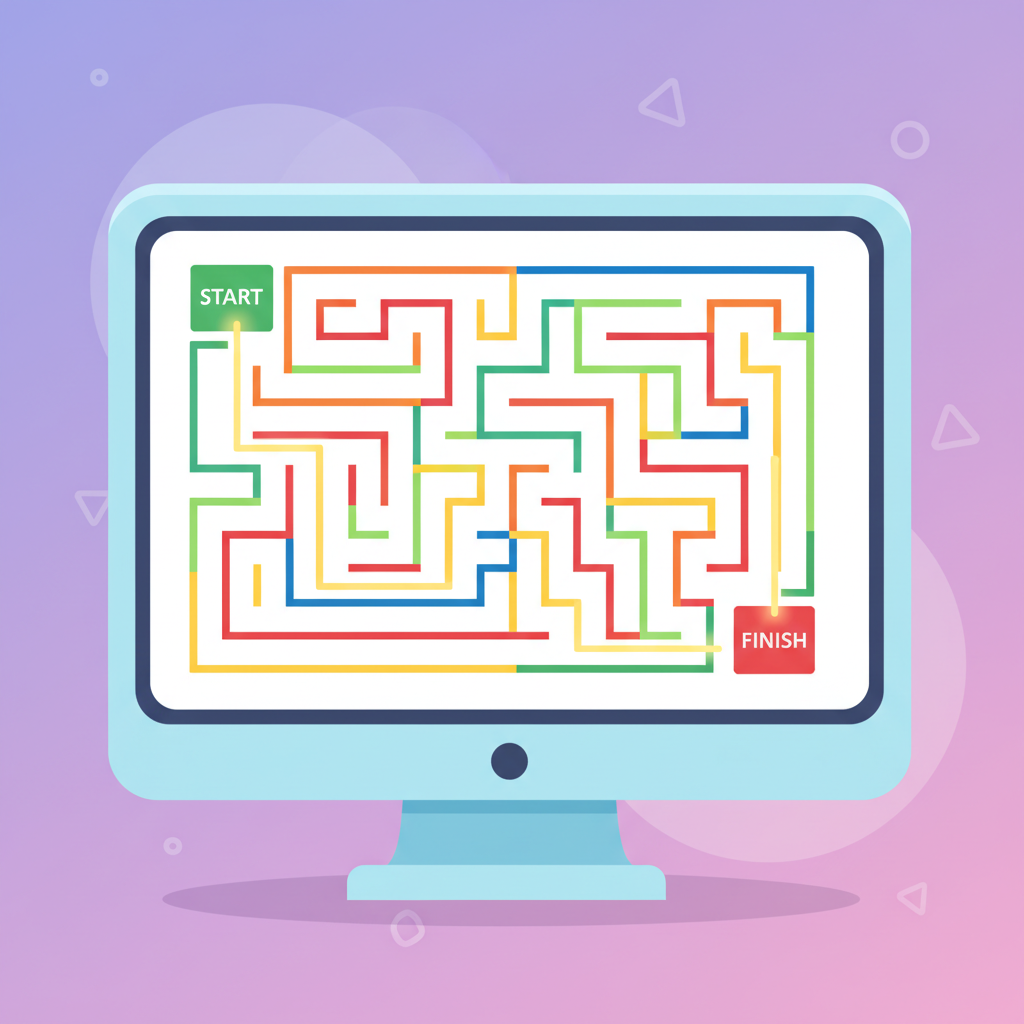
Here’s another picture to help us imagine a computer working on a puzzle.
So, computers are not just for playing games or watching videos. They are also super helpers that can use their fast brains to follow rules and try many ideas very quickly to solve all sorts of puzzles! Isn't that cool?
Keep learning, free
Create a free Syllabax account to unlock practice questions and games for this topic.
Visual Learning Enhanced! 🚀
To help you master this topic, we use Advanced Syllabax AI to generate detailed diagrams and visual models.
Note on Visuals: The AI sometimes makes spelling errors in image labels. Please refer to the lesson text for the correct terminology.