Learning Journey
Watch this topic in 60 seconds
Free preview · Lesson 1
Understanding Sense organs (Human Body)
Hello, Super Sense Detectives!
Imagine living in a world where you couldn't see the bright colors of a rainbow, hear your favorite song, smell delicious cookies baking, taste a yummy ice cream, or feel the warm sunshine. Sounds a bit dull, right?
Luckily, our amazing bodies have special tools called sense organs! Think of them as the superheroes of your body, each with a unique power that helps you explore and understand the world around you. They collect information from outside and send it to your brain, which is like the super-smart command center of your body.
There are five main sense organs, and each one helps us with one of our five senses:
- Eyes for Sight (seeing)
- Ears for Hearing (listening)
- Nose for Smell (sniffing)
- Tongue for Taste (yumming)
- Skin for Touch (feeling)
1. Our Wondrous Eyes: The Windows to the World! (Sense of Sight)
Our eyes are like two incredible cameras that help us see everything! They let us see colors, shapes, how far away things are, and whether it's light or dark. Just like a camera takes pictures, our eyes take in light and send information to our brain so we can "see" the world.
Have you ever looked at a camera lens? Your eye has parts that work similarly:
- Pupil: This is the dark circle in the center of your eye. It's like the little opening on a camera that lets light in. When it's dark, your pupil gets bigger to let in more light, just like a camera needs more light in a dim room!
- Iris: This is the colorful part around your pupil (like blue, brown, or green). It's like the adjustable opening of a camera that controls how much light goes through the pupil.
- Lens: Behind your pupil and iris is a part called the lens. It's like the lens of a camera, which focuses the light to create a clear image at the back of your eye.
The light goes through these parts, hits the back of your eye, and then tiny messages are sent to your brain. Your brain then pieces all this information together to show you what you're seeing! Isn't that amazing?
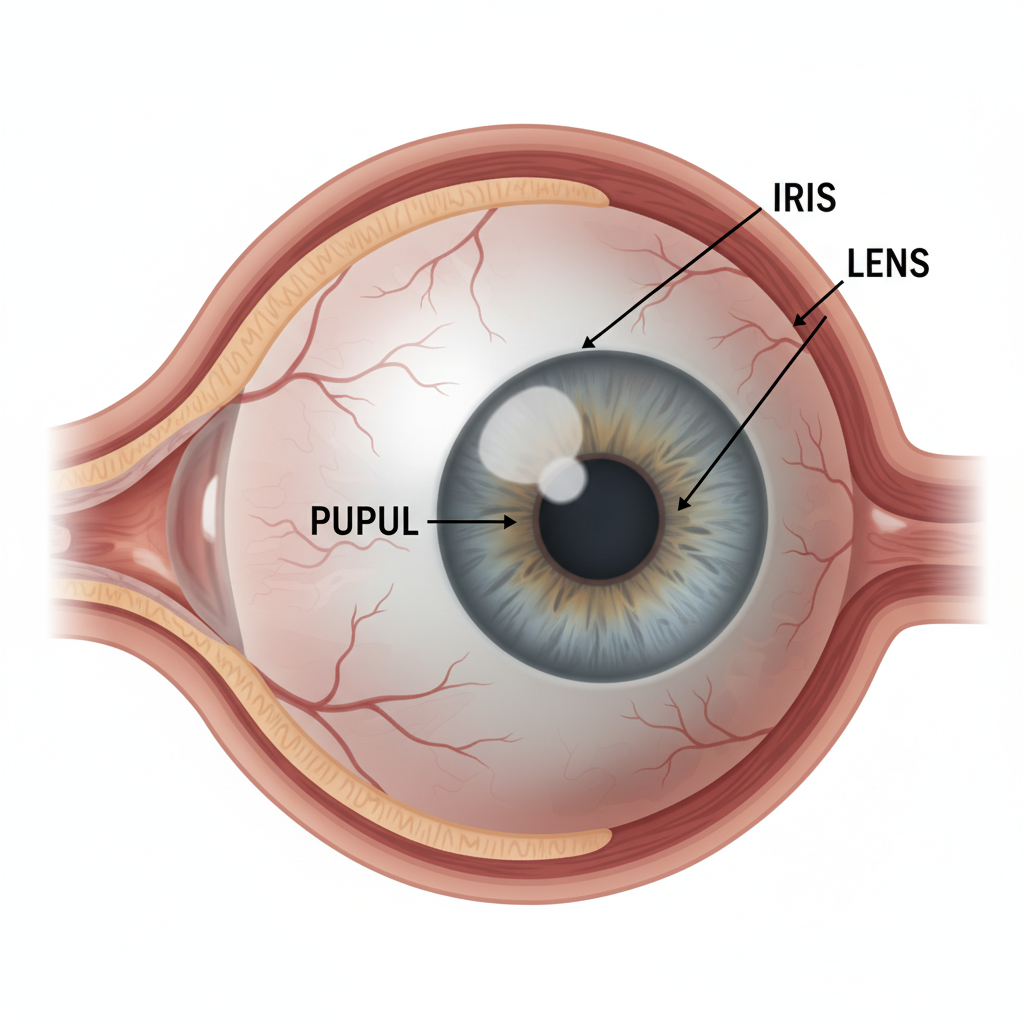 ⚠️ This picture may have spelling mistakes. Trust the words in the lesson.
2. Our Amazing Ears: Sound Detectors! (Sense of Hearing)
Our ears are like super-sensitive microphones that pick up all the sounds around us! They let us hear music, people talking, birds singing, and even the rustle of leaves. Imagine trying to talk to your friends without hearing their voices – that would be tough!
How do they work? When something makes a sound, it creates tiny waves in the air, just like ripples in water when you drop a stone. These sound waves travel into your ear. Your outer ear (the part you can see!) acts like a fun little funnel, catching these waves and guiding them deeper inside.
Inside your ear, there's a thin, delicate part called the eardrum. When sound waves hit the eardrum, it vibrates, just like the top of a drum when you tap it! These vibrations then get sent deeper into your ear where tiny bones and fluid help turn them into messages for your brain. Your brain then understands these messages as the different sounds you hear.
So, next time you hear your favorite song, thank your amazing ears and brain for working together!
3. Our Clever Nose: The Smell Detective! (Sense of Smell)
Our nose is like a super-smart detective that helps us identify thousands of different smells! It lets us smell delicious food, blooming flowers, or even detect if something is burning or gone bad.
Have you ever noticed tiny particles floating in a sunbeam? Well, some of these tiny, invisible particles carry smells! When you breathe in, these smell particles float up into the special "smell zone" inside your nose. Here, there are millions of tiny smell sensors (like little mini-detectives) that recognize different smell particles.
Once a smell is detected, these sensors send a secret message to your brain. Your brain then quickly identifies the smell. "Ah, that's popcorn!" or "Hmm, something is rotten here!" Sometimes, your nose even works with your tongue to make food taste even better!
4. Our Tasteful Tongue: The Flavor Explorer! (Sense of Taste)
Our tongue is like a fantastic flavor explorer that helps us taste all sorts of yummy (and sometimes yucky!) things. It helps us enjoy the sweetness of candy, the sourness of a lemon, the saltiness of chips, or the bitterness of certain vegetables.
Look in the mirror and stick out your tongue. Do you see those tiny bumps? Those bumps are where our amazing taste buds live! Think of taste buds as tiny little explorers, each one specially trained to detect certain flavors.
When you eat food, chemicals from the food mix with your saliva (spit) and touch your taste buds. The taste buds then send messages to your brain. Your brain quickly figures out if you're tasting something sweet, sour, salty, bitter, or a special savory taste called "umami." This is why different foods taste so different!
5. Our Sensitive Skin: The Body's Protective Blanket! (Sense of Touch)
Our skin is the largest organ in our body, and it's like a giant protective blanket covering us from head to toe! But it's not just for covering; it's also our incredible sense organ for touch.
Imagine your skin as a huge sensor pad, covered with millions of tiny sensors. These sensors can detect all sorts of things:
- Pressure: Like when you push a button or feel a hug.
- Pain: Like when you accidentally bump your knee (ouch!). This is super important because it tells your body to be careful and stay safe!
- Temperature: Like feeling if something is hot or cold.
- Texture: Like feeling if something is smooth, rough, soft, or spiky.
When these sensors in your skin detect something, they immediately send a message to your brain. Your brain then tells you what you're feeling. This is how you know if the bathwater is too hot, if your sweater is soft, or if a mosquito just landed on your arm!
All Our Senses Working Together!
Our five sense organs are truly amazing, and they often work together! For example, when you eat an apple, your eyes see its red color, your nose smells its fresh scent, your tongue tastes its sweetness, and your skin (in your mouth) feels its crisp texture. All this information helps your brain understand that you're enjoying a delicious apple!
So, next time you look, listen, smell, taste, or touch, take a moment to appreciate these incredible superheroes that make our world so rich and exciting!
Keep learning, free
Create a free Syllabax account to unlock practice questions and games for this topic.
Visual Learning Enhanced! 🚀
To help you master this topic, we use Advanced Syllabax AI to generate detailed diagrams and visual models.
Note on Visuals: The AI sometimes makes spelling errors in image labels. Please refer to the lesson text for the correct terminology.