Learning Journey
Watch this topic in 60 seconds
Free preview · Lesson 1
Understanding Transparent, translucent, opaque objects (PHYSICS)
Understanding Light: Transparent, Translucent, and Opaque Objects
Have you ever wondered why you can see right through a window, but not through a brick wall? Or why your bathroom window is often blurry, letting light in but hiding what's outside? It all has to do with how different objects interact with light!
Light is a form of energy that helps us see the world around us. When light from the sun, a lamp, or any other source hits an object, one of three main things usually happens: the light can pass straight through, it can pass through but get scattered, or it can be completely blocked. Let's explore these three amazing ways objects handle light!
1. Transparent Objects: Our See-Through Wonders!
Imagine looking through a sparkling clean windowpane. You can see everything outside clearly, as if nothing is even there! That's because the window glass is transparent.
Definition: Transparent objects are materials that allow almost all light to pass straight through them without scattering it much. This means you can see clearly through a transparent object to whatever is on the other side.
Analogies to Help You Understand:
- The Clear Highway: Think of light as tiny, super-fast race cars. When these race cars hit a transparent object, it's like a wide-open, perfectly smooth highway. The cars zoom straight through without hitting any bumps, without changing direction, and without slowing down much. They keep going on their original path!
- Eyeglasses: If you wear eyeglasses, the lenses are transparent. They let light pass through perfectly so you can see things clearly and sharply.
- Clean Water: When you look into a very clean, still swimming pool or a clear glass of water, you can see the bottom or objects inside. That's because the water is transparent.
- The Air We Breathe: The air all around us is also transparent! If it weren't, we wouldn't be able to see anything at all.
How it works simply: The particles inside transparent materials are arranged in a very regular way, and there's nothing much to stop or divert the light rays as they travel through. Light just keeps going in a straight line.
Common Examples: Clear glass windows, eyeglasses, clear plastic wrap, clean drinking water, the air around us, some clear plastic bottles.
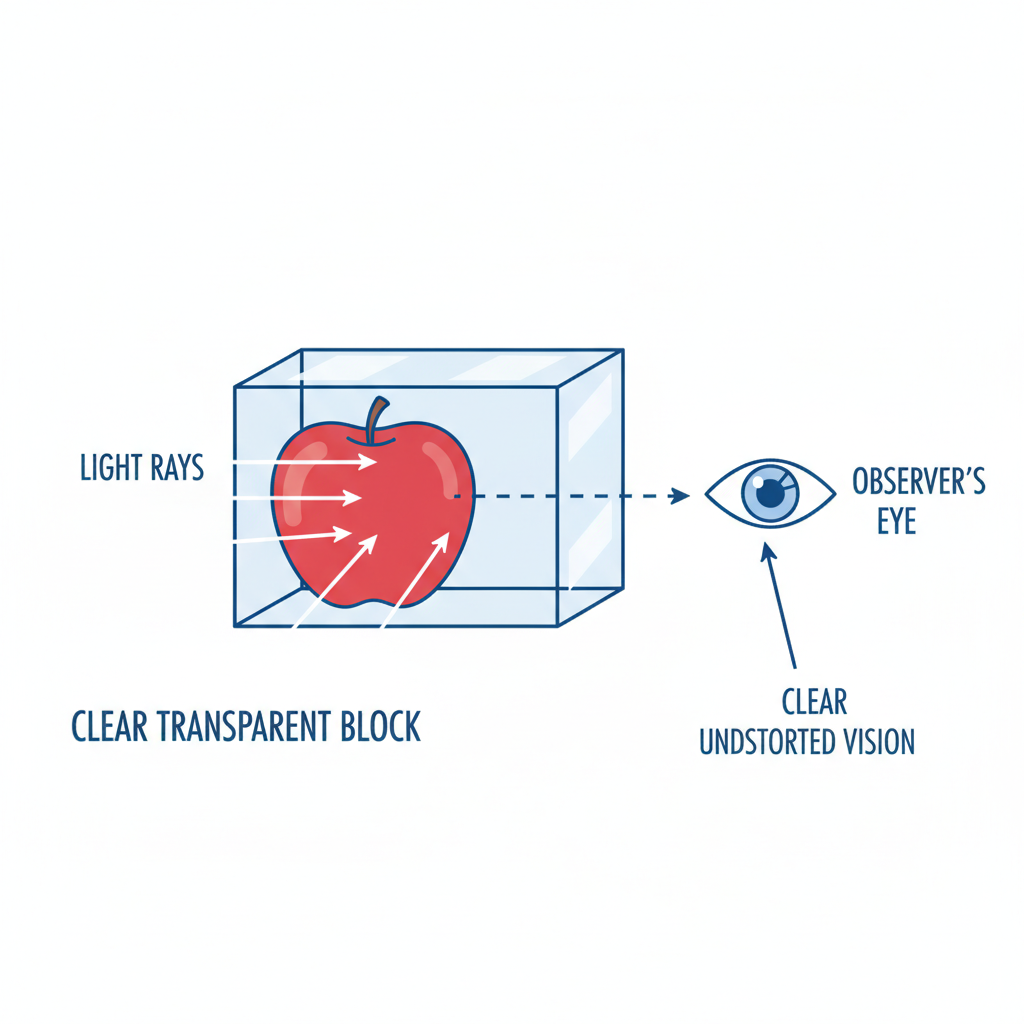 ⚠️ This picture may have spelling mistakes. Trust the words in the lesson.
2. Translucent Objects: The Blurry Vision Makers!
Now, think about a frosted bathroom window or a shower door. You know there's a person on the other side, and you can maybe see their outline or shape, but you can't see their face clearly, can you? Everything looks blurry or hazy. That's because the glass is translucent.
Definition: Translucent objects are materials that allow some light to pass through them, but they scatter the light as it goes. This means you can see light coming through, but you can't see clear images or sharp details of what's on the other side – everything looks blurry or diffused.
Analogies to Help You Understand:
- The Bumpy Road: Using our light race car analogy, when light race cars hit a translucent object, it's like a bumpy, winding road or a maze filled with tiny obstacles. Some cars make it through, but they bounce around a lot and come out in all different directions. Because the light is scattered, the 'picture' gets scrambled, and you only see a blurry mess.
- Tracing Paper: Have you ever used tracing paper? You can place it over a drawing and see the lines underneath, but they aren't perfectly sharp. The paper makes the light scatter, so the image is fuzzy.
- Thin Curtains: A thin, sheer curtain lets some sunlight into a room, but it also makes the view outside seem soft, hazy, and unclear.
- Clouds: When you look at the sun through a thin cloud, the light is still bright, but you can't see the sun's sharp outline. The cloud is translucent, scattering the sunlight.
How it works simply: The particles inside translucent materials are not as regularly arranged as in transparent objects, or the surface might be rough. When light rays hit these particles or rough surfaces, they bounce off in many different directions, getting scattered before they pass through.
Common Examples: Frosted glass, waxed paper, thin tissue paper, some plastics (like milk jugs), lamp shades, thin clouds, milky water.
3. Opaque Objects: The Ultimate Light Blockers!
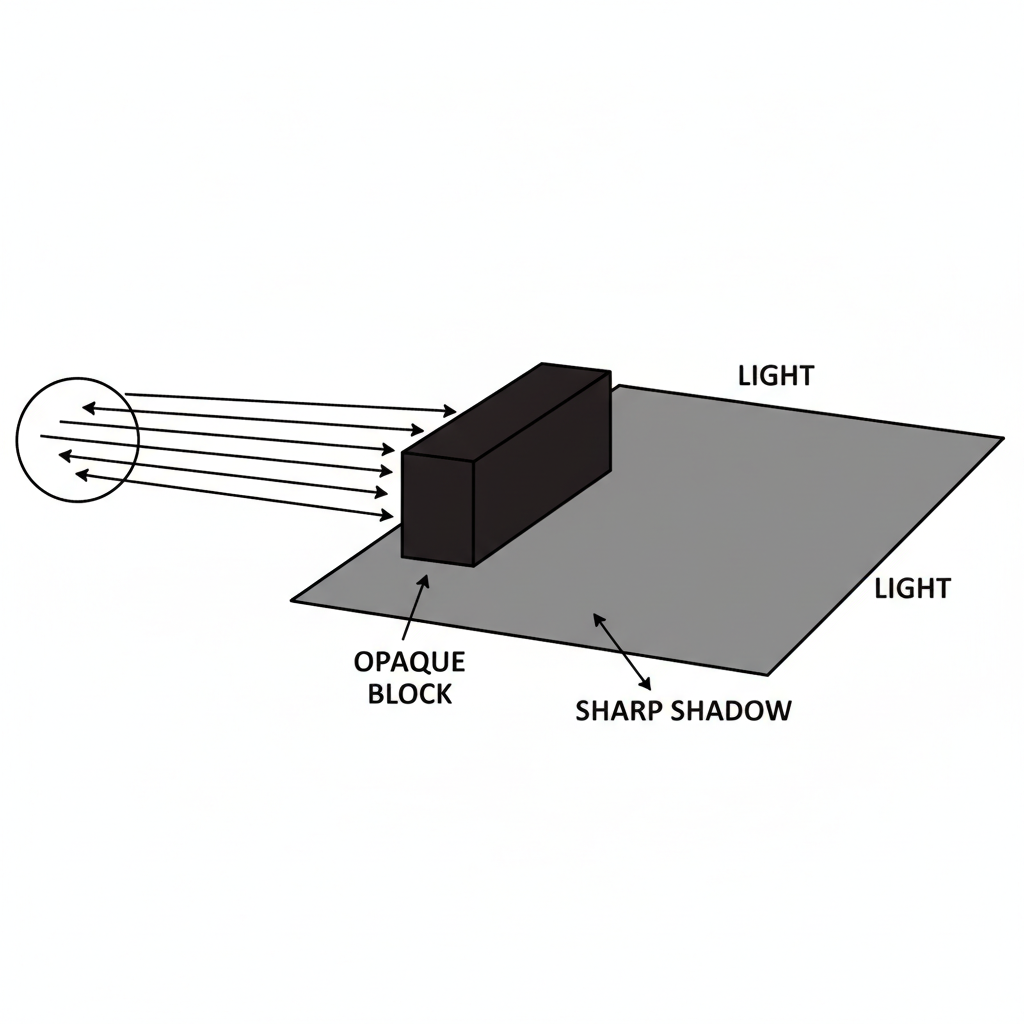
Finally, let's think about a solid brick wall or a wooden door. Can you see through them? Absolutely not! When light hits these objects, it doesn't pass through at all. These are opaque objects.
Definition: Opaque objects are materials that do not allow any light to pass through them. When light hits an opaque object, it's either absorbed (taken in) by the object, making the object warmer, or reflected (bounces off) by it, which is how we see the object itself.
Analogies to Help You Understand:
- The Solid Wall: For our light race cars, an opaque object is like a giant, solid brick wall that blocks the entire road. The race cars hit it and either bounce right off (reflection, like a mirror) or get stuck and absorbed into the wall. No cars make it to the other side.
- Your Hand: Hold your hand up to a bright light. Can you see through your palm? No, because your hand is opaque. It blocks the light.
- A Book: If you put a thick book in front of a lamp, the light doesn't go through the book. The book blocks the light, creating a shadow behind it.
Shadows: Opaque objects are famous for making shadows! Because they completely block the path of light, they create a dark area behind them where the light cannot reach.
How it works simply: The particles inside opaque materials are so tightly packed or are of a type that readily absorbs light energy, preventing light from passing through. The light energy is either converted into heat or bounced away.
Common Examples: Wood, metal, brick, stone, thick paper or cardboard, your body, a desk, a mountain, a ceramic mug.
Comparing Them All!
Let's put them all together with a simple summary:
- Transparent: Lets light pass straight through (you get a clear view, like a clean window).
- Translucent: Lets some light pass through, but scatters it (you get a blurry or hazy view, like frosted glass).
- Opaque: Blocks all light (you get no view, and a shadow, like a brick wall).
Think of it like different kinds of windows: a clear window (transparent), a frosted window (translucent), and a window that has a solid board nailed over it (opaque). Each one interacts with light in a different and useful way!
Why is This Important?
Understanding transparent, translucent, and opaque materials helps scientists, engineers, and designers create many things we use every day:
- Windows are transparent so we can see outside.
- Lampshades are often translucent to soften the light and spread it around a room without being too harsh.
- Walls and doors are opaque to give us privacy and keep out light when we want a room to be dark.
- Sunglasses have translucent or slightly opaque lenses to reduce glare but still allow us to see.
So, the next time you look through a window, at a lampshade, or at a shadow on the ground, you'll know exactly why objects behave the way they do with light! Isn't physics amazing?
Keep learning, free
Create a free Syllabax account to unlock practice questions and games for this topic.
Visual Learning Enhanced! 🚀
To help you master this topic, we use Advanced Syllabax AI to generate detailed diagrams and visual models.
Note on Visuals: The AI sometimes makes spelling errors in image labels. Please refer to the lesson text for the correct terminology.