Computer Ethics & Privacy
Watch this topic in 60 seconds
Free preview · Lesson 1
Understanding Computer Ethics & Privacy
Understanding Computer Ethics & Privacy: Your Digital Rules of the Road
Welcome to the digital world! Just like in the real world, where we have rules for how to behave, treat others, and keep ourselves safe, the internet also has its own set of guidelines. These guidelines are called Computer Ethics and Digital Privacy. Think of them as the 'rules of the road' for navigating the internet safely and responsibly. Just as a driver needs to follow traffic laws and protect their passengers, you, as a digital citizen, need to understand these concepts to be a good and safe online user.
What are Computer Ethics? Doing the Right Thing Online
Imagine you're playing a game with your friends. There are rules, right? Like not cheating, not being a sore loser, and playing fair. Computer Ethics are essentially these same kinds of rules, but for when you're using computers and the internet. It's all about making good, honest, and respectful choices in the digital world. It's about understanding the difference between right and wrong when you're online.
Analogy: Think of computer ethics like the rules of a classroom or a sports team. You wouldn't cheat on a test, nor would you intentionally try to make a teammate look bad. Similarly, online, you wouldn't steal someone's work, nor would you use the internet to hurt someone's feelings. It’s about being a good digital citizen – someone who uses technology respectfully and responsibly.
Key Ethical Principles to Remember:
- Respect for Others: Treat everyone online with kindness and respect, just as you would in person. This means no cyberbullying, no spreading rumors, and no harassing others.
- Honesty: Don't pretend to be someone you're not, and don't take credit for other people's work (this is called plagiarism). If you use information from a website for a school project, always give credit to the source!
- Responsibility: Be accountable for your actions online. If you post something, you are responsible for it. Think before you click 'post' or 'send'!
- Fairness: Don't try to gain an unfair advantage or exploit others online. This includes things like illegal downloading or trying to hack into someone's account.
Example Scenarios:
- Cyberbullying: Sending mean messages or posting embarrassing photos of someone online. This is unethical because it harms others.
- Plagiarism: Copying and pasting an entire article from Wikipedia into your report without citing it. This is unethical because you're pretending someone else's work is your own.
- Hacking: Trying to guess a friend's password to log into their social media account without their permission. This is unethical because it invades their privacy and is dishonest.
What is Digital Privacy? Keeping Your Secrets Safe
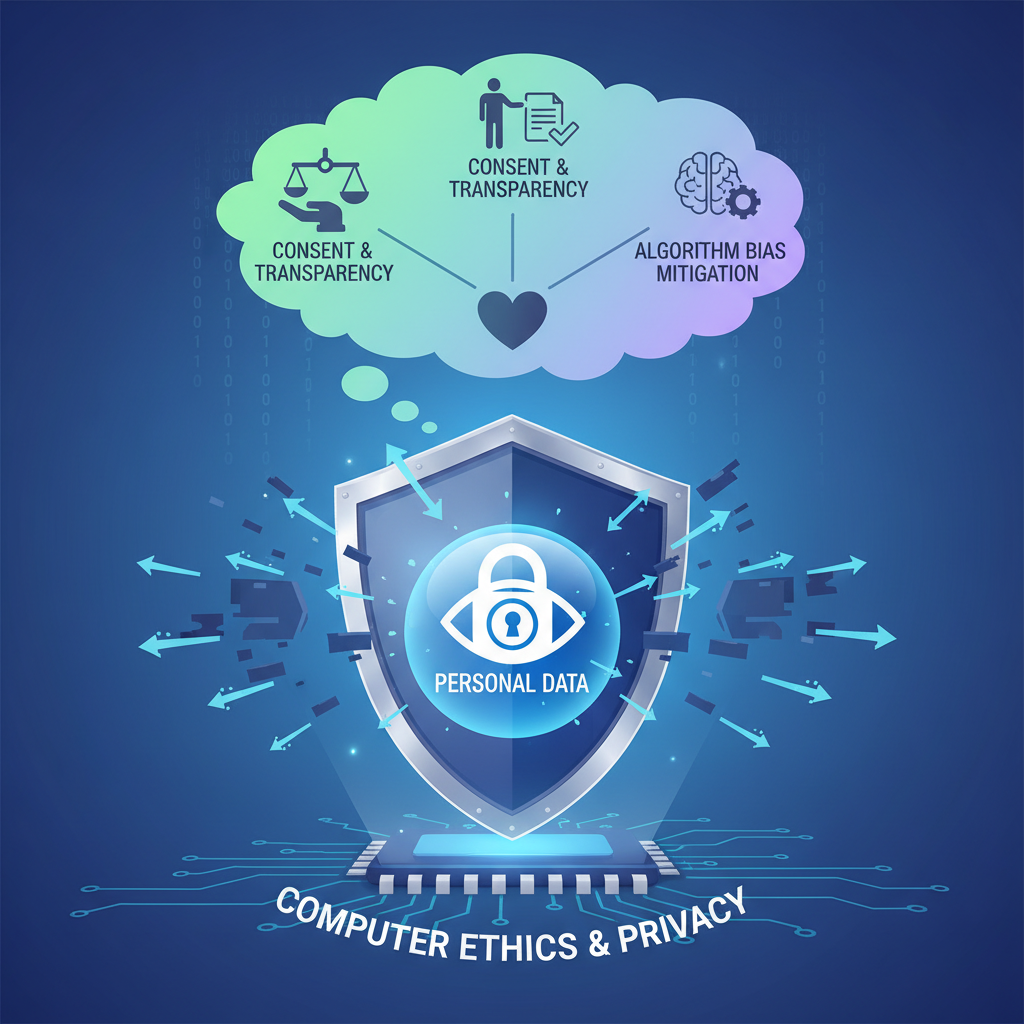
Now let's talk about Digital Privacy. This is about controlling what information about you is shared online and who gets to see it. Just like you have a right to your own private thoughts and a locked diary, you also have a right to control your personal information online. It's like having a digital lock on your personal space on the internet.
Analogy: Imagine your home. You wouldn't leave your front door wide open for anyone to walk in, nor would you leave your most personal belongings out for strangers to see. Digital privacy is like putting locks on your doors and curtains on your windows in your online life. It's about deciding who gets to come in and what they get to see.
What is 'Personal Information'?
This is any information that can be used to identify you. It includes things like:
- Your full name
- Your home address
- Your phone number
- Your email address
- Photos of you
- Your birthdate
- Your school name
- Even sometimes your interests and hobbies, if they can be linked directly back to you!
Why is Digital Privacy Important?
Protecting your privacy online is super important for several reasons:
- Safety: It helps protect you from online predators, identity theft, and scams.
- Security: It keeps your personal accounts secure from hackers.
- Control: It gives you control over your own story and reputation online. Once something is online, it can be very hard to remove!
How to Protect Your Digital Privacy: Be Your Own Online Bodyguard
You have the power to protect your privacy! Here are some key ways:
- Think Before You Share: Every time you post a photo, write a comment, or share a link, ask yourself: "Do I really want everyone to see this? Will I be okay with this being online forever?" Once you share something, it’s like releasing a balloon into the sky – you can’t easily get it back.
- Strong Passwords: Use unique, complex passwords for different accounts. Don't use your birthday or simple words. Think of your password as the key to your digital locker – you want it to be super difficult for anyone else to guess! Mix letters (uppercase and lowercase), numbers, and symbols.
- Privacy Settings: Most social media sites and apps have privacy settings. Use them! These settings allow you to control who sees your posts, photos, and personal information. Set your profiles to 'private' so only people you approve can see your content. This is like putting a fence around your yard.
- Be Wary of Strangers: Just as you wouldn't share personal details with a stranger in the street, don't share them with strangers online. Be suspicious of requests for personal information, especially if they sound urgent or too good to be true. This is often called 'phishing' – where someone tries to 'fish' for your information by pretending to be someone else.
- Understand Apps and Websites: Before you download an app or sign up for a website, read their privacy policy (or at least the summary). Understand what information they are collecting from you and how they plan to use it. Many apps collect location data or access your photos; be aware if you're comfortable with that.
Conclusion: Be a Smart and Safe Digital Citizen!
Computer ethics and digital privacy go hand-in-hand. Being ethical means respecting others' privacy, and protecting your own privacy is a smart ethical choice. By understanding these foundational concepts, you are taking an important step towards becoming a responsible, safe, and smart digital citizen. Remember, the internet is a powerful tool, and with great power comes great responsibility!
Always think before you click, share, or post. Your online actions have real-world consequences, and your privacy is a valuable asset worth protecting. Keep these 'rules of the road' in mind, and enjoy your digital journey safely!
Keep learning, free
Create a free Syllabax account to unlock practice questions and games for this topic.
Visual Learning Enhanced! 🚀
To help you master this topic, we use Advanced Syllabax AI to generate detailed diagrams and visual models.
Note on Visuals: The AI sometimes makes spelling errors in image labels. Please refer to the lesson text for the correct terminology.