Basic financial literacy (NEP 2020 initiative) [Arithmetic in Daily Life]
Watch this topic in 60 seconds
Free preview · Lesson 1
Understanding Basic financial literacy (NEP 2020 initiative) [Arithmetic in Daily Life]
**Money Matters: Your First Steps in Financial Literacy (Grade 6)**
Welcome, young learners! Today, we're embarking on an exciting journey into the world of money. Understanding money is like learning a new superpower – it helps you make smart choices and reach your goals. Think of it like this: just as you learn to read and write to understand stories and express yourself, you learn about money to understand how things work around you and to get the things you need and want!
**What is Money? More Than Just Coins and Notes!**
You see coins in your pocket and notes in your parents' wallets. But what is money really? It's a tool! It's something we all agree has value, and we use it to buy and sell things. Imagine you have a super cool toy, and your friend has a delicious snack. If you want the snack and your friend wants the toy, you could trade them directly. This is called barter. But what if your friend doesn't want your toy, or you don't want their snack? It gets complicated!
Money solves this problem. It acts as a medium of exchange. It's like a universal translator for value. You give money for the snack, and the person selling the snack can then use that money to buy something they need. It makes trading fair and easy for everyone.
Think of money as different types of building blocks. Some blocks are small (like coins), and some are bigger (like notes). Each block has a specific value. We use these blocks to 'build' what we need – from a pencil for school to a treat after a good day.
**Income: Where Does Money Come From?**
Everyone needs money to get things. But where does it come from? The money we receive is called income. For your parents, income often comes from their jobs – the work they do every day. For example, a teacher gets income for teaching, a doctor for helping people, and a shopkeeper for selling goods.
Even young people can earn a small income. Perhaps you help a neighbour with their garden, or you sell drawings you've made. That small amount you receive is your income!
Think of income like rain. Sometimes it's a gentle drizzle, and sometimes it's a downpour. The amount of income we get can change.
**Expenses: What Do We Spend Money On?**
Once you have income, you'll want to use it to get things you need and want. These things we spend money on are called expenses. Expenses are like the things you need to fill your backpack for school: books, pens, a lunchbox. They are also the things you *want*: a new game, a fun outing with friends, or a special treat.
There are two main types of expenses:
- Needs: These are essential things you *must* have to live and stay healthy. Examples include food, water, clothes, and a safe place to live (like your home). Without these, it's difficult to survive.
- Wants: These are things that make life more enjoyable but aren't absolutely necessary. Examples include toys, video games, fancy clothes, or going to the movies.
It's like choosing what to pack for a picnic. You need sandwiches and drinks. You might want some cookies or a special dessert. Both are important, but needs come first!
**Saving: Keeping Money for Later**
Imagine you want a big, exciting toy that costs more money than you have right now. What do you do? You save! Saving means putting aside some of your income instead of spending it all. This saved money can be used later for something bigger or for unexpected needs.
Think of saving like collecting puzzle pieces. Each time you save a little bit of money, you add another piece. Eventually, you'll have enough pieces (money) to see the whole picture (your goal!).
A piggy bank is a great way to start saving. Or, your parents might have a special bank account for you. Saving is like planting a seed. You water it regularly (save small amounts), and over time, it grows into a big plant (your savings).
**Budgeting: Planning Your Money Adventure**
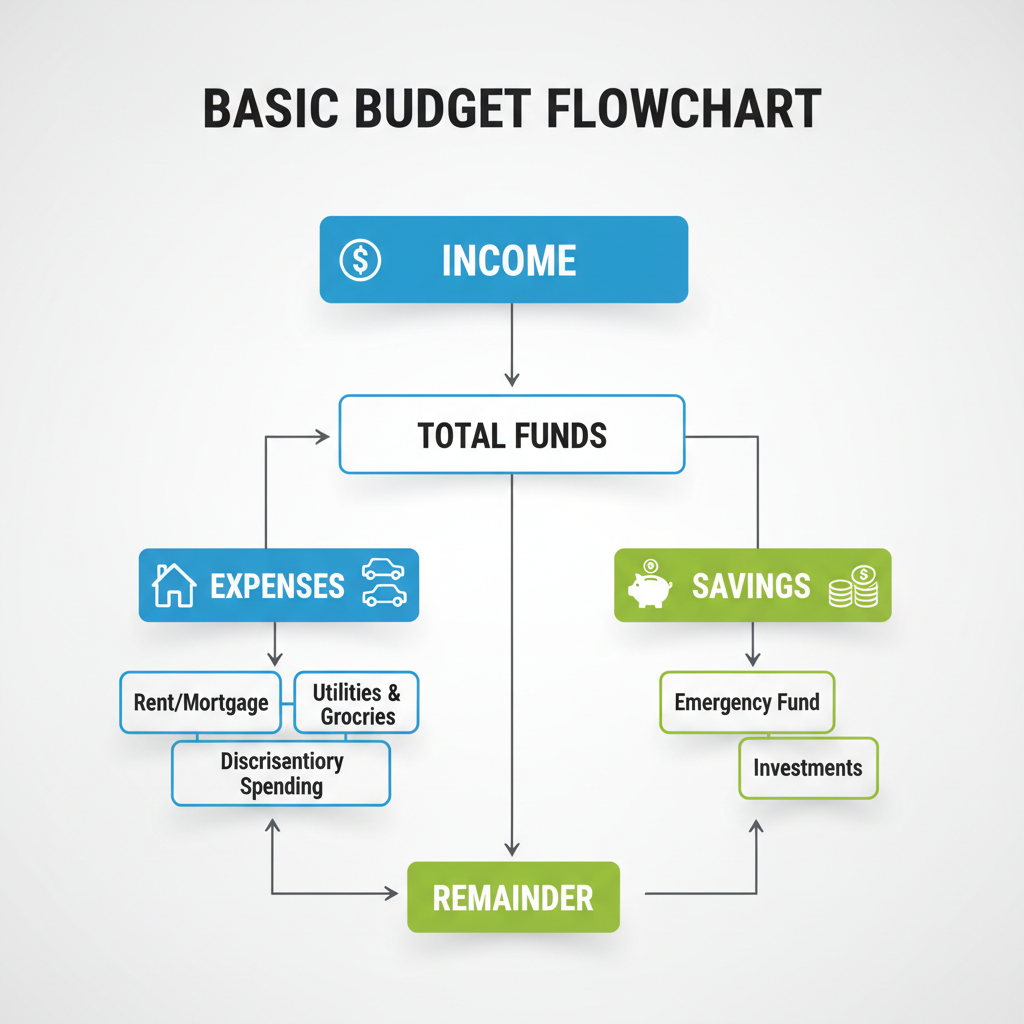
Budgeting is like drawing a treasure map for your money. It's a plan that shows how much money you expect to receive (income) and how you plan to spend it (expenses) over a certain period, like a week or a month.
Why is it important? Imagine you're going on a road trip. You wouldn't just start driving without knowing where you're going or how much fuel you need, right? Budgeting helps you:
- Track your money: Know where your money is coming from and where it's going.
- Prioritize: Decide if your wants are more important than your needs right now, or if you should save for something special.
- Avoid overspending: Prevent spending more money than you have.
A simple budget can be a list: My Money Plan for the Week:
- Income: ₹50 (pocket money)
- Expenses (Needs): ₹20 (school supplies)
- Expenses (Wants): ₹15 (ice cream)
- Savings: ₹15 (for a new book)
This plan helps you ensure you have enough for your needs, a little for fun, and still manage to save!
Here’s a visual representation of how money flows:
 ⚠️ This picture may have spelling mistakes. Trust the words in the lesson.
**Basic Arithmetic in Financial Literacy**
All these concepts – income, expenses, saving, and budgeting – rely on simple math skills you already use!
- Addition: When you add up all your income, or all your expenses. For example, if you get ₹10 pocket money one day and ₹15 the next, your total income is ₹10 + ₹15 = ₹25.
- Subtraction: When you want to know how much money is left after spending, or how much more you need to save. If you have ₹50 and spend ₹20, you have ₹50 - ₹20 = ₹30 left.
- Comparison: Deciding if you have enough money for something, or if one option is cheaper than another. Is ₹20 enough to buy a ₹15 chocolate and still have money left? Yes!
By understanding these basic financial ideas and using your math skills, you are well on your way to becoming a smart money manager!
Keep learning, free
Create a free Syllabax account to unlock practice questions and games for this topic.
Visual Learning Enhanced! 🚀
To help you master this topic, we use Advanced Syllabax AI to generate detailed diagrams and visual models.
Note on Visuals: The AI sometimes makes spelling errors in image labels. Please refer to the lesson text for the correct terminology.