Learning Journey
Watch this topic in 60 seconds
Free preview · Lesson 1
Understanding Wood, plastic, glass, fabric (CHEMISTRY)
Exploring Our Everyday Materials: Wood, Plastic, Glass, and Fabric!
Hello, young scientists! Look around you right now. What do you see? A desk? A chair? A window? Clothes? A water bottle? Everything you see and touch is made of something! In science, we call these "somethings" materials. Just like a chef uses different ingredients to make different foods, engineers and designers use different materials to make different objects.
What is Chemistry? It's All About What Things Are Made Of!
You might hear the word "chemistry" and think of crazy experiments with bubbling liquids! And yes, that's part of it! But for us, chemistry simply means understanding what things are made of and how they behave. When we talk about wood, plastic, glass, and fabric, we're doing a bit of chemistry by exploring what they are made from and what makes them special.
1. Wood: The Gift From Trees
Imagine a giant, sturdy tree in a forest. Wood comes directly from these trees! It's one of the oldest and most natural materials we use.
- What it is: Wood is made up of tiny, strong fibers from trees. Think of these fibers like tiny, hollow straws bundled together very tightly. These straws help the tree drink water and stay strong.
- Where it comes from: Directly from nature – trees!
- What makes it special (Properties):
- Strong: Great for building houses and furniture.
- Natural: It smells nice and has unique patterns called grain.
- Can burn: That's why we use it for campfires and fireplaces.
- Floats: Have you ever seen a log floating in a river?
- Absorbs water: If you spill water on a wooden table, it might soak in.
- What we use it for: Tables, chairs, floors, doors, paper, pencils, and even the frames of houses.
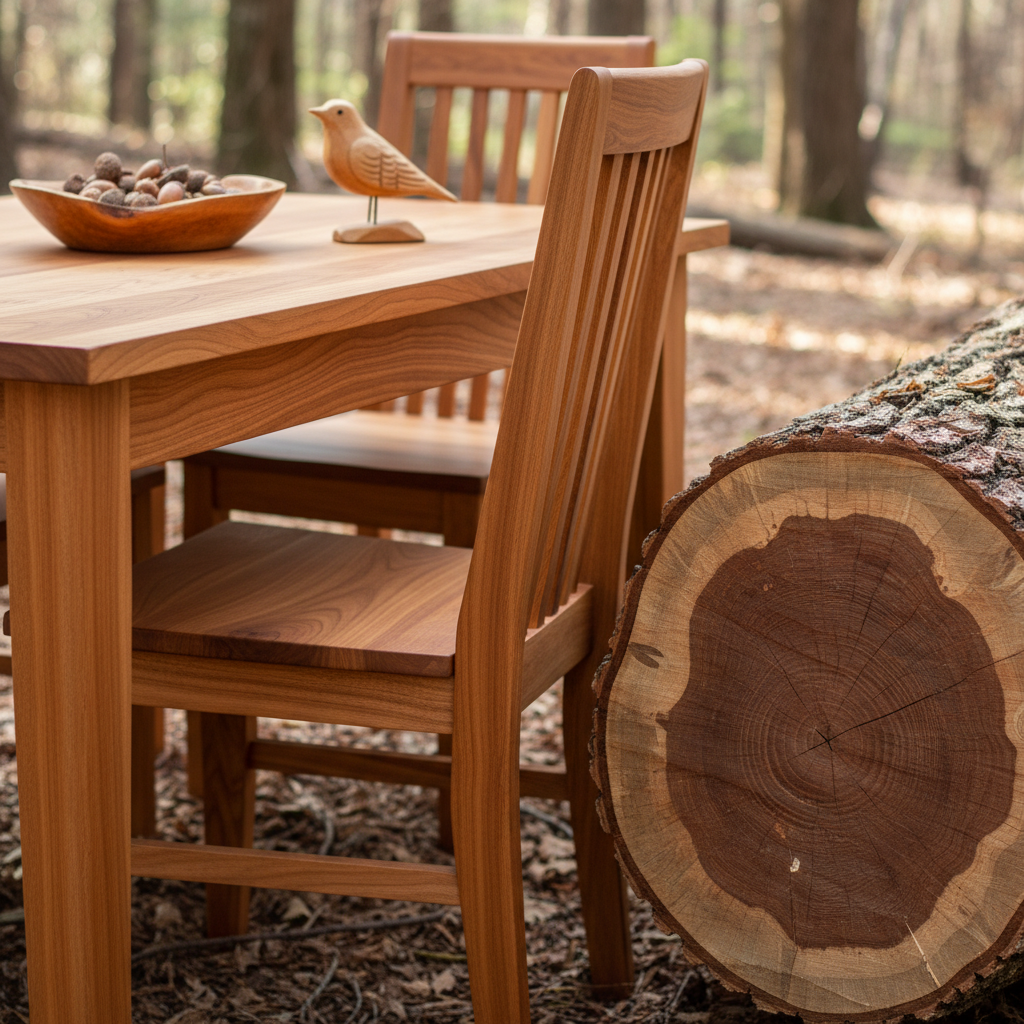 ⚠️ This picture may have spelling mistakes. Trust the words in the lesson.
2. Plastic: The Man-Made Wonder
Plastic is everywhere! Look at your water bottle, your toys, or many food containers. Plastic is very different from wood because it's mostly man-made.
- What it is: Plastic is made from special chemicals that usually come from oil and natural gas. These chemicals are like tiny building blocks that are linked together to make very long chains. Imagine linking hundreds or thousands of Lego bricks together – that's a bit like how plastic is made!
- Where it comes from: Mostly from oil and natural gas, which are dug up from deep underground. Then, factories change these into plastic.
- What makes it special (Properties):
- Lightweight: Easy to carry around.
- Waterproof: Liquids don't soak through it, perfect for bottles.
- Flexible or Hard: Some plastics bend easily (like a plastic bag), while others are very hard (like a toy brick). This is like play-doh that you can mold into any shape, and then it hardens!
- Durable: It lasts a very, very long time without rotting or rusting.
- Can be molded: Factories can heat plastic and squish it into almost any shape they want.
- What we use it for: Bottles, toys, containers, bags, parts of cars, computer cases, and even some clothes!
3. Glass: The See-Through Solid
Have you ever wondered how windows are made? Or drinking glasses? They're made of glass, a fascinating material that lets light pass right through it!
- What it is: Glass is mostly made from sand! Yes, the same kind of sand you find at the beach. But it's not just regular sand; it's special sand called silica sand. Along with some other ingredients, the sand is heated to incredibly high temperatures until it melts into a thick liquid, like super-hot syrup. When it cools down, it becomes solid and transparent.
- Where it comes from: Man-made from natural materials like sand.
- What makes it special (Properties):
- Transparent: This means you can see through it, which is super useful for windows and eyeglasses. Think of it like a frozen, clear block of water (ice)!
- Hard: It's tough to scratch.
- Brittle: This is its tricky side! If you drop glass, it usually shatters into many pieces. It's strong until it suddenly breaks.
- Waterproof: Like plastic, it doesn't let liquids pass through, making it good for bottles and jars.
- What we use it for: Windows, drinking glasses, mirrors, light bulbs, jars, and even parts of your phone screen.
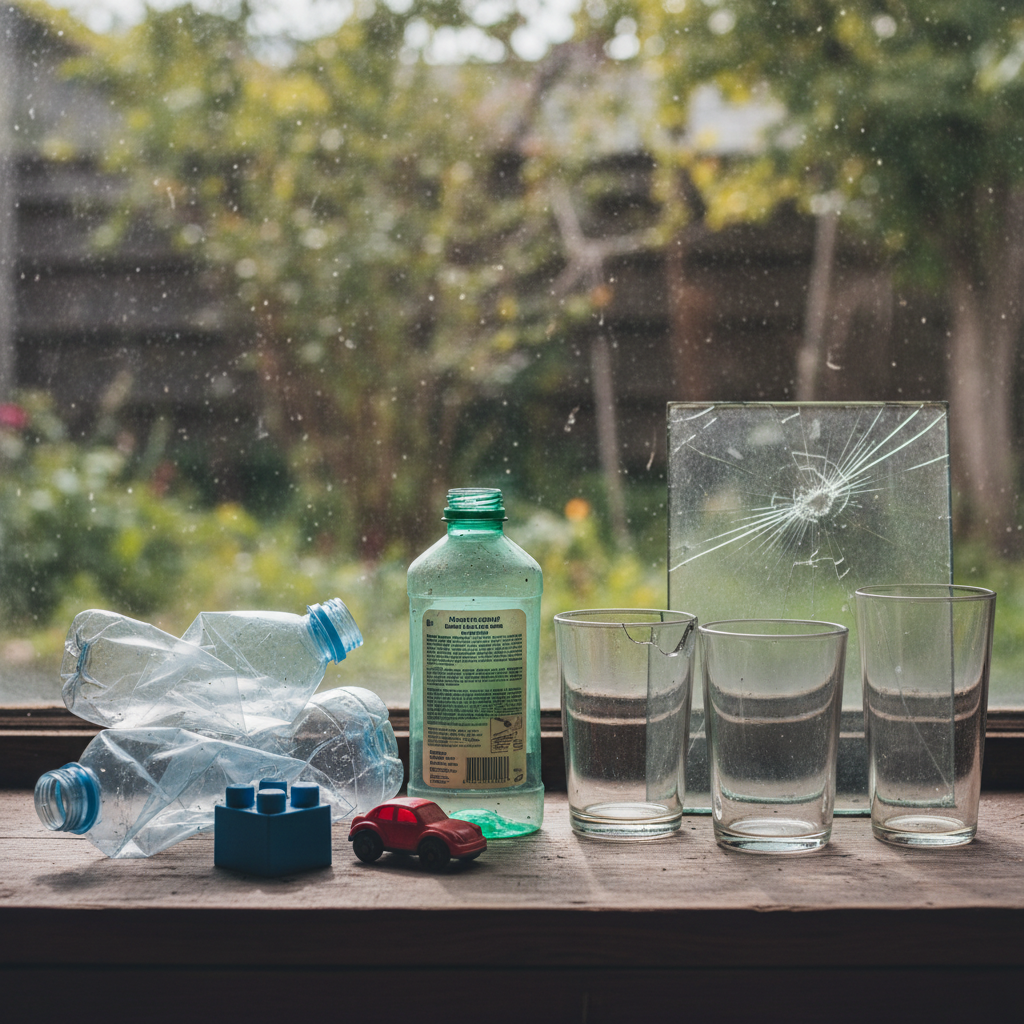
4. Fabric: The World of Textiles
What are your clothes made of? Or your blankets? Or the curtains on your window? They're all made of fabric! Fabric is what we use to create things that are soft, flexible, and comfortable.
- What it is: Fabric is made by weaving or knitting tiny strands called fibers together. Imagine taking many pieces of spaghetti and weaving them together to make a mat – that's a bit like how fabric is made from fibers!
- Where it comes from: Fabrics can come from:
- Nature: Like cotton (from a plant), wool (from sheep), or silk (from silkworms).
- Man-made: Like polyester or nylon, which are made from chemicals, similar to how plastic is made.
- What makes it special (Properties):
- Soft and Flexible: Easy to bend and comfortable against our skin.
- Can absorb water: Cotton towels are great at soaking up water.
- Different textures: Some fabrics are smooth (like silk), some are fuzzy (like wool), and some are rough.
- Warm or Cool: Wool keeps you warm, while cotton can keep you cool.
- What we use it for: Clothes, blankets, towels, curtains, carpets, and upholstery for furniture.
Why Do We Use Different Materials?
Now that we know about these four amazing materials, let's think about why we choose one over another. It all depends on the job we want the material to do!
- We use glass for windows because it's transparent, letting light in. We wouldn't use wood for a window because you couldn't see out!
- We use plastic for water bottles because it's lightweight, waterproof, and doesn't break as easily as glass if dropped.
- We use wood for tables and chairs because it's strong, sturdy, and natural.
- We use fabric for clothes because it's soft, flexible, and comfortable against our skin. Imagine wearing clothes made of glass – ouch!
Each material has its own unique "superpowers" that make it perfect for certain tasks. Understanding these superpowers is what chemistry is all about at this level!
Caring for Our Materials and Our Planet
Because some materials, like plastic, can last a very long time, it's important to think about how we use and get rid of them. Recycling plastic, glass, and paper (which comes from wood!) helps us reuse these valuable materials and protects our planet. It's like giving materials a second life!
Great job exploring the materials all around you! Now you know a bit more about the everyday chemistry of your world!
Keep learning, free
Create a free Syllabax account to unlock practice questions and games for this topic.
Visual Learning Enhanced! 🚀
To help you master this topic, we use Advanced Syllabax AI to generate detailed diagrams and visual models.
Note on Visuals: The AI sometimes makes spelling errors in image labels. Please refer to the lesson text for the correct terminology.