3D shapes: cube, cuboid, sphere, cone (Basic Shapes)
Watch this topic in 60 seconds
Free preview · Lesson 1
Understanding 3D shapes: cube, cuboid, sphere, cone (Basic Shapes)
Exploring Our 3D World: Cubes, Cuboids, Spheres, and Cones!
Welcome, young explorers, to the exciting world of 3D shapes! Everything around us, from the toys you play with to the buildings you see, is made up of shapes. Today, we're going to get to know four of the most common and fascinating 3D shapes: the cube, the cuboid, the sphere, and the cone. These shapes are all around us, and once you learn to recognize them, you'll see them everywhere!
What is a 3D Shape?
Before we dive into our specific shapes, let's quickly talk about what makes a shape 3D. Think about a flat drawing of a square on a piece of paper. That's a 2D (two-dimensional) shape. It only has length and width. A 3D shape, on the other hand, has length, width, AND height (or depth). This means 3D shapes take up space! Imagine a box – you can hold it, turn it around, and it has a top, a bottom, and sides. That's a 3D shape!
The Cube: The Perfectly Balanced Shape
Let's start with the cube. A cube is a very special shape because all its sides are exactly the same. Think of a perfectly fair die you use in board games. Each face of a die is a square, and all those squares are identical in size. A cube has:
- 6 faces: These are the flat surfaces of the cube. Each face is a square.
- 12 edges: These are the lines where two faces meet. Imagine the lines you'd draw to connect the corners of the squares.
- 8 vertices (corners): These are the points where three edges meet.
Analogy Time! Imagine a perfect sugar cube. It has six equal square sides. Or think about a Rubik's Cube – all the little squares on each side are the same size, and the whole cube is perfectly balanced. If you could take one apart, you'd find six identical square pieces.
A cube is like a perfectly symmetrical box where every single side is the same size and shape (a square!).
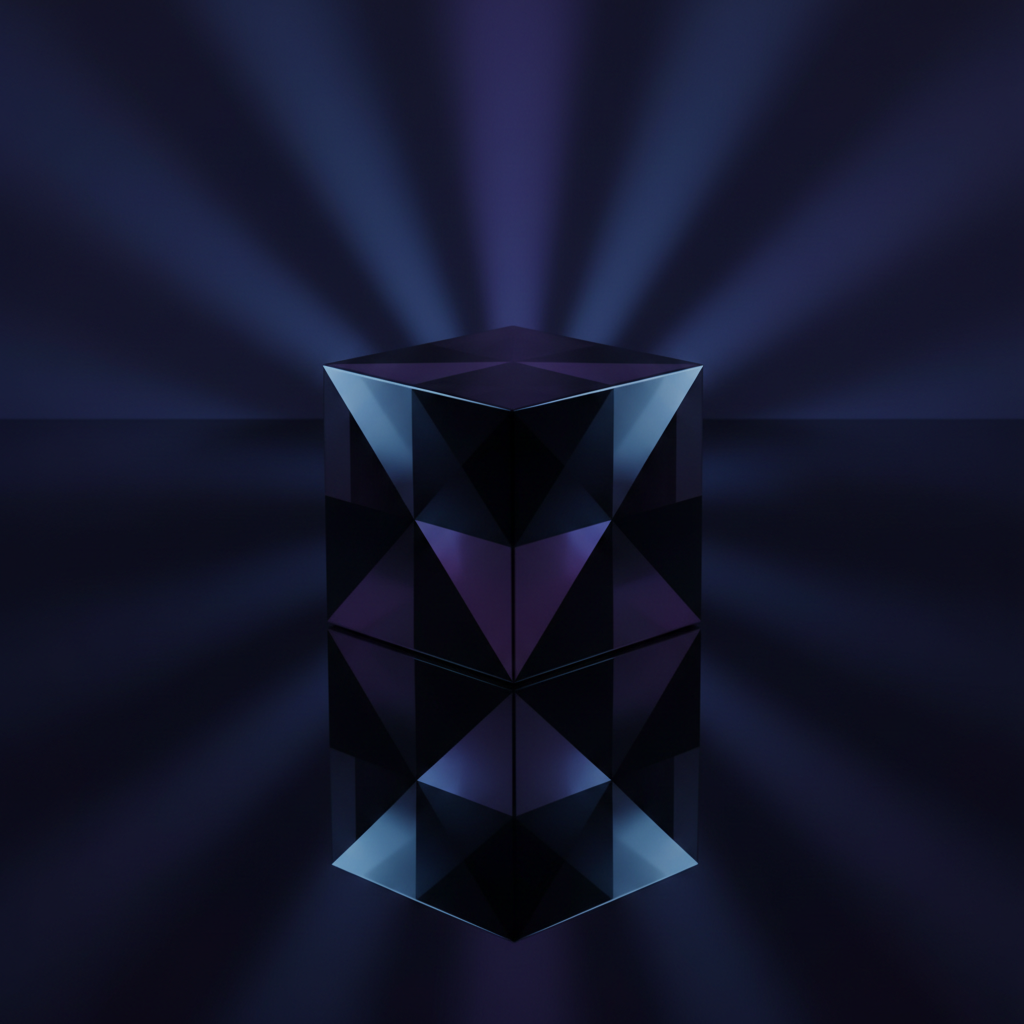 ⚠️ This picture may have spelling mistakes. Trust the words in the lesson.
The Cuboid: The Stretchy Box
Next up is the cuboid. A cuboid looks a lot like a cube, but with one important difference: its faces don't have to be the same size. Think of a brick used to build a house or a typical cereal box. A cuboid also has:
- 6 faces: These are the flat surfaces. They are always rectangles (or squares, if it happens to be a cube!).
- 12 edges: The lines where two faces meet.
- 8 vertices (corners): The points where three edges meet.
The key thing about a cuboid is that it has pairs of opposite faces that are identical rectangles. For example, the top and bottom faces might be long and skinny, while the front and back faces might be shorter and wider. But the top is the same size as the bottom, and the front is the same size as the back.
Analogy Time! Think of a shoebox. The lid and the bottom are the same size. The front and back sides are the same size. The left and right sides are the same size. But the lid might be longer than it is wide, making it a rectangle, not a square. Other examples include a book, a door, or a refrigerator.
A cuboid is like a box that can be stretched or squeezed in different directions, but it still has six rectangular (or square) sides and those familiar corners and edges.
The Sphere: The Perfectly Round Ball
Now let's talk about the sphere. The sphere is a beautiful, perfectly round shape. Think of a ball! A sphere is unique because it has no flat faces, no straight edges, and no corners. It's just one continuous, curved surface.
- 1 face: It has one single, curved surface.
- 0 edges: There are no lines where flat surfaces meet.
- 0 vertices (corners): There are no points where edges meet.
Every single point on the surface of a sphere is the same distance from the very center of the sphere. This makes it perfectly round.
Analogy Time! Imagine a bouncy ball, a globe of the Earth, or a tangerine. They are all spheres! You can roll a sphere in any direction, and it keeps going smoothly. It's like a perfectly smooth, round bubble that never ends.
A sphere is the ultimate round shape, like a perfectly smooth ball with nothing to catch on.
 ⚠️ This picture may have spelling mistakes. Trust the words in the lesson.
The Cone: The Pointy Hat
Finally, let's explore the cone. The cone is a fun shape that comes to a point! Think of an ice cream cone or a party hat. A cone has:
- 2 faces: One is a flat, circular base, and the other is the curved surface that goes up to the point.
- 1 edge: This is the circular edge where the flat base meets the curved surface.
- 1 vertex (corner): This is the pointy tip at the top.
The base of a cone is always a circle, and it gets narrower as it goes up towards a single point called the apex.
Analogy Time! Think of an upside-down traffic cone – it has a flat circular bottom and slopes up to a point. Or imagine a witch's hat – it has a flat circle for your head to go through and then tapers to a point. An ice cream cone is a perfect example, but remember, the ice cream is *on* the cone, the cone itself is the shape!
A cone is like a circle that decided to grow up and reach for the sky, ending in a sharp point!
Putting It All Together
We've learned about four amazing 3D shapes: the cube (all square faces), the cuboid (rectangular faces), the sphere (perfectly round), and the cone (circular base, pointy top). Keep your eyes open as you go through your day – you'll start to see these shapes everywhere! From your building blocks to the oranges you eat, these basic shapes are the building blocks of our world.
Keep learning, free
Create a free Syllabax account to unlock practice questions and games for this topic.
Visual Learning Enhanced! 🚀
To help you master this topic, we use Advanced Syllabax AI to generate detailed diagrams and visual models.
Note on Visuals: The AI sometimes makes spelling errors in image labels. Please refer to the lesson text for the correct terminology.