Industrial Revolution (causes & impact) – World History
Watch this topic in 60 seconds
Free preview · Lesson 1
Industrial Revolution (causes & impact) – World History (Foundational)
The Industrial Revolution: A Beginner's Guide
The Industrial Revolution was a big change in how things were made. It started in Great Britain in the late 1700s and then spread to other parts of the world. Instead of making things by hand, people started using machines in factories.
What Caused the Industrial Revolution?
Several things came together to make the Industrial Revolution possible:
- New Inventions: People invented new machines that could do work faster and better than humans or animals.
- Natural Resources: Britain had a lot of coal and iron, which are needed to power and build machines.
- More People: There were more people looking for work, which meant factories could hire workers easily.
- Money to Invest: Some people had money to invest in new factories and businesses.
Key Inventions
Some important inventions of the time were:
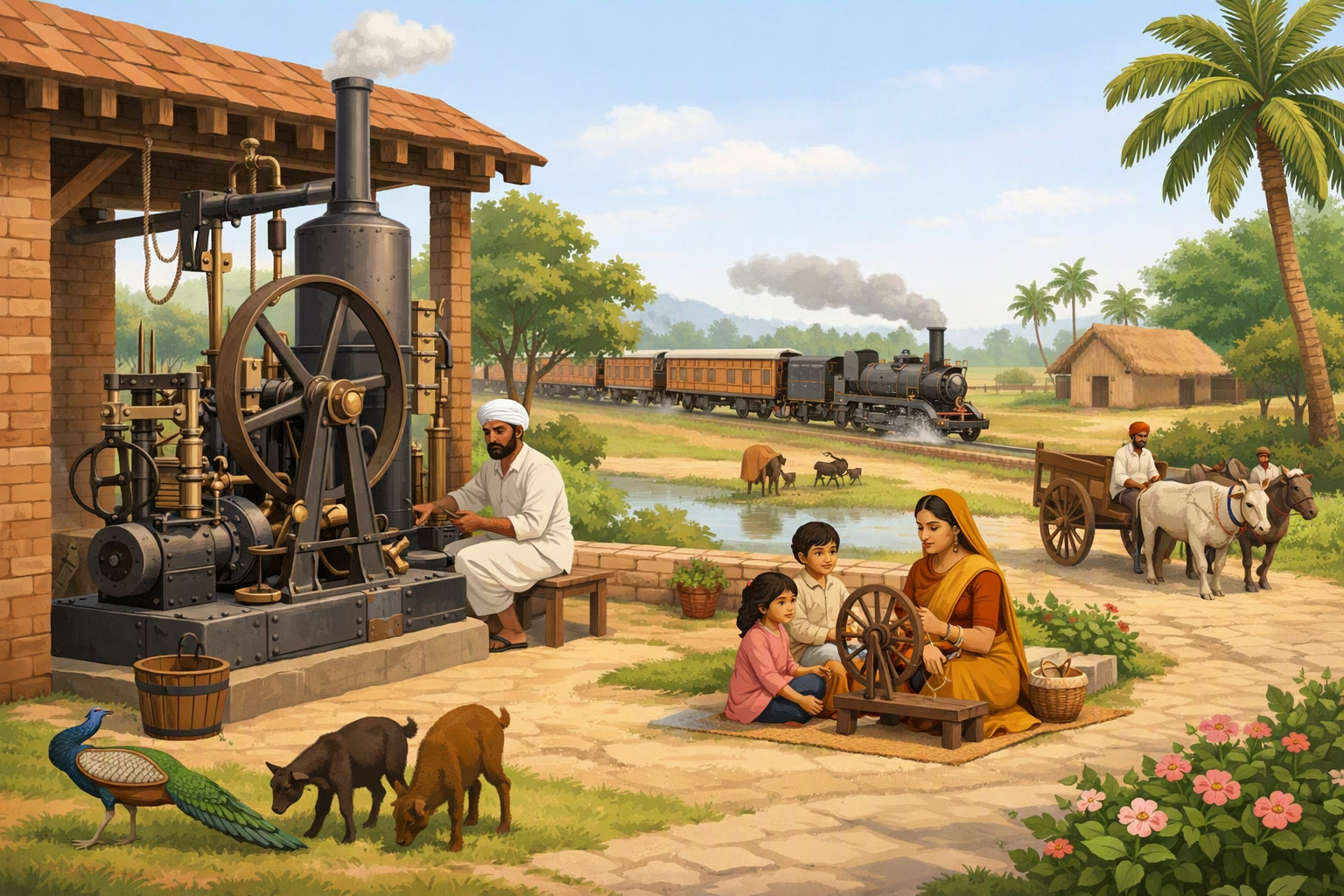
- The Spinning Jenny: A machine that could spin many threads at once, making cloth production much faster.
- The Steam Engine: A machine that used steam to power other machines, like trains and factory equipment.
Impact of the Industrial Revolution
The Industrial Revolution changed the world in many ways:
- Factory Work: People moved from farms to cities to work in factories. This led to the growth of cities.
- New Products: Factories made more products at lower prices, so more people could afford things like clothing and furniture.
- Transportation: New inventions like trains and steamboats made it easier to travel and transport goods.
- Social Changes: A new middle class of factory owners and managers emerged. However, working conditions in factories were often very poor.
Negative Impacts
While the Industrial Revolution brought many benefits, it also had some negative consequences:
- Pollution: Factories released smoke and waste into the air and water, causing pollution.
- Poor Working Conditions: Factory workers often worked long hours in dangerous conditions for low pay.
- Child Labor: Children were often employed in factories because they were small and could fit into tight spaces.
Keep learning, free
Create a free Syllabax account to unlock practice questions and games for this topic.
Visual Learning Enhanced! 🚀
To help you master this topic, we use Advanced Syllabax AI to generate detailed diagrams and visual models.
Note on Visuals: The AI sometimes makes spelling errors in image labels. Please refer to the lesson text for the correct terminology.