Recognizing coins & notes (Money)
Watch this topic in 60 seconds
Free preview · Lesson 1
Understanding Recognizing coins & notes (Money)
Learning About Money: Coins and Notes for Second Graders
Hello young learners! Today, we're going on an exciting adventure to learn all about money! Money is super important because it helps us buy the things we need and want, like yummy snacks, fun toys, and books to read. Think of money like special tokens that let you trade for other cool stuff.
What is Money?
Money is what people use to buy and sell things. In our country, we use coins and paper bills, which we call notes. Each coin and note has a different value, which means it's worth a different amount. It's like having different sizes of candy – some are small and sweet, while others are bigger and give you more yummy goodness!
Let's Meet the Coins!
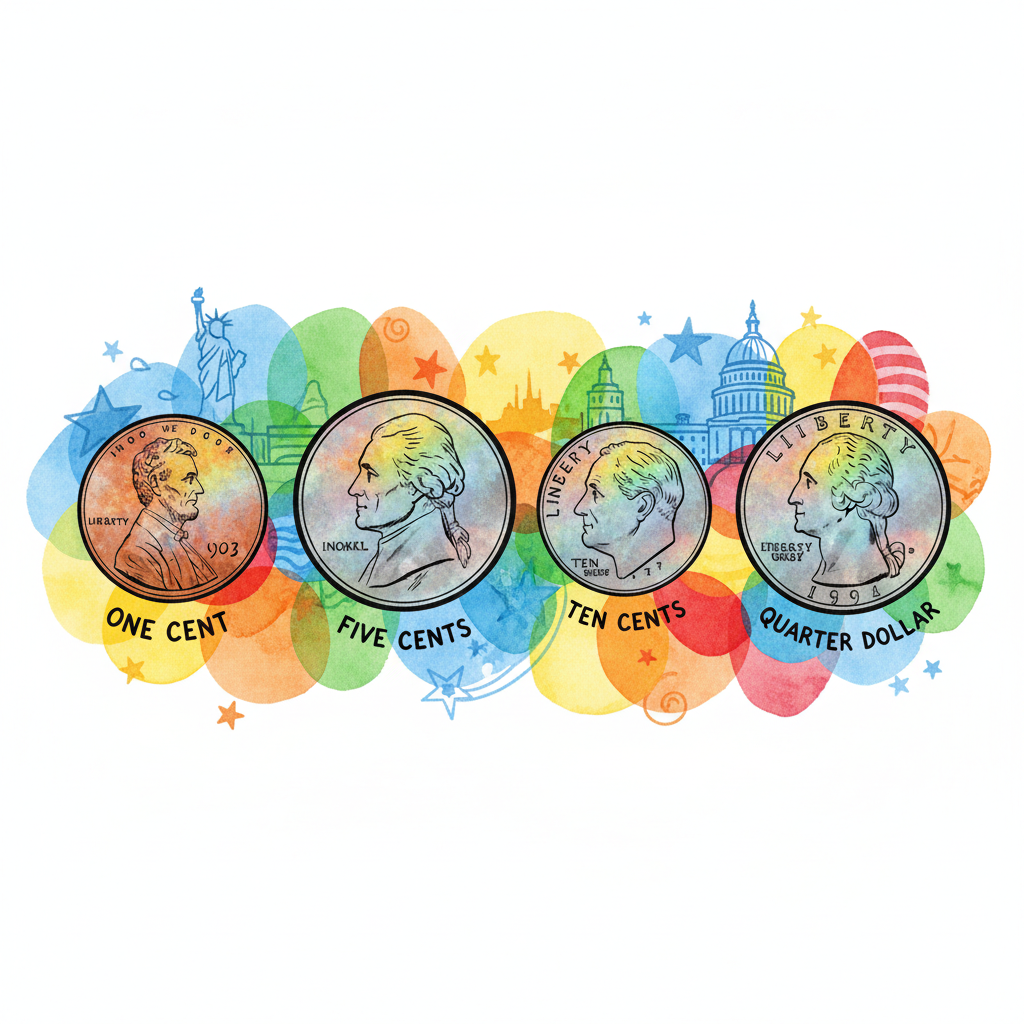
Coins are small, round pieces of metal. They come in different sizes, colors, and have different pictures on them. Each coin has a special name and a special value.
The Penny (1 cent)
The penny is the smallest and least valuable coin. It's usually reddish-brown. If you have one penny, it's worth 1 cent. Imagine a tiny little ladybug – that's like a penny, small but still important!
The Nickel (5 cents)
The nickel is a bit bigger than a penny and is silver-colored. It's worth 5 cents. A nickel is like a friendly dog – it's more than a ladybug, right? If you have 5 pennies, you could trade them for one nickel!
The Dime (10 cents)
The dime is the smallest coin, but it's worth more than a nickel! It's also silver-colored. A dime is worth 10 cents. Think of a dime like a speedy little bird – it's small, but it can fly fast and is worth quite a bit! You can trade two nickels for one dime, or ten pennies for one dime.
The Quarter (25 cents)
The quarter is the largest and most valuable of our common coins. It's silver-colored and often has a picture of a president or a special symbol. A quarter is worth 25 cents. The quarter is like a big, cuddly teddy bear – it's the biggest and most valuable of our coins! You can trade two dimes and a nickel for one quarter, or five nickels for one quarter, or even 25 pennies for one quarter!
Here's a little reminder of the coin values:
- Penny = 1 cent
- Nickel = 5 cents
- Dime = 10 cents
- Quarter = 25 cents
 ⚠️ This picture may have spelling mistakes. Trust the words in the lesson.
Let's Look at the Notes!
Notes, also called bills, are pieces of paper money. They have different colors and pictures and are worth much more than coins.
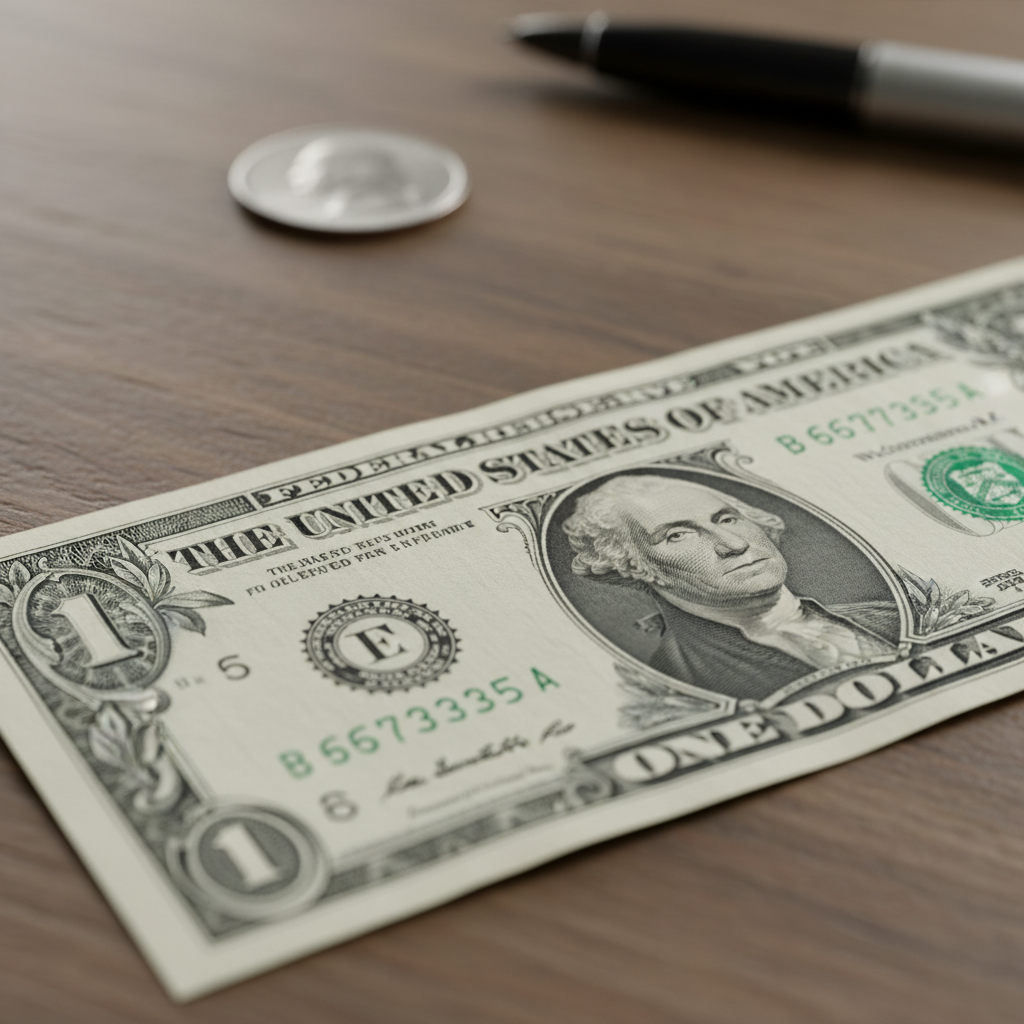
The One-Dollar Bill ($1)
This is the most common bill. It's usually green and white and has a picture of a president on it. It's worth 100 cents, or just $1. Think of the one-dollar bill as a whole pizza! A pizza is much bigger and more satisfying than a single slice, just like a dollar is worth more than a single coin.
The Five-Dollar Bill ($5)
This bill is usually green and has a different president on it. It's worth five dollars. Five dollars is like having five whole pizzas! It can buy you a lot more than one dollar can.
The Ten-Dollar Bill ($10)
This bill is a different color, often a bit more blueish or grey. It's worth ten dollars. Ten dollars is like a whole birthday party with lots of presents and cake!
We also have higher value bills like the twenty-dollar bill and the fifty-dollar bill, but for now, let's focus on the ones we see most often!
Remember:
- 1 dollar = 100 cents
Putting It All Together!
Knowing the value of each coin and note helps us understand how much money we have. If you have a quarter and a dime, you have 25 cents + 10 cents = 35 cents. That's like having a small bag of candies!
Imagine you want to buy a sticker that costs 50 cents. You could use two quarters (25 cents + 25 cents = 50 cents). Or you could use five dimes (10 cents + 10 cents + 10 cents + 10 cents + 10 cents = 50 cents). Or maybe ten nickels (5 cents x 10 = 50 cents)! There are many ways to make the same amount of money!
 ⚠️ This picture may have spelling mistakes. Trust the words in the lesson.
Understanding money is like learning a secret code. The more you practice, the better you'll get at using it to get the things you need and want. Keep practicing, and soon you'll be a money expert!
Keep learning, free
Create a free Syllabax account to unlock practice questions and games for this topic.
Visual Learning Enhanced! 🚀
To help you master this topic, we use Advanced Syllabax AI to generate detailed diagrams and visual models.
Note on Visuals: The AI sometimes makes spelling errors in image labels. Please refer to the lesson text for the correct terminology.