Learning Journey
Watch this topic in 60 seconds
Free preview · Lesson 1
World climate patterns – World Geography (Foundational)
World Climate Patterns - FoundationalWorld Climate Patterns – Foundational
Introduction to Climate
Climate describes the average weather conditions in a place over a long period. It's more than just whether it's hot or cold; it includes factors like rainfall, humidity, and wind patterns. Understanding climate is essential for knowing what types of plants and animals can live in a region, how people build their homes, and what crops they can grow.
Factors Influencing Climate
Several factors work together to shape the climate of a particular location:
- Latitude: How far north or south a place is from the equator. Regions near the equator receive more direct sunlight and are generally warmer.
- Altitude: The height of a place above sea level. Higher altitudes tend to be colder than lower altitudes.
- Proximity to Water: Large bodies of water, like oceans, moderate temperatures. Coastal areas usually have milder temperatures than inland areas.
- Ocean Currents: These are like rivers in the ocean that transport warm or cold water, affecting the temperature of nearby landmasses.
- Wind Patterns: Prevailing winds carry warm or cold air from one place to another, influencing temperature and precipitation.
Major Climate Zones
Based on temperature and precipitation patterns, the world is divided into several major climate zones:
Tropical Climates
Found near the equator, these climates are hot and humid year-round. They often experience heavy rainfall.
Temperate Climates
Located between the tropics and the polar regions, these climates have distinct seasons, with warm summers and cold winters.
Polar Climates
Found near the North and South Poles, these climates are extremely cold year-round, with long winters and short summers.
Dry Climates
Characterized by low precipitation, these climates include deserts and steppes. Temperatures can vary greatly depending on latitude and altitude.
Understanding Climate Change
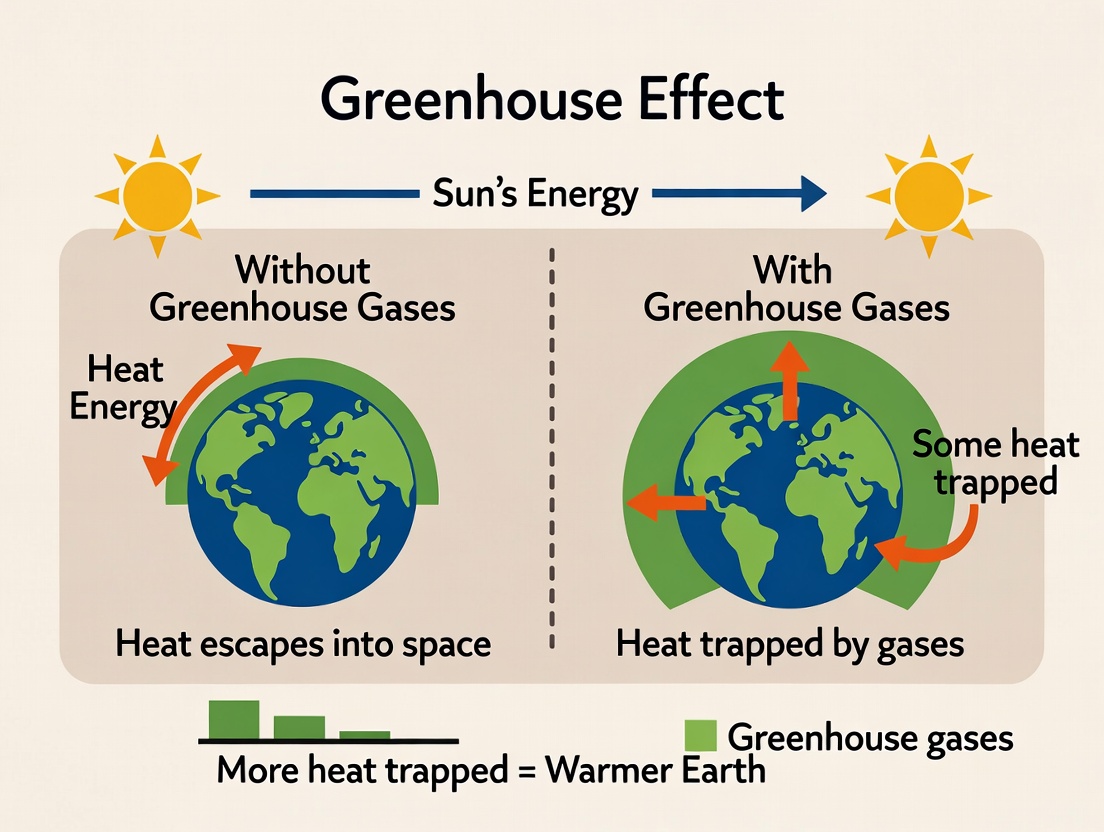
Climate change refers to long-term shifts in temperature and weather patterns. Human activities, particularly the burning of fossil fuels, are increasing the concentration of greenhouse gases in the atmosphere, leading to global warming and changes in climate patterns around the world.
Keep learning, free
Create a free Syllabax account to unlock practice questions and games for this topic.
Visual Learning Enhanced! 🚀
To help you master this topic, we use Advanced Syllabax AI to generate detailed diagrams and visual models.
Note on Visuals: The AI sometimes makes spelling errors in image labels. Please refer to the lesson text for the correct terminology.