Animals’ homes and babies (Animals)
Watch this topic in 60 seconds
Free preview · Lesson 1
Understanding Animals’ homes and babies (Animals)
Animal Homes and Their Babies: A Cozy Adventure!
Hello, young explorers! Today, we're going on an exciting adventure to learn about animals! Just like you and I have homes and families, animals do too. We'll discover where animals live and how they take care of their little ones. It's going to be a wild and wonderful journey!
Part 1: Home Sweet Home for Animals!
Imagine your own home. It keeps you safe from rain, snow, and strong winds, right? It protects you from things that might scare you, and it's where you eat, sleep, and play with your family. Well, animals need homes for the very same reasons!
Why Do Animals Need Homes?
- Safety First! Just like your front door keeps you safe, animal homes protect them from predators (animals that hunt other animals for food).
- Weather Watch! When it's super hot or super cold, homes keep animals cozy. Think of it like your jacket on a chilly day or your fan on a warm day.
- Raising a Family! Homes are the perfect nurseries for baby animals to grow up safe and sound. It's like your bedroom, but for a whole animal family!
Different Types of Animal Homes
Animals are super creative! They build or find all sorts of homes. Let's look at some cool examples:
1. Nests: The Cozy Cradle for Birds and Bugs
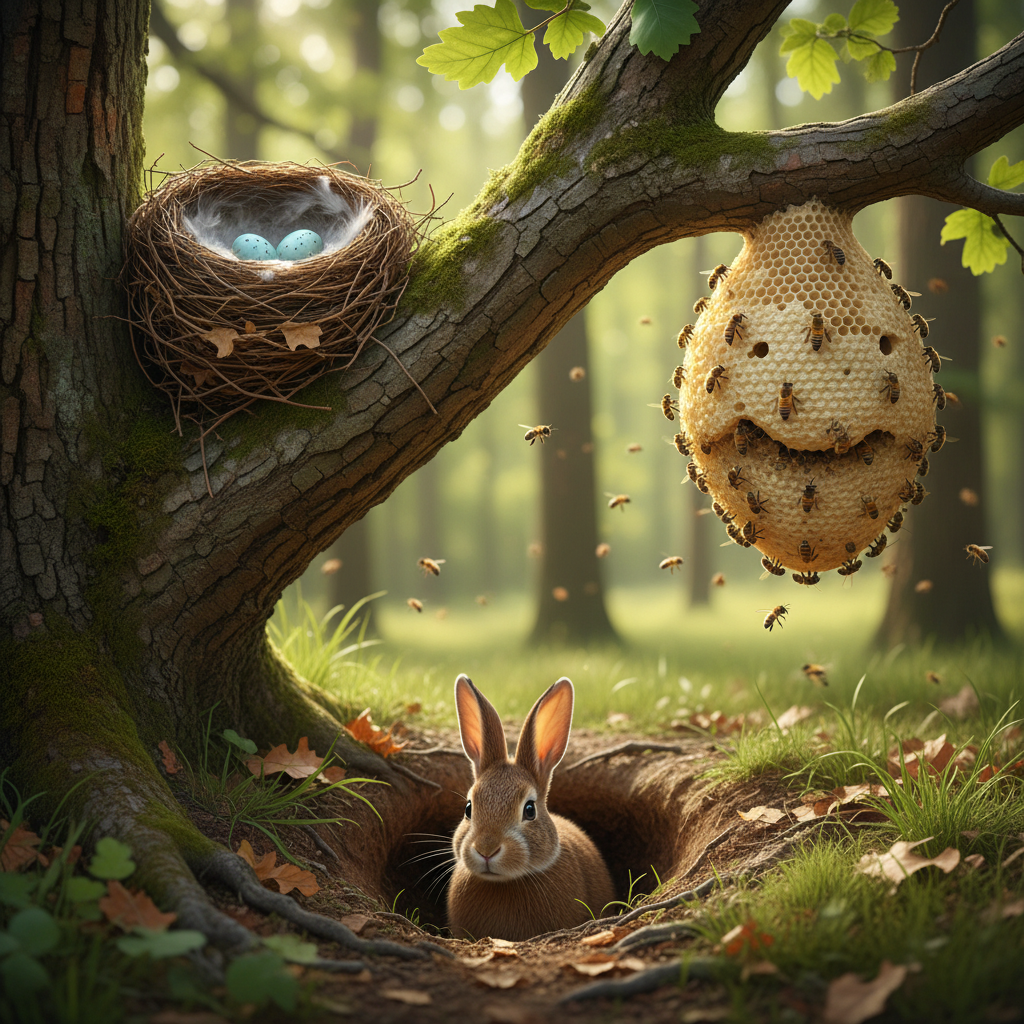
Have you ever seen a bird's nest high up in a tree? Birds carefully weave twigs, leaves, and even mud together to make a cozy basket. It's like a soft crib for their eggs and fluffy babies! Some insects, like wasps, also build nests. A bird's nest is a lot like a baby's cradle or a comfy bed just for tiny bird families.
2. Dens and Burrows: Underground Apartments!
Some animals like foxes, rabbits, and badgers are expert diggers! They dig holes in the ground called burrows or dens. These are like underground apartments that keep them safe from danger and bad weather. Imagine having a secret tunnel leading to your bedroom – that's what a burrow feels like for these animals! Bears also have dens, often in caves or hollow logs, where they sleep through winter.
 ⚠️ This picture may have spelling mistakes. Trust the words in the lesson.
3. Hives: Busy Bee Apartment Buildings!
Bees are amazing builders! They live in structures called hives, often in trees or special boxes made by people. A hive is like a giant apartment building, with hundreds, even thousands, of bees living and working together. Each little hexagon shape inside is like a tiny room!
4. Webs: Silky Traps and Homes for Spiders!
Spiders are masters of silk! They spin intricate webs that serve two purposes: to catch food (like flies) and to be their home. Imagine building your house out of super-strong, sticky string – that's what a spider does! It's their kitchen and bedroom all in one.
5. Shells: Portable Houses!
Some animals carry their homes right on their backs! Turtles and snails have hard shells that protect them from danger. When they feel scared, they can pull their head and legs inside, safe and sound. It's like having a little house that you can take with you wherever you go!
6. Underwater Wonders: Reefs and Lodges!
Fish often live in coral reefs, which are like colorful underwater cities full of hiding spots. Beavers build amazing homes called lodges in the water, made of sticks and mud. They build them with an underwater entrance to keep predators out! It's like having a secret underwater entrance to your house, only accessible by swimming.
Part 2: Animal Babies: Growing Up Wild!
Now that we know about homes, let's talk about the cutest part: animal babies! Just like you were once a baby, all animals start small and need lots of care.
How Do Animal Babies Arrive?
There are two main ways animal babies come into the world:
1. Laying Eggs: A Special Cradle!
Many animals lay eggs. Think about birds, reptiles (like snakes and lizards), amphibians (like frogs), fish, and insects. The baby grows inside the egg, safe and sound. When it's ready, the egg hatches, and out pops the baby! It's like a special birthday surprise, but instead of being born right away, the baby grows inside its little shell home first.
2. Live Birth: Born Ready to Cuddle!
Mammals (like cats, dogs, cows, and humans!) give birth to live babies. This means the baby grows inside the mother's body until it's ready to come out. These babies often look like smaller versions of their parents right away. It's like being born ready for a cuddle, right from the start!
How Do Parents Care for Their Babies?
Animal parents are super caregivers! They do many things to make sure their babies grow up strong and healthy:
- Feeding Time! Just like your parents feed you healthy food, animal parents bring food to their babies or feed them milk (if they are mammals). A mother bird will fly back and forth to find worms for her chicks, just like your grown-ups make sure you have yummy meals!
- Keeping Them Safe! Animal parents are very protective. They watch out for danger, teach their babies how to hide, and sometimes even fight to keep them safe from predators. Think of it like your parents holding your hand when you cross the street.
- Teaching Them How to Be an Animal! Baby animals need to learn important skills, like finding food, hunting, or escaping danger. Parents teach them these survival lessons. A lioness teaches her cubs how to hunt, just like your teachers and parents teach you how to read and write.
Growing Up and Changing
Some animal babies grow up looking pretty much like their parents, just smaller, like a puppy growing into a dog. But other animals go through amazing changes!
For example, a tiny caterpillar hatches from an egg, eats a lot, and then forms a chrysalis (like a cozy sleeping bag). After a while, it emerges as a beautiful butterfly! This amazing change is called metamorphosis. It's like going to sleep as one thing and waking up as something totally different and magical!
Putting It All Together: Homes and Babies!
So, you see, animal homes and babies are connected! Homes provide the safe, warm, and hidden places where animal parents can lay their eggs or give birth, and where their babies can grow, learn, and be protected until they are big enough to take care of themselves. Every nest, burrow, and shell is a vital part of an animal family's life.
Let's Remember!
Animals need homes for safety, protection from weather, and to raise their babies. They have many different kinds of homes. Animal babies are born either from eggs or live birth, and their parents take wonderful care of them, feeding, protecting, and teaching them until they are grown. Isn't the animal kingdom amazing?
Keep learning, free
Create a free Syllabax account to unlock practice questions and games for this topic.
Visual Learning Enhanced! 🚀
To help you master this topic, we use Advanced Syllabax AI to generate detailed diagrams and visual models.
Note on Visuals: The AI sometimes makes spelling errors in image labels. Please refer to the lesson text for the correct terminology.