Things that move & things that don’t (Movement)
Watch this topic in 60 seconds
Free preview · Lesson 1
Understanding Things that move & things that don’t (Movement)
Understanding Movement: Things That Move and Things That Don't!
Hello, young explorers! Today, we're going on an adventure to look at all the things around us and figure out a big secret about them: Do they move, or do they stay still? This is a super important idea called movement!
What is Movement?
Imagine you're playing with your favorite toy car. If you push it, what happens? It rolls! If you let go, it stops. That rolling is movement! Movement means changing your spot. It's like going from "here" to "there."
Think about a sleepy cat. When it's sleeping, it's still, right? But when it wakes up and chases a toy, it's moving! Movement is when something changes its position or place over time. It's like changing seats on a bus or walking from one side of a room to the other.
Things That LOVE to Move!
There are so many wonderful things in our world that move. Let's look at some of them:
1. People! (That's YOU!)
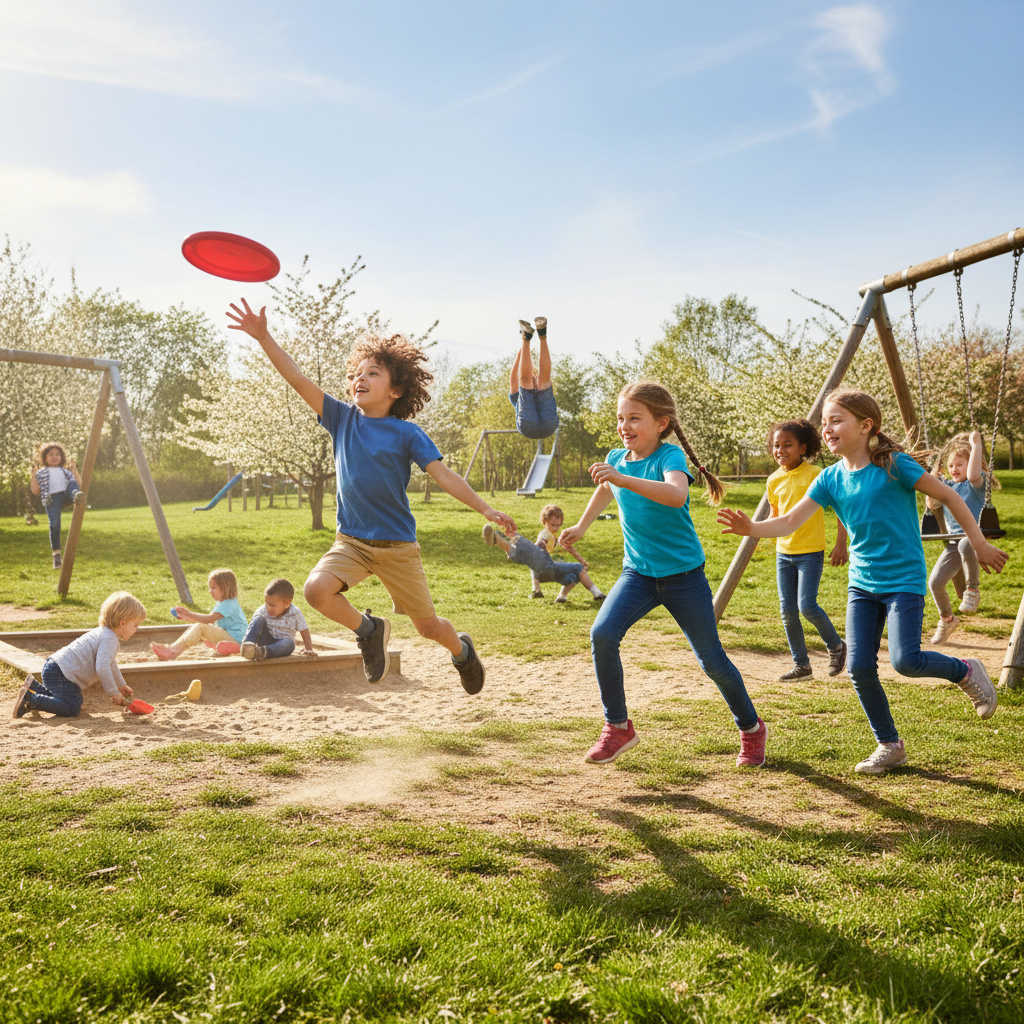
- You move all the time! When you run, jump, walk, skip, dance, or even just wiggle your fingers and toes, you are moving! Your body is like an amazing machine that can do all sorts of movements. You move to play, to learn, to eat, and to explore.
- Analogy: Think of yourself as a super energetic puppet, and your brain is pulling the strings to make you move! Every step, every wave, every blink is a kind of movement.
2. Animals!
- Animals are fantastic movers! Birds use their wings to fly high in the sky, fish swim gracefully in the water with their fins, and quick cheetahs run super fast on land using their strong legs. Even a tiny snail crawls slowly, but it's still changing its spot, so it's moving!
- Analogy: Animals are like little explorers, always on the go, searching for food, playing with their friends, or finding a comfy place to rest. They move to survive and have fun!
 ⚠️ This picture may have spelling mistakes. Trust the words in the lesson.
3. Vehicles!
- Cars zoom down the road, buses take us to school, and airplanes fly across the sky. These are all called vehicles, and they are designed to move things and people from one place to another. Trains roll on tracks, and boats sail on water.
- Analogy: Vehicles are like giant roller skates or super-fast legs for grown-ups and things, helping them travel long distances much faster than walking. They usually need an engine or someone to control them to move.
4. Natural Movers!
- Did you know that nature moves too? The wind blows the leaves on trees and makes flags wave in the air. Water in rivers flows downstream, carrying little boats or leaves along. Ocean waves crash on the shore with a big splash. Clouds float across the sky, changing shapes as they go. Even the Earth itself is always moving around the sun, though we can't feel it!
- Analogy: Nature's movements are like a never-ending dance, always changing and happening around us, powered by natural forces you can't see but can often feel.
Why Do Things Move?
Many things move because something gives them a push or a pull! You push a swing to make it go high, a car's engine makes its wheels turn, and the wind pushes a sailboat across the water. Sometimes, things move because they are alive and want to do something, like an animal looking for food or a person going to play.
Things That Like to Stay Still (Things That Don't Move on Their Own)
Now, let's talk about things that usually stay in one spot. These are things that don't move unless something else moves them. They are happy to be steady and still!
1. Buildings!
- Your house, your school, the grocery store – these are all buildings. Once they are built, they stay in the same place. They don't get up and walk away! They are fixed to the ground.
- Analogy: Buildings are like big, comfy giants that sleep in one spot, providing shelter and warmth for us. They are strong and steady, always there for us.
2. Trees!
- A tree grows tall and strong, but its roots hold it firmly in the ground. The main part of the tree itself doesn't walk around. Its branches might sway in the wind, and its leaves might dance, but the whole tree stays put.
- Analogy: Think of a tree as a giant green umbrella that is stuck in the ground. It can offer shade and shelter but stays exactly where it was planted.
3. Furniture!
- Your bed, your table, your chair, the bookshelf in your room – these are all types of furniture. They stay where you put them. If you want them to move, you have to push, lift, or drag them. They don't have legs to walk around by themselves.
- Analogy: Furniture is like a team of quiet helpers that wait patiently in your house for you to use them. They don't get up and serve you a snack, but they're always there to hold your books or let you sit.
4. Rocks and Mountains!
- Rocks are heavy and usually stay in one place unless a strong force, like a big kick, heavy rain causing a landslide, or a big truck picking them up, moves them. Mountains are even bigger! They are huge parts of the Earth that stand tall and still for millions of years. They are some of the biggest things that don't move on their own.
- Analogy: Rocks are like very patient little statues, and mountains are like huge, ancient sculptures that never budge. They have been in their spots for a very, very long time.
 ⚠️ This picture may have spelling mistakes. Trust the words in the lesson.
Can Things Be Tricky?
Sometimes, it can be a little tricky! A house doesn't move, but a door on the house moves when you open it. A tree doesn't move, but its leaves flutter in the wind and its branches can sway. A big rock doesn't move on its own, but if you give it a mighty kick (or if a big truck picks it up), it will move!
This shows us that some parts of a still thing can move, or that something still can be moved if a strong enough push or pull comes along. So, 'moving' can mean the whole thing or just a part of it!
Why Is It Important to Know About Movement?
Understanding movement helps us understand how the world works! It helps us play games like soccer or hide-and-seek, build things like robots that can move, understand why cars drive, and even understand why birds fly. It's a foundational idea in science and helps us make sense of everything around us!
So, next time you look around, try to be a movement detective! Ask yourself: "Does that move? Or does it stay still?" You'll be amazed at all the answers you find and how much you learn!
Keep learning, free
Create a free Syllabax account to unlock practice questions and games for this topic.
Visual Learning Enhanced! 🚀
To help you master this topic, we use Advanced Syllabax AI to generate detailed diagrams and visual models.
Note on Visuals: The AI sometimes makes spelling errors in image labels. Please refer to the lesson text for the correct terminology.