Counting Our Collections
Watch this topic in 60 seconds
Free preview · Lesson 1
Understanding Counting Our Collections
Counting Our Collections: A Fun Adventure!
Hello, young mathematicians! Today, we're going on an exciting adventure to learn all about counting our collections. Do you have a collection of special things? Maybe you collect colorful rocks, shiny stickers, cool toy cars, or even bottle caps! Almost everyone has a collection of something they love. Counting helps us know exactly how many special things we have!
What is a Collection?
Imagine you have a basket filled with all your favorite toy animals. That basket of toy animals is your collection! A collection is just a group of similar things that belong together or things you've gathered because you like them. Think of it like a treasure chest filled with your unique treasures. Whether it's a collection of shells from the beach or a pile of your favorite books, they are all groups of things!
Why Do We Count Our Collections?
Counting is like being a detective for your own treasures! When you count, you discover how many items are in your collection. Why is this important?
- Knowing how much: If you have 10 toy cars, you know exactly how many you have to race. If you didn't count, you might think you have 5 or 20, but counting tells you the exact number.
- Sharing fairly: If you want to share your stickers with a friend, counting helps you give them exactly half, or a certain number, so everyone is happy.
- Finding missing items: If you know you have 12 unique rocks, and you only see 11, you know one is missing and can go on a hunt to find it!
- Comparing: Counting helps you compare. "I have 15 blue marbles, but only 7 red marbles!" This helps you understand more about your collection.
Let's Get Counting! Simple Steps for Foundational Counting
Counting might seem super easy, but there are smart ways to do it, especially when your collection gets bigger! Here are some foundational tips:
1. One-to-One Correspondence: The Touch and Tell Method
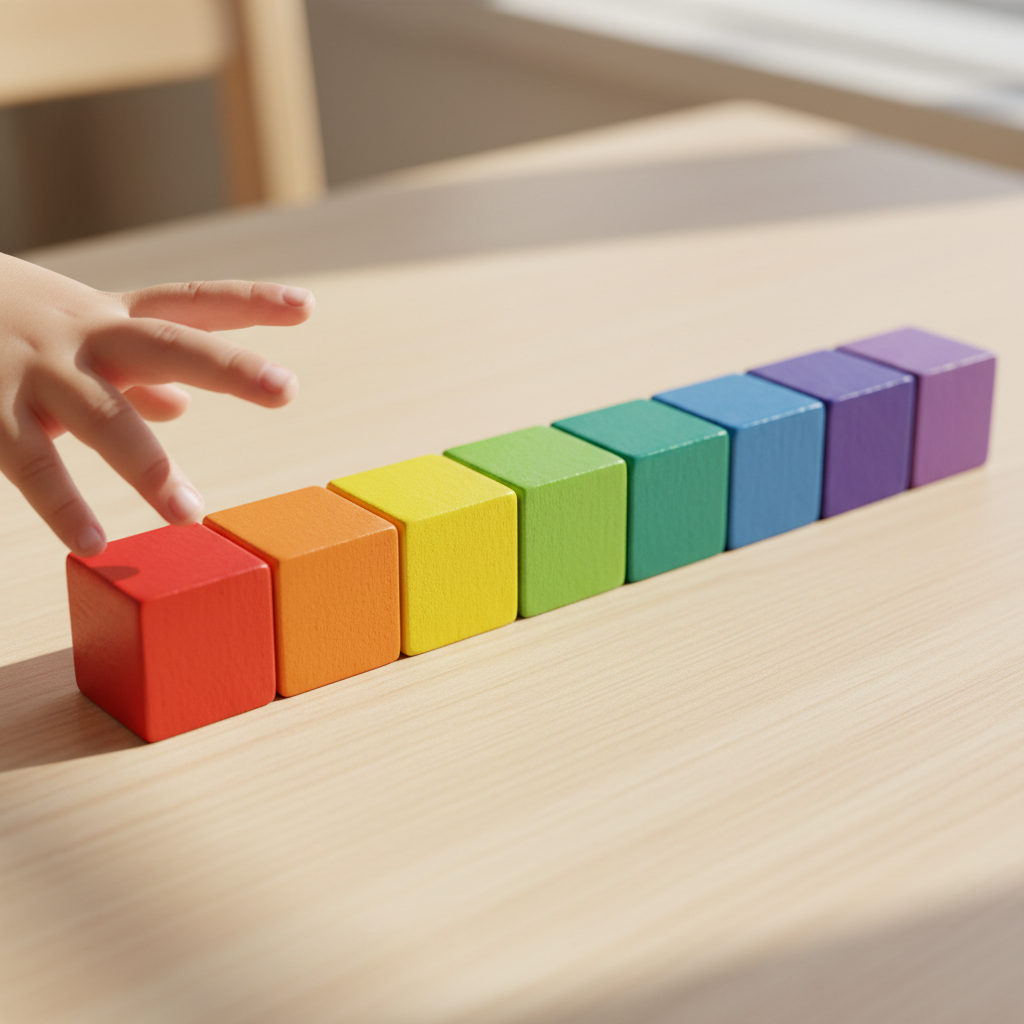
This is the super important first step! Imagine you have a line of delicious cookies. To count them, you touch each cookie *one time* and say a number *one time*. You wouldn't touch a cookie twice, and you wouldn't skip one. This is called one-to-one correspondence.
- Analogy: Think of it like giving each guest at a party one party hat. You wouldn't give two hats to one person, and you wouldn't forget to give a hat to someone. Everyone gets one hat, and you count how many hats you give out.
- How to do it: Gently touch or point to each item in your collection as you say the number out loud: "One, two, three, four..." Move your finger or eye to the next item for the next number.
2. Arranging Your Collection: Making it Neat and Tidy
It's much easier to count things when they are neat! If your toys are all in a messy pile, you might count the same toy twice or miss one completely. Like cleaning your room before playing, organizing your collection helps you count better.
- Analogy: Imagine trying to count how many apples are in a giant, jumbled bag versus counting apples neatly lined up on a table. The table is much easier!
- How to do it: Lay your items out in a straight line, a circle, or in small groups. Once you touch an item and count it, you can even push it to the side to show you've already counted it.
3. Counting On: Starting from a Number
Sometimes you might add new things to your collection, or you might have already counted some of it. You don't always have to start from zero!
- Analogy: If you have 5 stickers already on your page, and you get 3 new ones, you don't start counting from 1 again. You say, "I have 5... (touching the new ones) 6, 7, 8!" You count on from 5.
- How to do it: If you know you have a group of 10 items, and you add 3 more, you start counting from 10: "10... 11, 12, 13!"
4. Grouping for Bigger Collections: Counting by 2s, 5s, or 10s!
When your collection gets really big, counting by ones can take a long, long time! Imagine counting every single grain of rice! That would be impossible. But what if you put them in groups?
- Counting by 2s: If you have pairs of socks, you can count them quickly: "2, 4, 6, 8..."
- Counting by 5s: Your fingers on one hand are 5! If you have groups of 5, you can count, "5, 10, 15, 20..."
- Counting by 10s: This is super helpful! Imagine you have 10 little LEGO bricks in a bag. If you have 3 bags, you don't count each brick. You count the bags as "10, 20, 30!"
- Analogy: Think of a box of crayons. Instead of counting each crayon one by one, you might notice the box says it has 24 crayons! Or, if you have many small groups of crayons, you count the groups. If each group has 10 crayons, and you have 4 groups, it's easy to say "10, 20, 30, 40!"
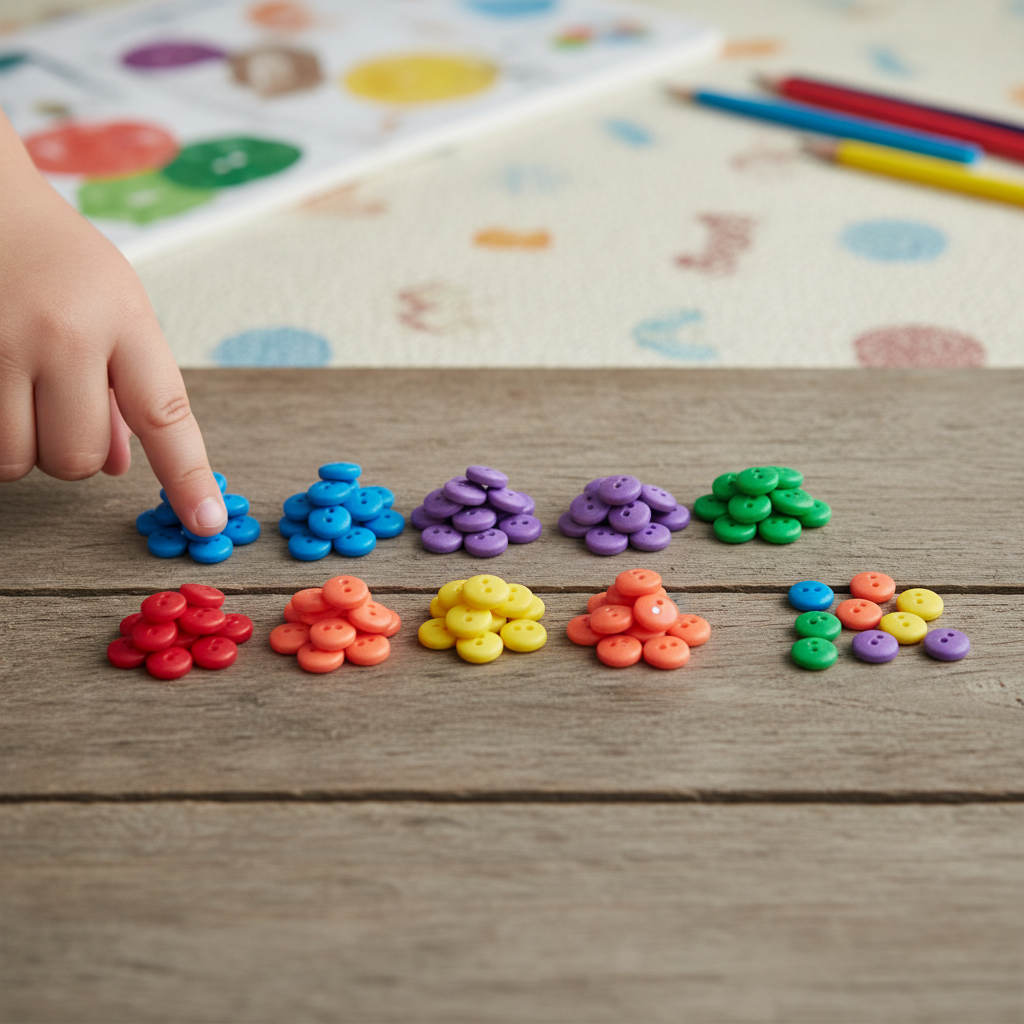
- How to do it: Put your collection into small, equal groups. For example, make piles of 10 small stones. Then count your piles by 10s.
Being Careful and Checking Your Work
Even expert counters sometimes make a mistake! It's okay. The best way to make sure your count is correct is to count again. If you get the same number twice, you're probably right!
- Analogy: If you're building a tower with blocks, you always check if it's steady. If you count your collection, you check your count to make sure it's correct!
- Tip: You can count your collection from left to right, and then count it again from right to left. Or, have a friend count it too!
Let's Practice!
Get a collection of something near you – maybe some pencils, erasers, or small toys. Try counting them using one-to-one correspondence. Then, if you have a lot, try grouping them into 2s or 5s. You'll become a super counter in no time!
Counting your collections is a fun and useful skill that helps you understand the world around you, from how many cookies are left to how many friends are coming to your party. Keep practicing, and you'll be a counting master!
Keep learning, free
Create a free Syllabax account to unlock practice questions and games for this topic.
Visual Learning Enhanced! 🚀
To help you master this topic, we use Advanced Syllabax AI to generate detailed diagrams and visual models.
Note on Visuals: The AI sometimes makes spelling errors in image labels. Please refer to the lesson text for the correct terminology.