Computers Help Robots Work
Watch this topic in 60 seconds
Free preview · Lesson 1
Understanding Computers Help Robots Work
Computers Help Robots Work!
Hello, young learners! Have you ever seen a robot? Maybe in a movie, a toy store, or even helping around your house? Robots are super cool machines, and guess what? They get a lot of help from another super cool thing: computers!
Imagine your brain. Your brain tells your hands to clap, your legs to run, and your mouth to speak. Well, for robots, computers are like their super-smart brains! Today, we're going on an adventure to discover how computers and robots work together like best friends.
What is a Computer?
First, let's talk about computers. You might think of a big desktop computer, but computers are all around us! Your mom or dad's smartphone is a computer. The tablet you play games on is a computer. Even the smart TV in your living room has a tiny computer inside it!
A computer is a machine that can follow instructions to do many different tasks. It's like a super-fast thinker. It can count really quickly, remember tons of information, and help you draw pictures or write stories. Think of a computer as a very clever assistant who knows how to do a lot of different things, but only if you tell it exactly what to do.
It can't just decide to do something on its own. It needs someone (or something!) to give it instructions, just like you need a recipe to bake cookies. Without the recipe, your oven doesn't know what to do!
What is a Robot?
Now, let's talk about robots! Robots are special machines built to do specific jobs. They can look very different. Some robots look like people, but most don't! Some are small, like a toy car that cleans your floor (a robot vacuum!). Others are huge, like the giant arms you see in car factories.
A robot is a machine designed to do tasks automatically or with a little help from people. Robots are great at doing things that might be boring, dangerous, or very difficult for humans to do over and over again. Imagine trying to pick up hundreds of tiny screws every day – that would be super boring! A robot can do it without getting tired or complaining.
Think of a robot as a very helpful worker. It has parts that can move, like arms, wheels, or even legs. But just like your helpful worker needs instructions, a robot needs someone to tell it what to do. It can't think for itself.
 ⚠️ This picture may have spelling mistakes. Trust the words in the lesson.
How Do Computers Help Robots Work?
This is where the magic happens! Computers and robots work hand-in-hand. The computer is like the 'brain' of the robot, telling it exactly what to do, step by step. These instructions are called 'code' or 'programs'.
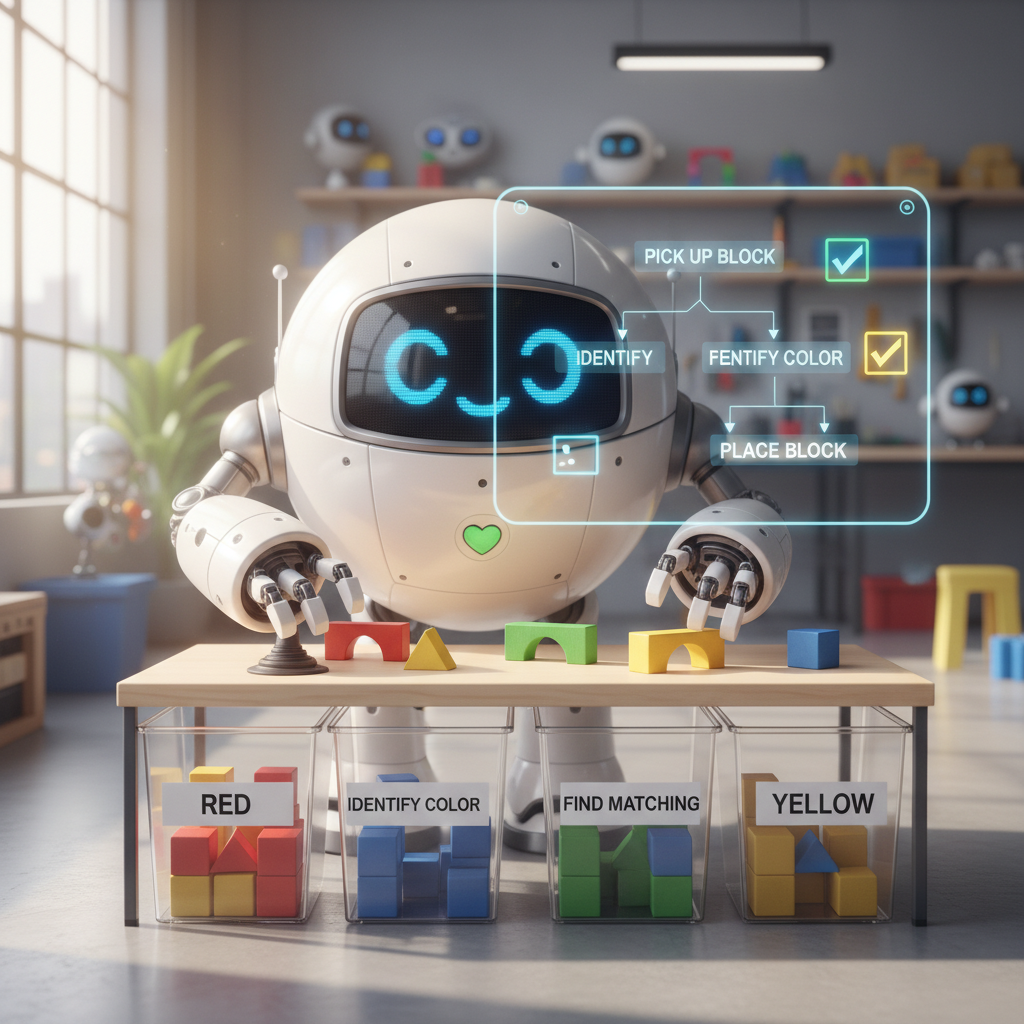
Imagine you want to build a tower with blocks. You need instructions, right? First, pick up a red block. Second, place it on the table. Third, pick up a blue block. Fourth, place it on top of the red block. Fifth, stop! These are instructions.
Computers give robots instructions just like that, but in a special language the robot understands. For example, a computer might tell a robot arm: "Move forward 5 steps, then close your gripper, then lift up, then turn left."
Here's the analogy: Think of a musician playing a song. The musician (the robot) needs sheet music (the instructions) to know what notes to play, how fast, and how loud. The composer (the person who writes the instructions, often using a computer) creates the sheet music. Without the sheet music, the musician wouldn't know what to play! In the same way, without a computer giving it instructions, a robot would just sit there, unable to do anything.
So, the computer tells the robot: "Move your arm here! Pick up that item! Drive over there!" And the robot, being a good follower, does exactly what the computer tells it to do. It uses its motors and sensors to carry out those commands.
Why Is This So Helpful?
Having computers help robots work makes our lives much easier and safer! Here's why:
- Doing Dangerous Jobs: Robots can go places that are too dangerous for people, like exploring volcanoes, fixing things in outer space, or cleaning up dangerous spills. The computer tells them what to do from a safe distance.
- Doing Difficult Jobs: Some jobs need super careful movements or incredible strength. Robots, guided by computers, can build tiny electronics or lift very heavy cars in factories.
- Doing Boring Jobs: Imagine sorting thousands of letters every day. A robot, following computer instructions, can do this quickly and accurately without getting bored!
- Doing Jobs Faster: Robots don't get tired and can work much faster than people on repetitive tasks. This helps us make things quicker, like getting more toys or shoes made for everyone.
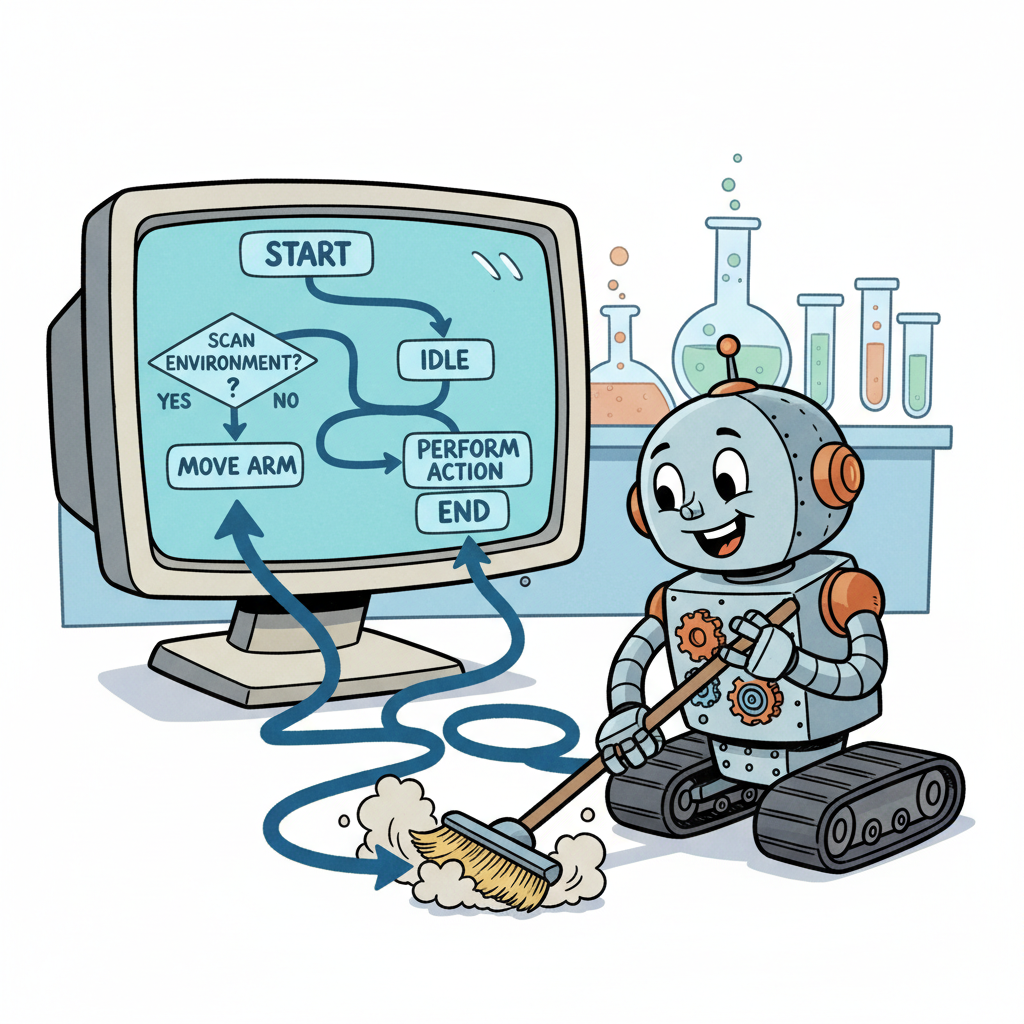
Think about a robot vacuum cleaner. A tiny computer inside it tells it: "Move forward, if you hit a wall, turn, if you see dirt, suck it up!" This helps keep your floors clean without you having to push the vacuum yourself.
 ⚠️ This picture may have spelling mistakes. Trust the words in the lesson.
Robots Everywhere!
From the robot arms that build cars, to the robots that help doctors in hospitals, to even toy robots that you can program yourself – computers are always the brains behind the brawn. They are the ones giving the orders, making sure the robots do their jobs perfectly.
So, the next time you see a robot, remember its hidden superpower: the smart computer brain that tells it exactly what to do, helping it make our world a better, safer, and more interesting place!
Keep learning, free
Create a free Syllabax account to unlock practice questions and games for this topic.
Visual Learning Enhanced! 🚀
To help you master this topic, we use Advanced Syllabax AI to generate detailed diagrams and visual models.
Note on Visuals: The AI sometimes makes spelling errors in image labels. Please refer to the lesson text for the correct terminology.