Types of food: energy-giving, body-building, protective (Food)
Watch this topic in 60 seconds
Free preview · Lesson 1
Understanding Types of food: energy-giving, body-building, protective (Food)
Food Friends: Energy, Building, and Protection!
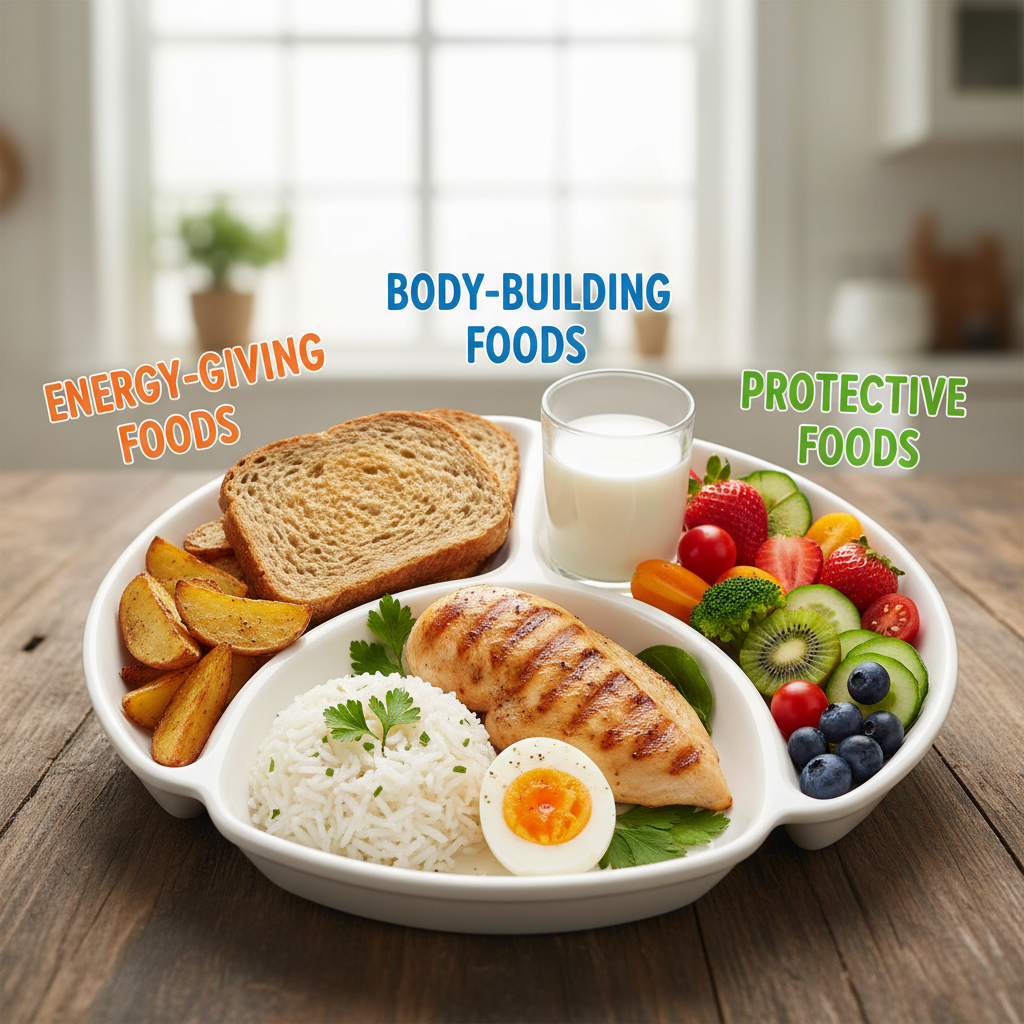
Hello, young explorers! Have you ever wondered why we eat so many different kinds of food every day? It's not just because they taste yummy! Just like a superhero needs different powers to save the day, your body needs different kinds of food to grow big, strong, and healthy. Think of food as special fuel and tools for your amazing body! Today, we're going to learn about three super important teams of food: Energy-Giving Foods, Body-Building Foods, and Protective Foods.
Team 1: Energy-Giving Foods (Your Body's Fuel!)
Imagine you have a toy car that needs batteries to move, or a bicycle that needs you to pedal to go fast. Your body is a bit like that! To run, jump, play, learn, and even just breathe, your body needs energy. And guess where it gets that energy? From Energy-Giving Foods!
These foods are like the super fuel that makes your body engine hum. They give you the power to do everything, from waking up in the morning to playing soccer in the park. Without enough energy foods, you might feel tired, sleepy, and not want to play.
What are some Energy-Giving Foods?
- Grains: Think about rice, bread, pasta, and cereals. These are like the supercharged batteries for your body!
- Potatoes: These starchy veggies are also great energy providers.
- Sugar and Honey: While we shouldn't eat too much of these, a little bit can give you a quick burst of energy, like a tiny turbo boost!
- Butter and Oil: These have a lot of energy packed into them, helping you stay warm and active.
So, when you eat a bowl of cereal for breakfast or a plate of rice with dinner, you're fueling up your body for all the adventures ahead!
Team 2: Body-Building Foods (Building Blocks for Your Body!)
Have you ever seen a house being built? Workers use bricks, wood, and cement to make the walls, roof, and floors strong. Your body is always growing and repairing itself, especially when you're a kid! To build strong muscles, healthy bones, and even new skin and hair, your body needs Body-Building Foods.
These foods are like the bricks and cement for your body. They help you grow taller, make your muscles strong so you can lift and play, and even fix parts of your body when you get a little scrape or cut. They are super important for making you big and strong!
What are some Body-Building Foods?
- Milk and Dairy Products: Milk, cheese, and yogurt are packed with calcium, which is like super glue for your bones and teeth!
- Eggs: These are amazing little packages of building materials for your body.
- Meat and Fish: Chicken, beef, fish – these are like super strong bricks for your muscles.
- Pulses and Legumes: Lentils, beans, chickpeas – these are excellent plant-based builders.
- Nuts: Almonds, walnuts, and peanuts also help build and repair your body.
When you drink your milk or eat some chicken, you're giving your body the materials it needs to grow strong and healthy, just like a construction worker builds a sturdy house!
 ⚠️ This picture may have spelling mistakes. Trust the words in the lesson.
Team 3: Protective Foods (Your Body's Shield!)
Imagine a superhero with a shield that protects them from villains, or a strong umbrella that keeps you dry in the rain. Your body also needs protection! Sometimes, tiny bad germs try to make you sick, or your body needs help staying healthy and working just right. That's where Protective Foods come in!
These foods are like your body's shield and special helpers. They contain vitamins and minerals, which are tiny, magical ingredients that keep you from getting sick, help your eyes see clearly, make your skin healthy, and generally keep all the different parts of your body running smoothly. They protect you like a superhero protects a city!
What are some Protective Foods?
- Fruits: Apples, bananas, oranges, berries – these are like colorful little health bombs!
- Vegetables: Carrots, spinach, broccoli, tomatoes – these are your body's best defenders! Try to eat a rainbow of vegetables every day.
By eating plenty of fruits and vegetables, you're giving your body a strong shield against sickness and making sure all your body parts are super happy and healthy. It's like having your own team of tiny doctors inside you!
Putting It All Together: A Balanced Plate!
So, now you know about the three amazing teams of food: Energy-Giving, Body-Building, and Protective. To be your best self – full of energy, growing strong, and protected from sickness – it's super important to eat a good mix of all three kinds of food every day. This is called eating a balanced diet!
Think of your plate at mealtime as a playground for all these food friends. You want some energy foods to play, some body-building foods to grow, and lots of protective foods to keep you healthy. Eating a variety of foods ensures your body gets all the different fuels and tools it needs.
Next time you sit down to eat, try to spot the different food friends on your plate. Are you getting enough energy to run? Enough building blocks to grow? And enough protection to stay well? Great job, young food scientists! Keep eating smart and growing strong!
 ⚠️ This picture may have spelling mistakes. Trust the words in the lesson.
Keep learning, free
Create a free Syllabax account to unlock practice questions and games for this topic.
Visual Learning Enhanced! 🚀
To help you master this topic, we use Advanced Syllabax AI to generate detailed diagrams and visual models.
Note on Visuals: The AI sometimes makes spelling errors in image labels. Please refer to the lesson text for the correct terminology.