Natural & artificial light sources (Light & Shadow)
Watch this topic in 60 seconds
Free preview · Lesson 1
Understanding Natural & artificial light sources (Light & Shadow)
Hello, Young Scientists! Let's Explore the Amazing World of Light!
Imagine trying to play hide-and-seek in a completely dark room. Not very fun, right? That's because we need light to see! Light is super important because it helps us see everything around us, from our toys to the beautiful sky. But where does all this light come from? Well, that's what we're going to find out today!
Think of light as a messenger that travels from a source to our eyes. When that messenger reaches our eyes, our brain tells us what we are seeing. Amazing!
What is a Light Source?
Simply put, a light source is anything that makes its own light. It's like a tiny (or giant!) factory that produces light and sends it out. Objects that don't make their own light, like your desk or your favorite book, just reflect light that comes from a light source. They are not light sources themselves.
Natural Light Sources: Gifts from Nature!
Let's start with light sources that are found all around us in nature. We call these natural light sources. They were not made by people; they just exist as part of our amazing world.
The Sun: Our Giant Star!
The biggest and most important natural light source for us on Earth is the Sun! It's a huge, hot star that's like a giant flashlight shining on our planet every day. The Sun gives us light so we can see during the daytime, and it also gives us warmth. Without the Sun, our world would be a very cold, dark place!
Twinkling Stars: Suns Far Away!
When you look up at the night sky, you see lots of tiny, twinkling lights. Those are other stars, just like our Sun, but they are so, so far away that they look like tiny dots of light. They are also natural light sources!
Lightning: Nature's Flash!
Have you ever seen a thunderstorm? Sometimes, you might see a bright, quick flash of light across the sky. That's lightning! It's a very powerful and quick burst of electricity that makes its own light. It's a natural light source that happens during storms.
Fireflies: Little Blinking Wonders!
In some places, especially during warm evenings, you might see tiny bugs that glow! These are called fireflies or lightning bugs. They have a special part of their body that makes light. It's like they have tiny, built-in light bulbs! They are definitely natural light sources.
Some Deep-Sea Animals: Light in the Deep!
The ocean is a very big and mysterious place. Down in the deepest parts, where the Sun's light can't reach, it's pitch black. But some amazing fish and other animals living there can make their own light! This is called bioluminescence. It's like they have their own little lanterns to help them see or to trick other animals. Very cool natural light sources!
Here's an image showing some of these natural light sources that light up our world:
Artificial Light Sources: Made by People!
Now, let's talk about light sources that are made by humans. We call these artificial light sources. 'Artificial' just means 'made by people' or 'not natural'. People invented these so we could have light whenever and wherever we need it, especially when the Sun goes down or when we are indoors.
Light Bulbs: Our Indoor Suns!
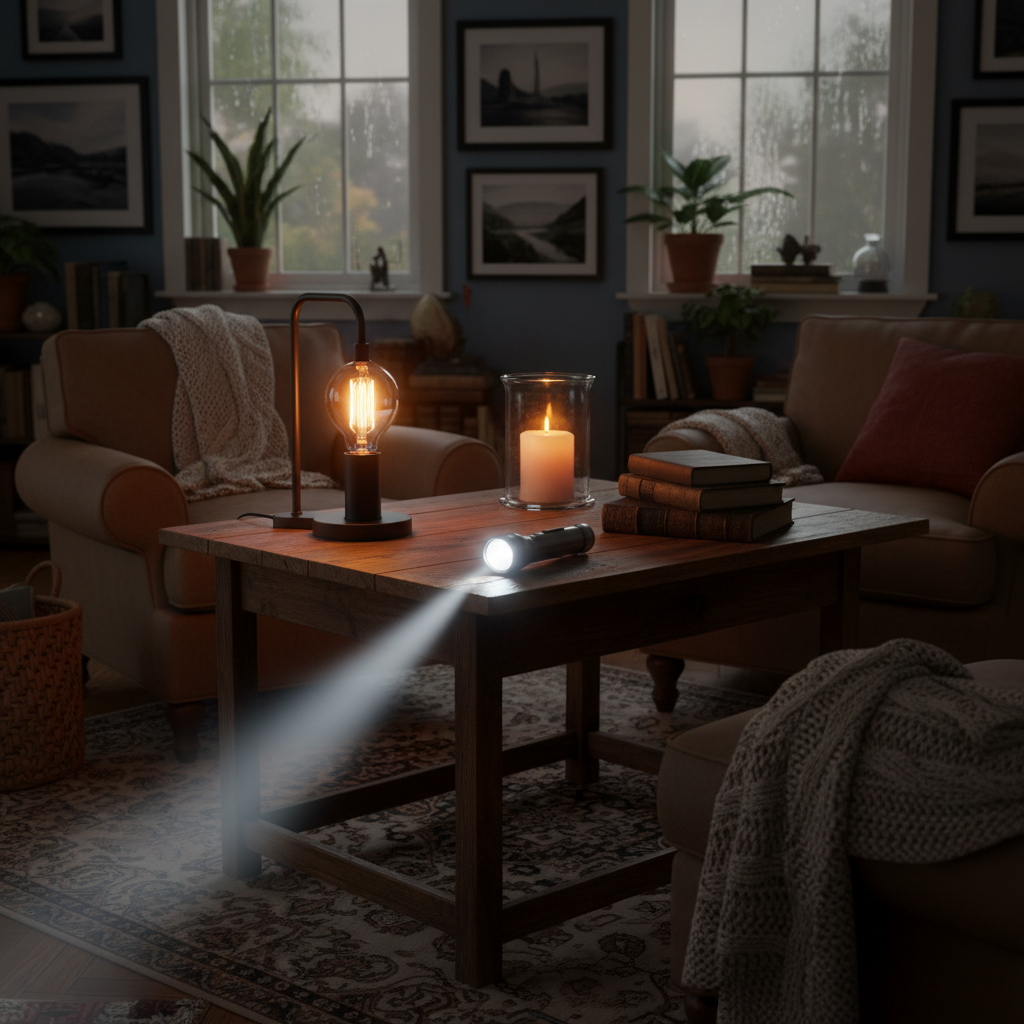
Probably the most common artificial light source is the light bulb! You have them in your house, in your classroom, and everywhere inside buildings. When you flip a switch, electricity goes into the bulb and makes a tiny wire inside get very hot and glow, producing light. It's like having a mini sun you can turn on and off!
Flashlights: Portable Light!
A flashlight is a super useful artificial light source. It's a portable light bulb that you can carry with you in the dark. It runs on batteries and helps us see when we're walking at night or when the power goes out.
Candles: Old-Fashioned Glow!
Before light bulbs were invented, people often used candles to get light. A candle has a wick (a string) that burns slowly, making a flame that gives off light. Candles are still used today for special occasions or when there's no electricity.
Streetlights: Lighting Our Roads!
When you're driving or walking at night, you see bright lights lining the streets. These are streetlights! They are artificial light sources that help us see the road and stay safe after the Sun has gone down.
TVs, Computers, and Phone Screens: Glowing Pictures!
Did you know that the screen of your television, computer, or tablet is also an artificial light source? They make their own light to show you pictures and videos. That's why you can see them even in a dark room!
Here's an image showing some examples of light sources that people have created:
 ⚠️ This picture may have spelling mistakes. Trust the words in the lesson.
Light and Shadow: A Quick Look!
We talked about light helping us see. But what happens when light is blocked? That's when we get a shadow! A shadow is an area of darkness that forms when an object gets in the way of light. Think about your shadow on a sunny day – your body blocks the Sun's light, creating a dark shape behind you. Light and shadow are best friends in the world of seeing!
Why Do We Need Both Natural and Artificial Light?
We need natural light like the Sun to light up our world during the day and help plants grow. But when the Sun sets, or when we are inside buildings, we rely on artificial light sources to continue seeing and doing our activities. Both types of light sources help us navigate our world and make it a brighter, safer, and more fun place!
So, the next time you see a bright light, stop and think: Is this a gift from nature, or did clever humans create it? You're now a light source expert!
Keep learning, free
Create a free Syllabax account to unlock practice questions and games for this topic.
Visual Learning Enhanced! 🚀
To help you master this topic, we use Advanced Syllabax AI to generate detailed diagrams and visual models.
Note on Visuals: The AI sometimes makes spelling errors in image labels. Please refer to the lesson text for the correct terminology.