Learning Journey
Watch this topic in 60 seconds
Free preview · Lesson 1
Understanding Basic functions (BIOLOGY)
Understanding Basic Life Functions in Biology
Welcome, young scientists! Today, we're going to embark on an exciting journey into the world of biology to discover the basic functions that make living things, well, *alive*! Think of living things like amazing machines, but instead of gears and wires, they use cells and special processes. We'll explore the core jobs that every living organism, from the tiniest ant to the biggest whale, has to do to survive and thrive.
What are Basic Life Functions?
Imagine you're planning a party. You need to make sure you have food, drinks, music, and decorations, right? Living things also have a list of essential "jobs" or "tasks" they need to perform to stay healthy, grow, and keep their species going. These are called basic life functions. They are the fundamental activities that all living organisms perform. If any of these functions stop, it's like a vital part of our party plan failing – things won't work!
The Seven Key Life Functions: The "Party Essentials" for Life!
Scientists have identified seven main functions that all living things share. Let's break them down with some fun analogies:
-
Movement (Responsiveness)
What it means: This is about reacting to changes in your environment, both inside and outside your body. It's like having "antennae" that help you sense what's going on and then do something about it.
Analogy: Think about touching a hot stove. Ouch! Your body quickly reacts by pulling your hand away. That's movement or responsiveness! A plant might turn its leaves towards the sun to get more light. Even a single-celled amoeba can move away from something harmful.
Why it's important: This helps living things find food, avoid danger, and find shelter or the right conditions to live.
-
Growth
What it means: This is the process of getting bigger and developing over time. It's not just about getting taller; it's also about your cells getting more numerous and specialized.
Analogy: Imagine a tiny seed growing into a tall tree, or a baby growing into an adult. That's growth! It’s like building with more and more LEGO bricks, making something bigger and more complex.
Why it's important: Growth allows organisms to mature, become stronger, and eventually reproduce.
-
Reproduction
What it means: This is the ability to create new individuals of the same kind. It's how life continues from one generation to the next.
Analogy: Think of how your parents had you, or how a cat has kittens. This is reproduction! It's like a photocopier making copies of important documents so the information isn't lost.
Why it's important: Without reproduction, a species would eventually disappear. It's the continuation of life!
-
Nutrition
What it means: This is about taking in food or other substances from the environment to get energy and materials needed for growth and repair.
Analogy: Imagine your body is like a car. It needs fuel (food) to run, move, and do all its jobs. Plants get their "fuel" from sunlight, water, and air through a process called photosynthesis. Animals eat other organisms.
Why it's important: Nutrition provides the energy and building blocks that living things need to survive, grow, and function.
-
Respiration
What it means: This is the process of releasing energy from food. It's how living things convert the "fuel" (from nutrition) into usable energy for all their activities.
Analogy: Think of respiration like burning wood in a fireplace. When you burn wood, you get heat (energy) and smoke. Your cells "burn" food (like sugar) with oxygen to release energy, producing carbon dioxide and water as byproducts. You breathe in oxygen to help this process!
Why it's important: This energy is vital for movement, growth, thinking, and every other life function.
-
Excretion
What it means: This is the process of getting rid of waste products – the "leftovers" or "garbage" – from the body that are no longer needed or that could be harmful.
Analogy: Just like your house produces trash that needs to be taken out, your body produces waste from its daily activities. When you sweat, urinate, or exhale carbon dioxide, you are excreting waste. It’s like cleaning up after the party!
Why it's important: Getting rid of waste keeps the body clean and healthy, preventing it from getting poisoned by its own byproducts.
-
Regulation (Homeostasis)
What it means: This is about maintaining a stable internal environment, even when the outside environment changes. It's like a thermostat keeping your house at a comfortable temperature.
Analogy: Imagine you're playing outside on a hot day. Your body needs to stay at a certain temperature to work properly. So, you might sweat to cool down. If it's cold, you might shiver to warm up. These are ways your body regulates its temperature. This balance is called homeostasis.
Why it's important: Maintaining a stable internal environment is crucial for all other life functions to work correctly.
These seven functions work together like a well-oiled machine to keep living things alive and well. Let's visualize how these functions are interconnected:
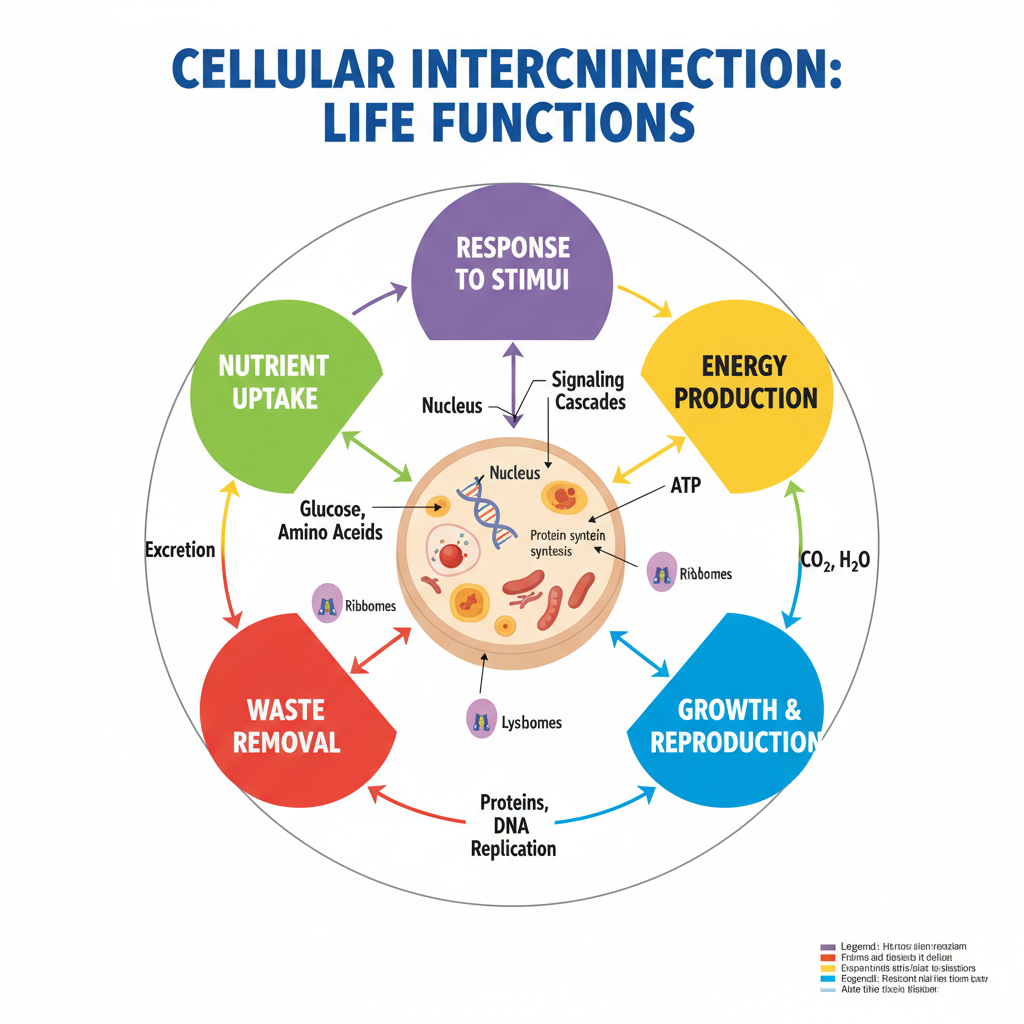 ⚠️ This picture may have spelling mistakes. Trust the words in the lesson.
Living vs. Non-Living
How can we tell if something is alive? We look for these basic life functions! A rock doesn't grow, eat, reproduce, or excrete. A car can move, but it doesn't do it on its own and doesn't reproduce. Only things that exhibit most or all of these functions are considered living.
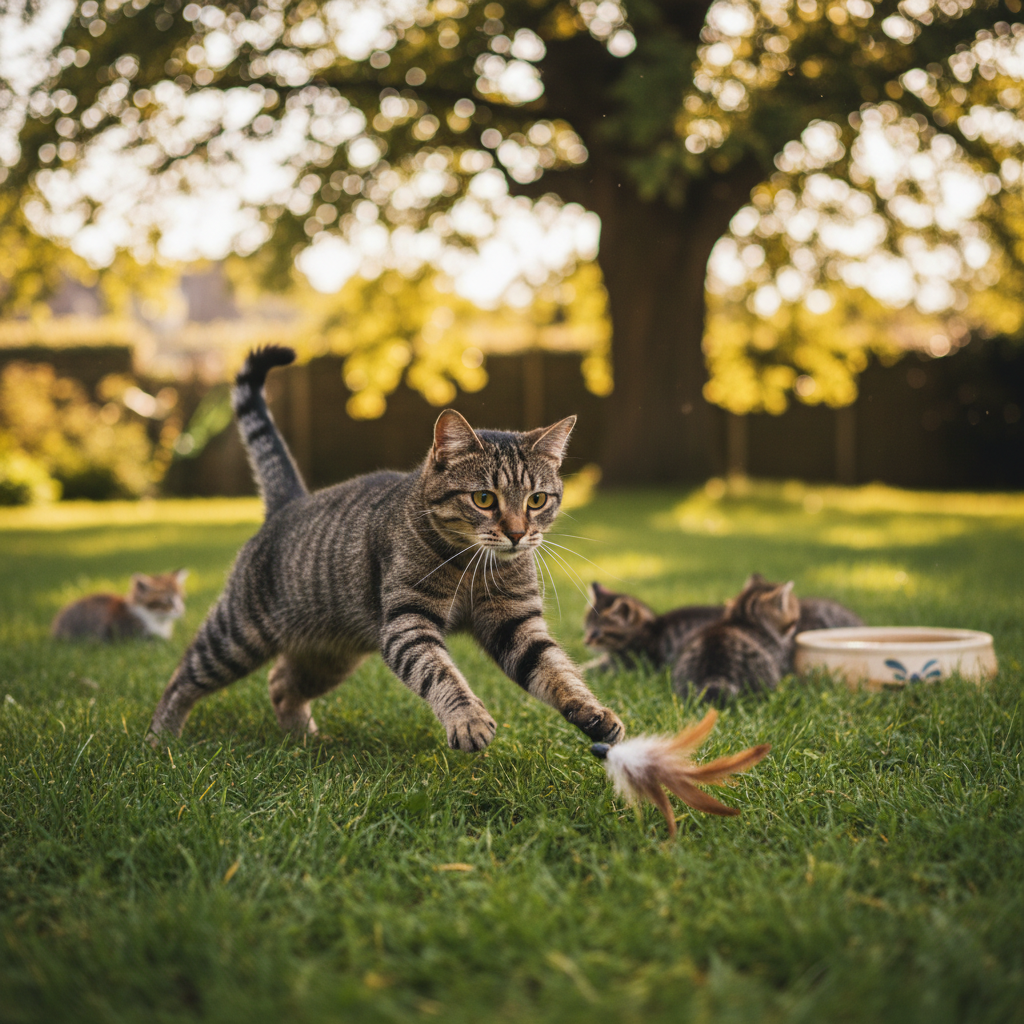
So, next time you see a plant, an animal, or even yourself, think about all the amazing jobs these basic life functions are doing to keep everything alive and functioning!
Keep learning, free
Create a free Syllabax account to unlock practice questions and games for this topic.
Visual Learning Enhanced! 🚀
To help you master this topic, we use Advanced Syllabax AI to generate detailed diagrams and visual models.
Note on Visuals: The AI sometimes makes spelling errors in image labels. Please refer to the lesson text for the correct terminology.