Deforestation[BIOLOGY]
Watch this topic in 60 seconds
Free preview · Lesson 1
Understanding Deforestation[BIOLOGY]
Deforestation: When Forests Disappear
Imagine our Earth is like a giant house, and the forests are its cozy, green carpets. These carpets are super important because they help keep the house clean, regulate the temperature, and are home to tons of amazing creatures. But what happens when we start tearing up these carpets? That's where deforestation comes in.
What is Deforestation?
Deforestation simply means the permanent removal of forests or trees to make land available for other uses. Think of it like taking up your carpet to build a new room or a swimming pool in your house. Instead of carpets, we're talking about large areas of trees being cut down and not being replanted.
Why does it happen?
People cut down forests for many reasons. It's usually to make space for other things that humans need or want. Let's break down the main reasons:
- Farming: This is a big one! To grow food like soybeans, palm oil, or raise cattle, we need open land. So, forests are often cleared to make way for farms and ranches. Think of it as clearing a patch of grass in your backyard to plant a vegetable garden.
- Building and Developing: When cities grow or new roads, buildings, or mines are needed, forests are often in the way. Imagine needing to build a new playground, and the only spot available is a beautiful, old forest. Sometimes, the trees have to go.
- Wood and Paper Products: We use wood for many things: building houses, making furniture, and creating paper for books and notebooks. While responsible forestry involves replanting trees, sometimes trees are cut down faster than they can grow back, leading to deforestation.
- Fuel: In some parts of the world, wood is still a primary source of fuel for cooking and heating. When many people rely on wood, it can lead to significant forest clearing.
The Amazing Jobs Forests Do (Why Deforestation is a Problem)
Forests are not just pretty; they are working wonders for our planet. When we remove them, we lose out on all the great things they do. It's like getting rid of your air conditioner and heater because you don't like the look of them – you lose out on comfort and proper temperature control!
Here are some of the vital roles forests play:
- Breathing Life into Our Air (Oxygen Production): Trees are like the lungs of our Earth. Through a process called photosynthesis, they take in carbon dioxide (a gas that's not great for the atmosphere in large amounts) and release oxygen, which we and other animals need to breathe.
Analogy: Think of trees as tiny air factories. They inhale the 'used' air (carbon dioxide) and exhale fresh, clean air (oxygen) for us! - Climate Control: Forests help regulate the Earth's temperature. They provide shade, release water vapor that cools the air, and store a lot of carbon.
Analogy: Imagine a hot summer day. You'd want to stand under a big, shady tree to cool down, right? Forests act like giant umbrellas for the planet, keeping things from getting too hot. - Home Sweet Home for Wildlife: Forests are buzzing with life! They provide food, shelter, and places to raise young for countless animals, from tiny insects to large mammals like bears and monkeys.
Analogy: A forest is like a giant apartment building for animals. Each tree is an apartment, offering a place to live, eat, and sleep. - Water Keepers: Forests help manage water cycles. Their roots hold the soil together, preventing erosion (when soil washes away). They also help filter water, keeping rivers and streams clean, and they play a role in how rain falls and where water ends up.
Analogy: Think of forest soil like a sponge. It soaks up rain, slowly releases it, and filters it along the way, providing clean water for rivers. - Soil Savers: The roots of trees hold the soil firmly in place, like the anchors of a ship holding it steady. This prevents soil from being washed away by rain or blown away by wind (erosion). Healthy soil is crucial for growing plants, including our food.
The Consequences: What Happens When Forests are Gone?
When forests disappear, the problems start to pile up. It’s like removing the foundation of a house – things start to crumble.
- More Carbon Dioxide in the Air: When trees are cut down and burned, or when they decay, they release the carbon they've stored back into the atmosphere as carbon dioxide. Also, without trees to absorb it, more carbon dioxide stays in the air. This extra carbon dioxide acts like a thicker blanket around the Earth, trapping heat and leading to global warming and climate change.
- Loss of Biodiversity: When forests are destroyed, the animals and plants that lived there lose their homes and food sources. Many species can no longer survive and become endangered or even extinct. This means we lose the amazing variety of life on Earth.
- Soil Erosion and Flooding: Without tree roots to hold the soil, rain can easily wash it away. This leads to less fertile land for farming and can cause rivers to become clogged with silt, increasing the risk of floods.
- Disrupted Water Cycles: The loss of forests can affect rainfall patterns, potentially leading to droughts in some areas and more severe floods in others.
- Impact on Human Communities: Many people, especially indigenous communities, rely directly on forests for their livelihood, food, medicine, and cultural practices. Deforestation disrupts their lives.
Can We Help?
Yes! Even though it's a big problem, there are ways we can help protect our forests:
- Reforestation and Afforestation: This means planting new trees (reforestation) or planting trees in areas that haven't had forests for a long time (afforestation). It’s like planting new carpets to replace the old ones.
- Sustainable Use of Resources: Using wood and paper products from forests that are managed responsibly, where trees are replanted, helps. Also, reducing our consumption of products that lead to deforestation (like unsustainable palm oil) makes a difference.
- Supporting Conservation Efforts: Many organizations work to protect forests and the wildlife within them. Supporting them with donations or by spreading awareness can help.
- Reducing, Reusing, and Recycling: Using less paper and wood means fewer trees need to be cut down. Recycling paper reduces the need for new wood pulp.
Our forests are precious. Understanding deforestation helps us appreciate how important these green spaces are for our planet and for all living things.
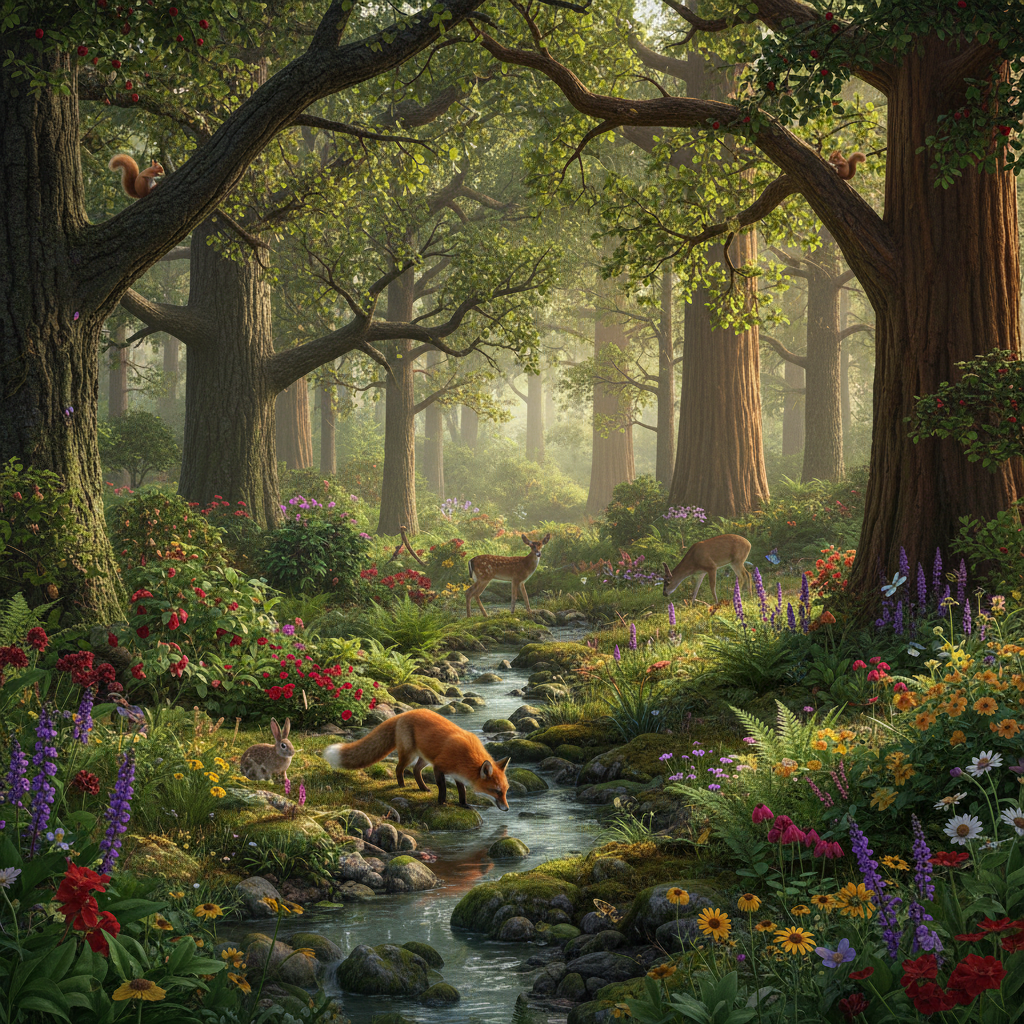 ⚠️ This picture may have spelling mistakes. Trust the words in the lesson.
Keep learning, free
Create a free Syllabax account to unlock practice questions and games for this topic.
Visual Learning Enhanced! 🚀
To help you master this topic, we use Advanced Syllabax AI to generate detailed diagrams and visual models.
Note on Visuals: The AI sometimes makes spelling errors in image labels. Please refer to the lesson text for the correct terminology.