Position & direction (left/right, above/below, near/far) (Spatial Understanding)
Watch this topic in 60 seconds
Free preview · Lesson 1
Understanding Position & direction (left/right, above/below, near/far) (Spatial Understanding)
Exploring Position and Direction: Where Things Are!
Hello, young explorers! Today, we're going on an exciting adventure to learn about something super important: position and direction. Have you ever wondered how to tell someone where your favorite toy is, or how to find your way around a new place? That's where understanding position and direction comes in handy! It's like having a secret map in your mind that helps you understand where everything is in the world around you.
Understanding 'Left' and 'Right'
Let's start with the words 'left' and 'right'. These words help us describe things that are to one side or the other. Think about your hands! You have a left hand and a right hand. Usually, most people write with their right hand. Can you wave your right hand? Great! Now, can you wave your left hand? Wonderful!
Imagine you are standing in front of a table. If the salt shaker is on the side closest to your right hand, we say it's on the right side of the table. If the pepper shaker is on the side closest to your left hand, we say it's on the left side of the table.
Analogy Time!
Think about a busy street. The cars driving on one side of the road are going in one direction, and the cars on the other side are going in the opposite direction. We can say the cars on the right are on the 'right lane' and the cars on the left are on the 'left lane'.
Sometimes, it can be a little tricky to remember which is which. Here's a fun trick: Make a fist with your right hand and extend your thumb and index finger. It looks a bit like the letter 'L', but it's your Left hand's shape! Oops, that's not quite right! Let's try another trick. Hold your hands out in front of you, palms facing away. If you can make the letter 'L' with your left hand by bending your fingers down while keeping your thumb straight, that's your left hand!
Let's Practice!
- Look around your room. Point to something on your left.
- Now, point to something on your right.
- If a friend is standing next to you, what is on their left might be on your right! We need to think about who is doing the looking.
Understanding 'Above' and 'Below'
Next, let's talk about 'above' and 'below'. These words tell us about things that are higher or lower.
Imagine a bird flying in the sky. The bird is above the ground. The ground is below the bird. If you are sitting in a chair, you are above the floor, and the floor is below you.
Analogy Time!
Think about a shelf in your house. The books are on the shelf. The ceiling is above the shelf, and the floor is below the shelf. Anything on the shelf is below the ceiling and above the floor.
What about clouds? Clouds are usually above us in the sky. Your feet are always below your head!
Let's Practice!
- Look up. What is above you? (Maybe the ceiling, a light, or the sky if you are outside!)
- Look down. What is below you? (Probably your feet, the floor, or a rug!)
- If you hang a picture on the wall, is it above the floor or below the floor? (Above the floor!)
Understanding 'Near' and 'Far'
Finally, let's explore 'near' and 'far'. These words help us describe how close or far away something is from us.
If your favorite teddy bear is sitting right next to you on the couch, it is near you. If your house is across the street from the park, the park is far away from your house.
Analogy Time!
Imagine you are at the beach. The ocean waves splashing at your feet are very near. The big ship you see far out on the water is far away. The sandcastle you built right next to you is near, but the lighthouse on the other side of the beach might be far.
When you are playing catch, the person throwing the ball is near you. If the ball goes very, very far, the person who has to run to get it is far away.
Let's Practice!
- Think about your school. Is the principal's office near or far from your classroom?
- Is your best friend's house near or far from your house?
- If you are standing very close to a tree, is the tree near or far? (Near!)
Putting It All Together!
Understanding these words – left, right, above, below, near, and far – helps us describe our world and communicate with others. We use these words every day without even realizing it!
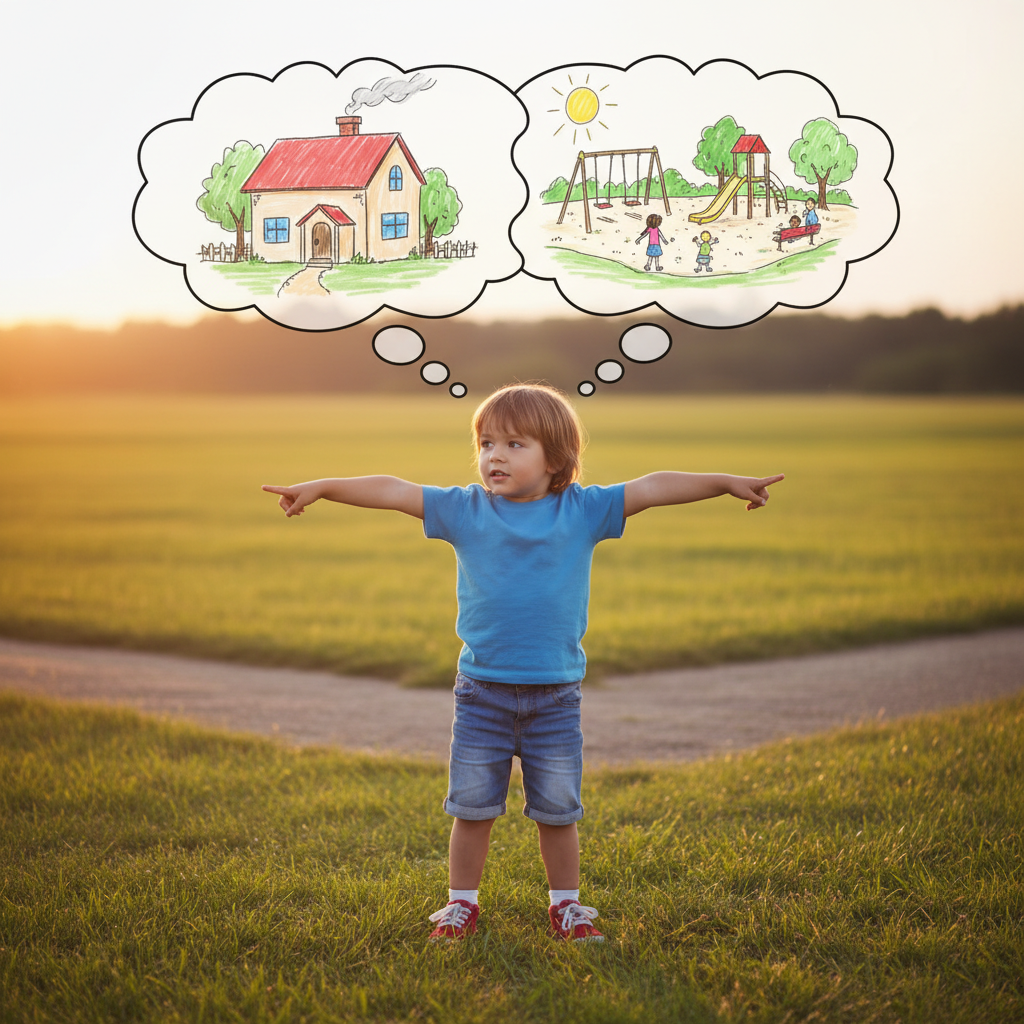
Imagine giving directions to a friend. You might say: "Go down the hall, turn left at the big painting. The classroom is the second door on your right. It's near the library and above the main entrance on the first floor." See how useful these words are?
 ⚠️ This picture may have spelling mistakes. Trust the words in the lesson.
Let's try another example. Imagine a playground. The swings are usually above the ground. The slide might be near the swings. If you are standing at the entrance, the big climbing frame at the other end of the playground is far away. The bench where parents sit is near the entrance, on your left.
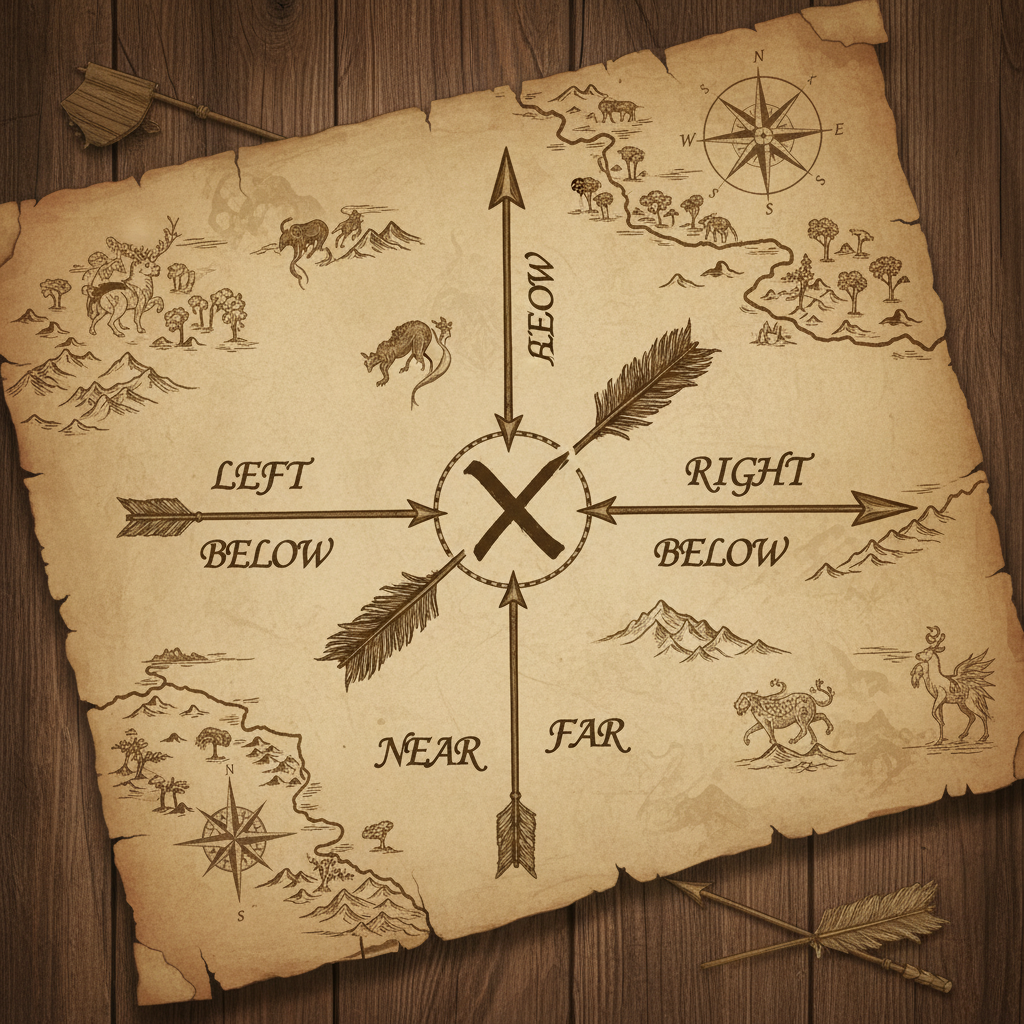
Remember, these words help us paint a picture with our words! Keep practicing, and you'll become a super-duper navigator!
 ⚠️ This picture may have spelling mistakes. Trust the words in the lesson.
Keep learning, free
Create a free Syllabax account to unlock practice questions and games for this topic.
Visual Learning Enhanced! 🚀
To help you master this topic, we use Advanced Syllabax AI to generate detailed diagrams and visual models.
Note on Visuals: The AI sometimes makes spelling errors in image labels. Please refer to the lesson text for the correct terminology.