Identifying coins & notes (Money )
Watch this topic in 60 seconds
Free preview · Lesson 1
Understanding Identifying coins & notes (Money )
Learning Resource: Identifying Coins and Notes (Money)
Welcome, Young Learners!
Hello there, super learners! Today, we're going on an exciting adventure into the world of money! Money is super important because it helps us get the things we need and want, like yummy snacks, fun toys, and even books to learn new things. We're going to learn all about the different types of money we use, called coins and notes.
What is Money?
Imagine you have a special toy you want to trade with a friend for their delicious cookie. But what if your friend doesn't want your toy? That's where money comes in! Money is like a special token that everyone agrees is valuable. Instead of trading toys or cookies directly, we use money to buy them. It's like a universal language for getting things!
Think of money like 'tickets' to get things. When you have money, you have 'tickets' to exchange for goods and services. A service is something someone does for you, like a haircut or a doctor helping you feel better.
Coins: The Little Round Treasures
Coins are small, round pieces of metal. They are usually made of shiny stuff. We use them for buying smaller things. Think of them as the 'small tickets' for smaller purchases.
Let's meet some of the most common coins:
The Penny (1 Cent)
The penny is the smallest and least valuable coin. It's usually a reddish-brown color. It's so small in value that you need 100 pennies to make just one dollar! Imagine having a big pile of pennies just to buy one candy bar. That's why pennies are like the tiniest 'thank you' tickets.
The Nickel (5 Cents)
The nickel is a bit bigger than the penny and is silver in color. It's worth 5 pennies. So, if you have 5 pennies, you can trade them for one nickel. It's like getting a 'better deal' by trading five small tickets for one slightly bigger ticket!
The Dime (10 Cents)
The dime is the smallest coin, even smaller than the nickel, but it's worth more! It's also silver. A dime is worth 10 pennies, or two nickels. Wow, that's a lot of value in a tiny coin! It's like a very small but powerful ticket.
The Quarter (25 Cents)
The quarter is the largest of these four coins and is also silver. It's worth 25 pennies! That's a lot of small tickets. It's worth two dimes and a nickel, or five nickels. The quarter is like a 'medium-sized' ticket that can get you some pretty good things, like a small toy or a special drink.
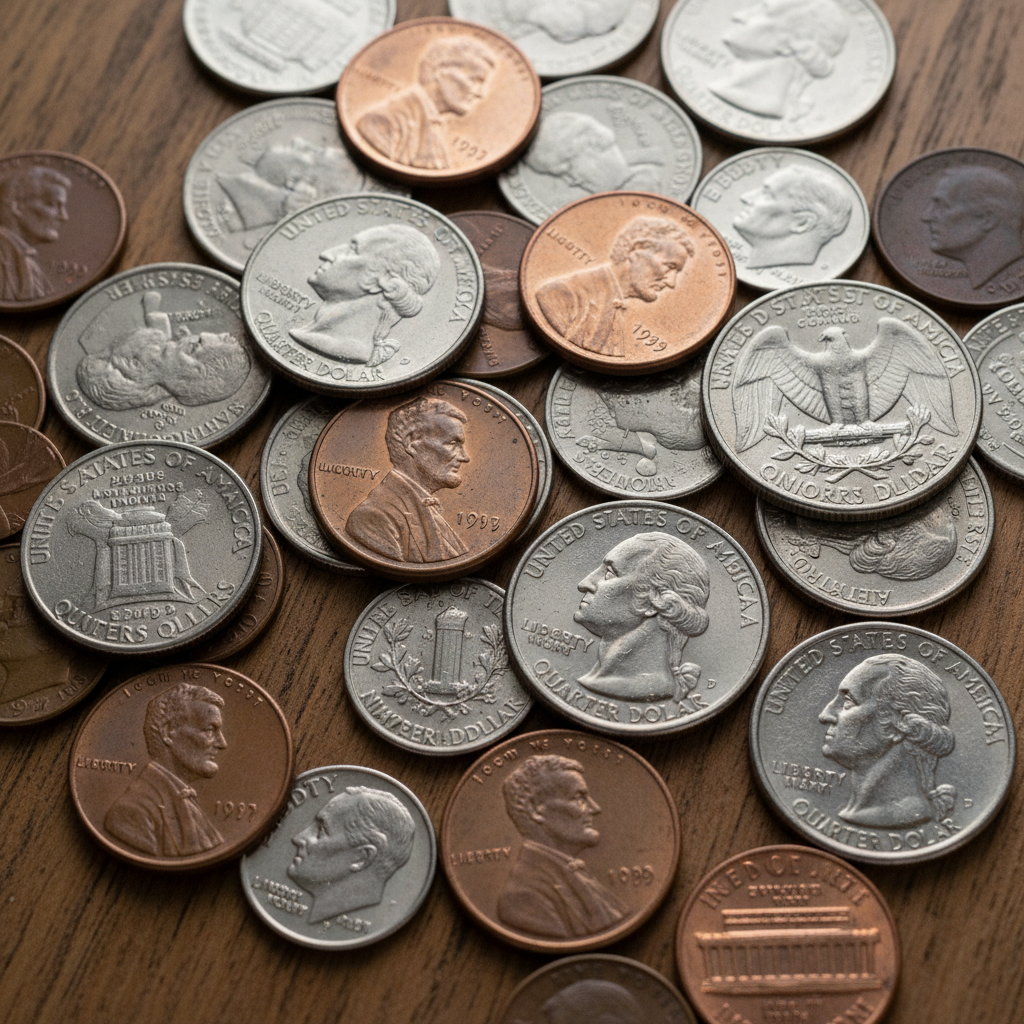 ⚠️ This picture may have spelling mistakes. Trust the words in the lesson.
Remember, each coin has a different size and a different picture or number on it, which tells you how much it's worth. It's like each coin has its own secret code for its value!
Notes: The Paper Bills
Notes, also called bills, are made of paper (or a special kind of material). They are worth much more than coins. Think of them as the 'big tickets' for buying bigger things.
Let's meet some common notes:
The One Dollar Note ($1)
This is the most common note. It's usually green. It's worth 100 pennies, or four quarters! Imagine needing 100 pennies to get one dollar – that's a lot to carry! Notes are much easier to carry around for bigger amounts.
The Five Dollar Note ($5)
The five dollar note is worth more than the one dollar note. It's like having five of the one dollar notes! It helps you buy bigger things, like a nice toy or a meal at a restaurant.
The Ten Dollar Note ($10)
This note is worth even more! It's like having ten of the one dollar notes, or two of the five dollar notes. You can get even more exciting things with a ten dollar note.
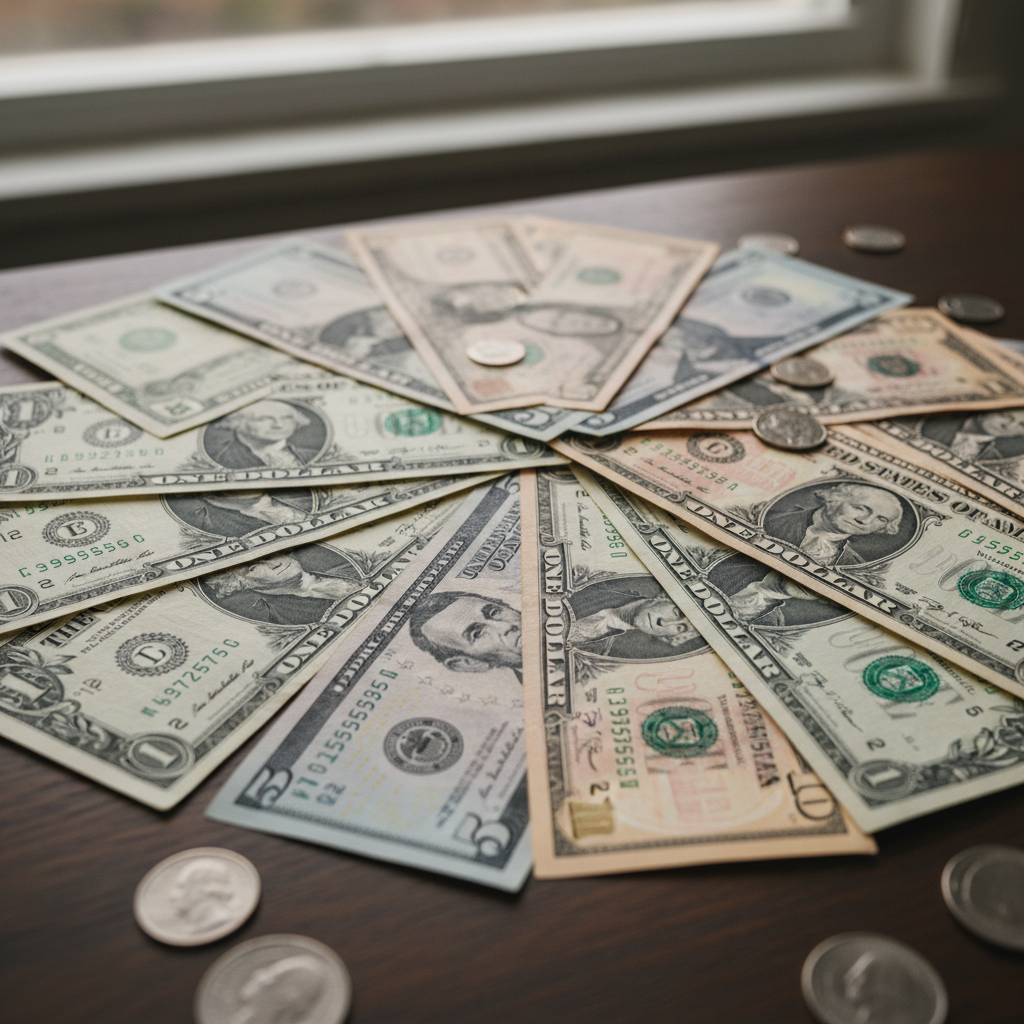
Just like coins, each note has a number on it that clearly shows its value. It's like a big, clear sign telling you how many 'tickets' it's worth!
Putting it all Together
So, we have coins for smaller purchases and notes for larger purchases. It's important to be able to tell them apart so you know how much money you have and what you can buy with it!
Think of it like building with blocks. The pennies are the smallest blocks, and the notes are the biggest blocks. You can use the small blocks to build something small, or you can use the big blocks to build something much bigger!
Learning about money helps you become a smart shopper. You can count your money, know if you have enough to buy something, and even learn to save up for something special. Isn't that amazing?
Keep learning, free
Create a free Syllabax account to unlock practice questions and games for this topic.
Visual Learning Enhanced! 🚀
To help you master this topic, we use Advanced Syllabax AI to generate detailed diagrams and visual models.
Note on Visuals: The AI sometimes makes spelling errors in image labels. Please refer to the lesson text for the correct terminology.