Agricultural practices[BIOLOGY]
Watch this topic in 60 seconds
Free preview · Lesson 1
Understanding Agricultural practices[BIOLOGY]
Understanding Agricultural Practices: Feeding Our World!
Welcome, young scientists! Today, we're going on a journey to understand how humans grow the food we eat. This is called agriculture, and the ways we do it are called agricultural practices. Think of it like this: just like you need a plan to build an amazing LEGO castle, farmers need a plan and specific steps to grow healthy plants and raise animals. These practices help us get enough food to feed everyone on our planet!
What is Agriculture?
Agriculture is simply the science and art of cultivating plants and animals for food, fiber (like cotton for clothes), and other products. It's one of the oldest and most important human activities. Imagine if we didn't have farming – we wouldn't have yummy fruits, crunchy vegetables, or bread to eat!
Why Are Agricultural Practices Important?
Good agricultural practices are like a secret recipe for success. They ensure that:
- We get enough food: Farming helps produce large quantities of food to feed billions of people.
- Food is healthy and safe: Practices that keep plants and animals healthy also make our food safe to eat.
- We protect the environment: Some practices help conserve water, soil, and wildlife, making sure we can keep farming for a long time.
Core Concepts in Agricultural Practices
Let's explore some of the main ideas behind how we grow food:
1. Soil Preparation: The Foundation of Farming
Before planting anything, the soil needs to be ready. Think of soil as the home for plant roots. We need to make sure this home is comfortable and has everything the roots need. This involves several steps:
- Tilling or Ploughing: This is like fluffing up a pillow. Farmers turn over the soil to loosen it, allowing air and water to reach the roots more easily. It also helps mix in any leftover plant material from the last crop, which acts like fertilizer.
- Fertilizing: Plants need food, just like we do! This food comes from nutrients in the soil. Sometimes, the soil doesn't have enough of these nutrients. Fertilizers are like vitamins for plants. They can be natural (like compost or manure) or man-made. Adding fertilizers gives plants the energy they need to grow big and strong.
- Levelling: After tilling and fertilizing, the soil is smoothed out. This is like making sure your LEGO baseplate is flat before you start building. Level ground helps water spread evenly across the field, so no plants get too much or too little.
2. Sowing: Planting the Seeds of Life
This is the exciting part where new life begins! Sowing means putting seeds into the prepared soil.
- Direct Sowing: This is like planting seeds directly into your garden. Some seeds, like corn or beans, are planted straight into the ground.
- Transplanting: Sometimes, seeds are first grown in a special nursery or greenhouse to become small seedlings (like baby plants). Then, these seedlings are carefully moved to the main field. This is like raising a baby animal until it's strong enough to join the herd. This method is often used for vegetables like tomatoes and peppers.
- Seed Drills: These are machines that plant seeds at the right depth and spacing. Think of them as super-organized gardeners who make sure every seed has enough room to grow without bumping into its neighbors.
3. Irrigation: Giving Plants a Drink
Just like you get thirsty, plants need water to survive and grow. Irrigation is the process of supplying water to crops when there isn't enough rain.
- Why is it important? Rainfall isn't always predictable. Some places get too much rain, while others don't get enough. Irrigation systems ensure plants get the consistent water they need.
- Types of Irrigation:
- Canal Irrigation: Water is brought to fields through man-made channels, like a small river system for crops.
- Well Irrigation: Water is pumped up from underground wells.
- Sprinkler Systems: These are like giant sprinklers in your backyard, spraying water over the crops.
- Drip Irrigation: This is a very smart way to water. It delivers water slowly and directly to the roots of each plant, like giving a plant a sip from a tiny straw. This saves a lot of water!
4. Crop Protection: Keeping Pests and Diseases Away
Imagine if tiny bugs or nasty diseases decided to attack your favorite toy. You'd want to protect it, right? Farmers also need to protect their crops.
- Pests: These are insects, birds, or animals that eat or damage crops. Think of them as tiny thieves trying to steal the plants' food or homes.
- Diseases: These are caused by tiny organisms like fungi or bacteria that make plants sick. It's like a plant catching a cold or flu.
- Methods of Protection:
- Natural Predators: Sometimes, farmers encourage helpful insects (like ladybugs) that eat the bad pests. This is like having a bodyguard for your plants!
- Crop Rotation: This means planting different types of crops in the same field in different seasons or years. It's like changing your diet to stay healthy; it prevents pests and diseases from building up in one spot.
- Pesticides: These are substances used to kill pests or control diseases. Farmers use them carefully to protect their crops, but they must be used responsibly to avoid harming helpful insects or the environment.
5. Harvesting: Gathering the Bounty
This is the final reward! Harvesting is the process of collecting the mature crops from the field.
- Timing is Key: Farmers need to harvest at the right time. If they harvest too early, the crops might not be ripe enough. If they wait too long, the crops might spoil or be damaged by weather. It's like picking an apple when it's perfectly red and sweet!
- Methods: Harvesting can be done by hand for smaller farms or using large machines like combine harvesters for bigger fields.
Modern Agricultural Practices
Agriculture has evolved a lot! Today, farmers use advanced technology to make farming more efficient and sustainable.
- Mechanization: Using machines like tractors, harvesters, and automated irrigation systems saves time and labor.
- Biotechnology: This involves using science to develop crops that are more resistant to pests, diseases, or harsh weather conditions.
- Precision Agriculture: This uses technology like GPS and sensors to monitor crops and soil conditions very closely, allowing farmers to apply water and fertilizers exactly where and when they are needed, minimizing waste.
Sustainable Agriculture
This is a very important concept! Sustainable agriculture means farming in a way that meets our current food needs without compromising the ability of future generations to meet their own needs. It focuses on:
- Conserving soil and water
- Protecting biodiversity (different kinds of plants and animals)
- Reducing pollution
- Ensuring the long-term health of the land
Think of it as taking good care of our planet so it can keep providing us with food for many, many years to come!
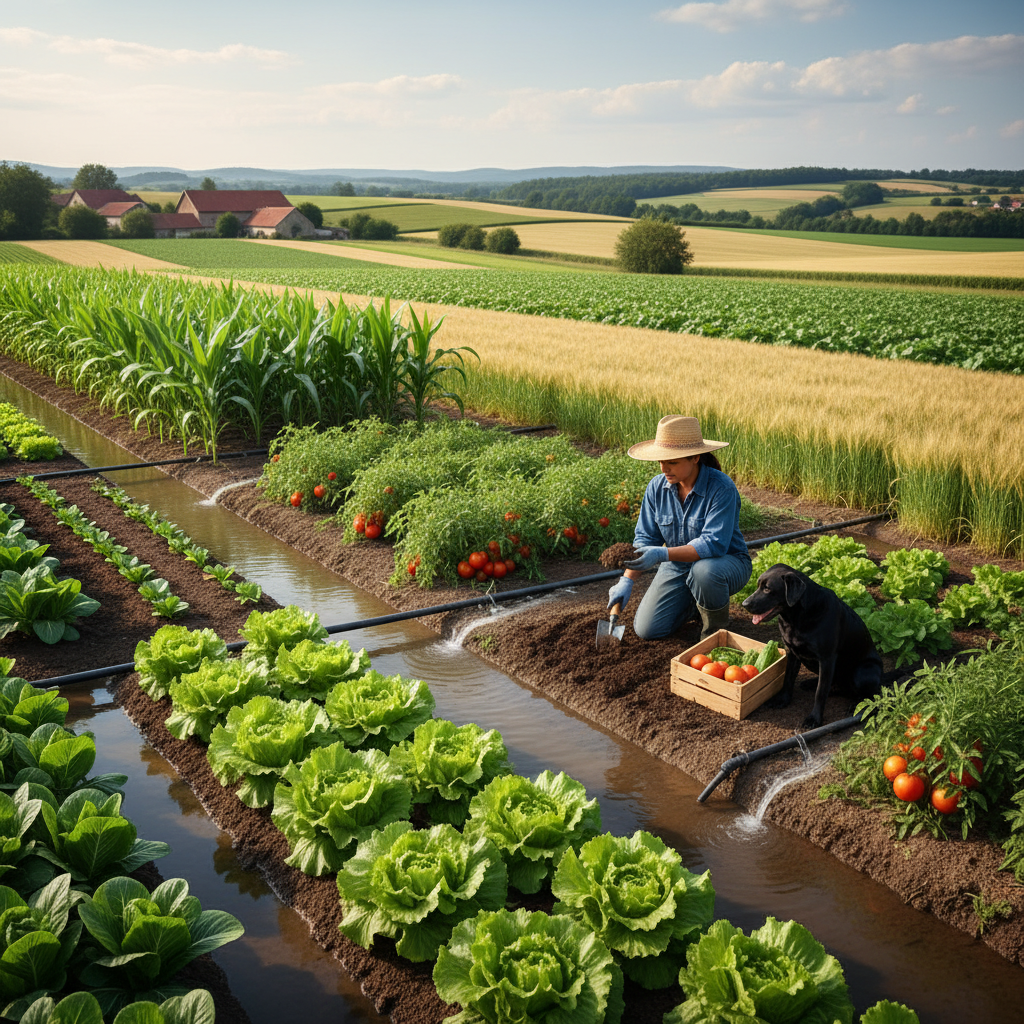 ⚠️ This picture may have spelling mistakes. Trust the words in the lesson.
Keep learning, free
Create a free Syllabax account to unlock practice questions and games for this topic.
Visual Learning Enhanced! 🚀
To help you master this topic, we use Advanced Syllabax AI to generate detailed diagrams and visual models.
Note on Visuals: The AI sometimes makes spelling errors in image labels. Please refer to the lesson text for the correct terminology.