Logical case-based questions [HOTS (High Order Thinking Skills)]
Watch this topic in 60 seconds
Free preview · Lesson 1
Understanding Logical case-based questions [HOTS (High Order Thinking Skills)]
Unlocking Mysteries with Logic: Case-Based Questions for 5th Graders
Welcome, young detectives and puzzle solvers! Today, we're going on an exciting adventure into the world of logical thinking. We're going to learn how to solve mysteries using clues and smart thinking. These kinds of questions are called 'case-based questions,' and they help us practice our High Order Thinking Skills (HOTS). Don't worry if that sounds complicated; we'll break it down with fun examples and analogies!
What is Logic? The Detective's Toolkit
Imagine you're a detective. You have a mystery to solve, like 'Who ate the last cookie?' You can't just guess, right? You need to look for clues! Logic is like your detective's toolkit. It's a way of thinking step-by-step to figure things out. It helps you connect the dots between different pieces of information.
Analogy: Building with LEGOs
Think about building with LEGOs. You have a box of different-shaped bricks (that's your information or clues). Logic is the instruction manual that tells you which brick connects to which to build something amazing (the solution). Without logic, you might just try to stick bricks anywhere, and it wouldn't look like the picture on the box!
What are Case-Based Questions?
Case-based questions give you a small story or a situation (the 'case') and then ask you questions about it. To answer them, you need to read carefully, understand the details, and use your logical thinking to find the answer. It's like being given a short mystery novel and then asked to figure out 'whodunnit' or 'how did it happen?'
Analogy: A Recipe
Think of a recipe for baking cookies. The recipe tells you: 1. Mix flour and sugar. 2. Add eggs and butter. 3. Bake for 10 minutes. This is like a case! If I ask you, 'What should you do before adding eggs?', you have to look at the recipe (the case) and use logic to say, 'Mix flour and sugar.' You can't bake them before you mix the ingredients!
Why are HOTS Important? Thinking Smarter!
HOTS stands for High Order Thinking Skills. These are the skills that help you do more than just remember facts. They help you:
- Analyze: Break down information into smaller parts.
- Evaluate: Make judgments about information.
- Create: Come up with new ideas.
- Problem-Solve: Find solutions to challenges.
Logical case-based questions are fantastic for practicing these skills. They push your brain to think beyond the obvious.
Analogy: A Superpower Scanner
Imagine you have a superpower scanner. Instead of just seeing a toy, your scanner can tell you how it was made, what parts it has, and how it works. HOTS are like that superpower scanner for your brain. They help you understand things more deeply.
Let's Solve a Case! Example 1: The Missing Lunchbox
The Case: Maya, Ben, and Chloe were at the park. Maya brought a red lunchbox with a sandwich. Ben brought a blue lunchbox with an apple. Chloe brought a green lunchbox with carrot sticks. When they went to eat, Maya's lunchbox was gone!
Clues:
- Maya's lunchbox is red.
- Ben's lunchbox is blue.
- Chloe's lunchbox is green.
- Maya's lunchbox is missing.
- There is a red glove lying near where Maya was sitting.
Thinking Logically (Connecting the Dots):
1. We know Maya's lunchbox is red.
2. We are looking for Maya's missing lunchbox.
3. We found a red glove.
4. Does the red glove tell us anything about the lunchbox? Not directly, but it's a red item. Could someone have picked up the wrong red item? Or perhaps the person who took the lunchbox also dropped a red glove?
Let's add another clue:
New Clue: A dog with a blue collar was seen running away from Maya's spot, carrying something red.
Logical Deduction:
1. The dog was carrying something *red*.
2. Maya's lunchbox is *red*.
3. The dog ran away from Maya's spot.
Conclusion: It's highly likely the dog took Maya's red lunchbox!
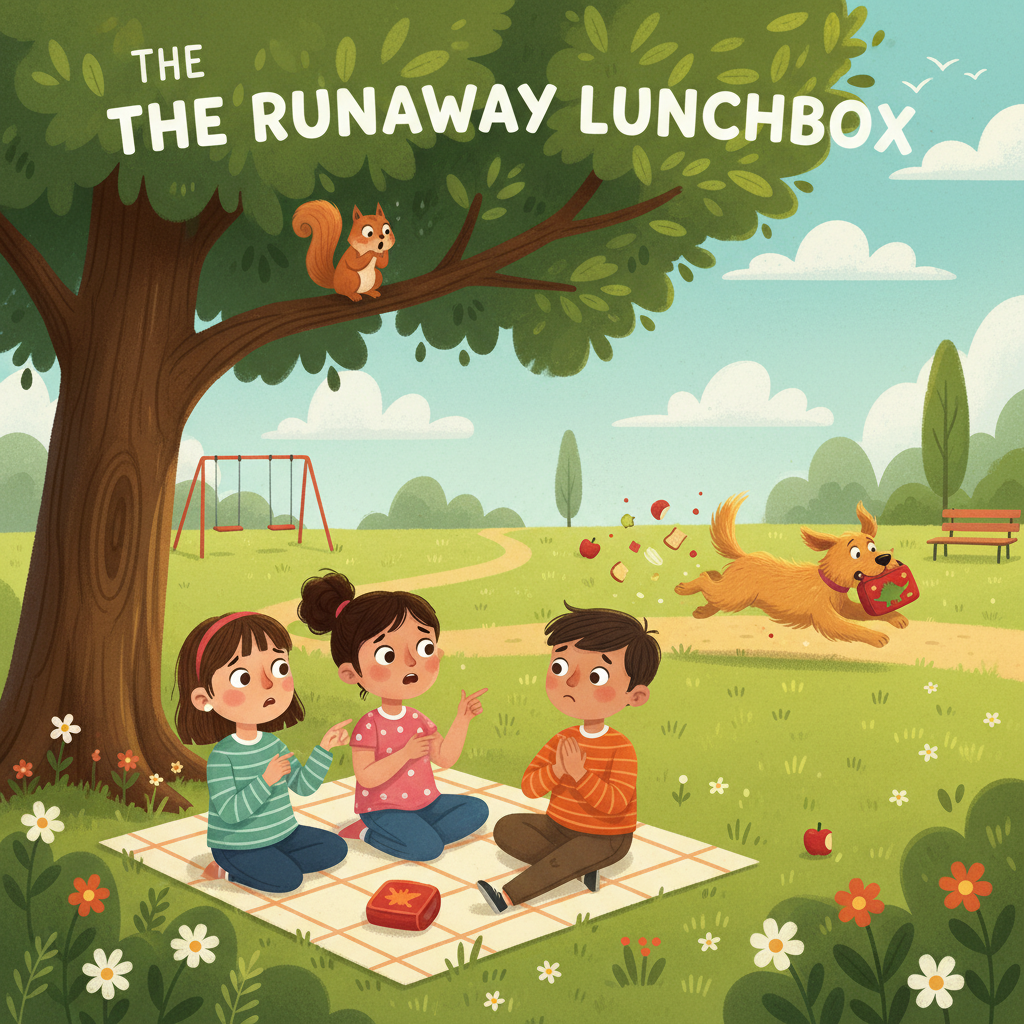 ⚠️ This picture may have spelling mistakes. Trust the words in the lesson.
Example 2: The Mystery of the Wobbly Chair
The Case: In Mrs. Davison's classroom, one of the chairs is wobbly. The chairs are labeled A, B, C, and D. The students noticed the wobble happened after they rearranged the desks.
Clues:
- Chair A is perfectly steady.
- Chair B makes a squeaky noise when someone sits in it, but it doesn't wobble.
- Chair C is the one that wobbles.
- Chair D was moved to a different corner of the room.
Thinking Logically:
1. We are looking for the wobbly chair.
2. The case tells us Chair C is the wobbly one.
3. The other clues confirm that A and B are *not* the wobbly chairs.
4. The information about Chair D being moved explains *why* a chair might be wobbly (maybe it's on an uneven spot now).
Conclusion: Chair C is the wobbly chair. The reason might be that it's now on an uneven part of the floor, possibly because the desks were rearranged.

How to Tackle Case-Based Questions: Your Step-by-Step Guide
- Read Carefully: Read the story or situation at least twice. Underline or note down important details and names.
- Identify the Clues: What specific pieces of information are given? List them out if it helps.
- Understand the Question: What exactly are you being asked to find or figure out?
- Connect the Clues: How do the clues relate to each other? Do they point towards a specific answer? Think: If this is true, then what?
- Eliminate Wrong Answers (if multiple choice): If you have options, see which ones don't fit the clues.
- Formulate Your Answer: State your conclusion clearly, based only on the information given in the case.
Analogy: A Jigsaw Puzzle
Solving a case is like putting together a jigsaw puzzle. Each clue is a puzzle piece. You look at the shape and picture on each piece (the clue). Then you try to fit them together (connect the clues) until the whole picture (the solution) becomes clear.
Practice Makes Perfect!
The more you practice, the better you'll get at logical thinking and solving case-based questions. Keep your detective hats on, and let's get ready for some practice!
Keep learning, free
Create a free Syllabax account to unlock practice questions and games for this topic.
Visual Learning Enhanced! 🚀
To help you master this topic, we use Advanced Syllabax AI to generate detailed diagrams and visual models.
Note on Visuals: The AI sometimes makes spelling errors in image labels. Please refer to the lesson text for the correct terminology.