Medieval India (Mughals – Basic Introduction) – Indian History
Watch this topic in 60 seconds
Free preview · Lesson 1
Medieval India (Mughals – Basic Introduction) – Indian History (Foundational)
Medieval India: The Mughal Empire (A Beginner's Guide)
Hey there, young historians! Get ready to journey back in time to Medieval India and learn about a powerful group called the Mughals. We'll discover who they were, where they came from, and what made their empire so special.
Who Were the Mughals?
- The Mughals were a group of people who ruled a large part of India for over 300 years.
- They came from Central Asia, led by their first emperor, Babur.
- Think of them as a family of powerful rulers who built a grand empire!
What Does 'Mughal' Mean?
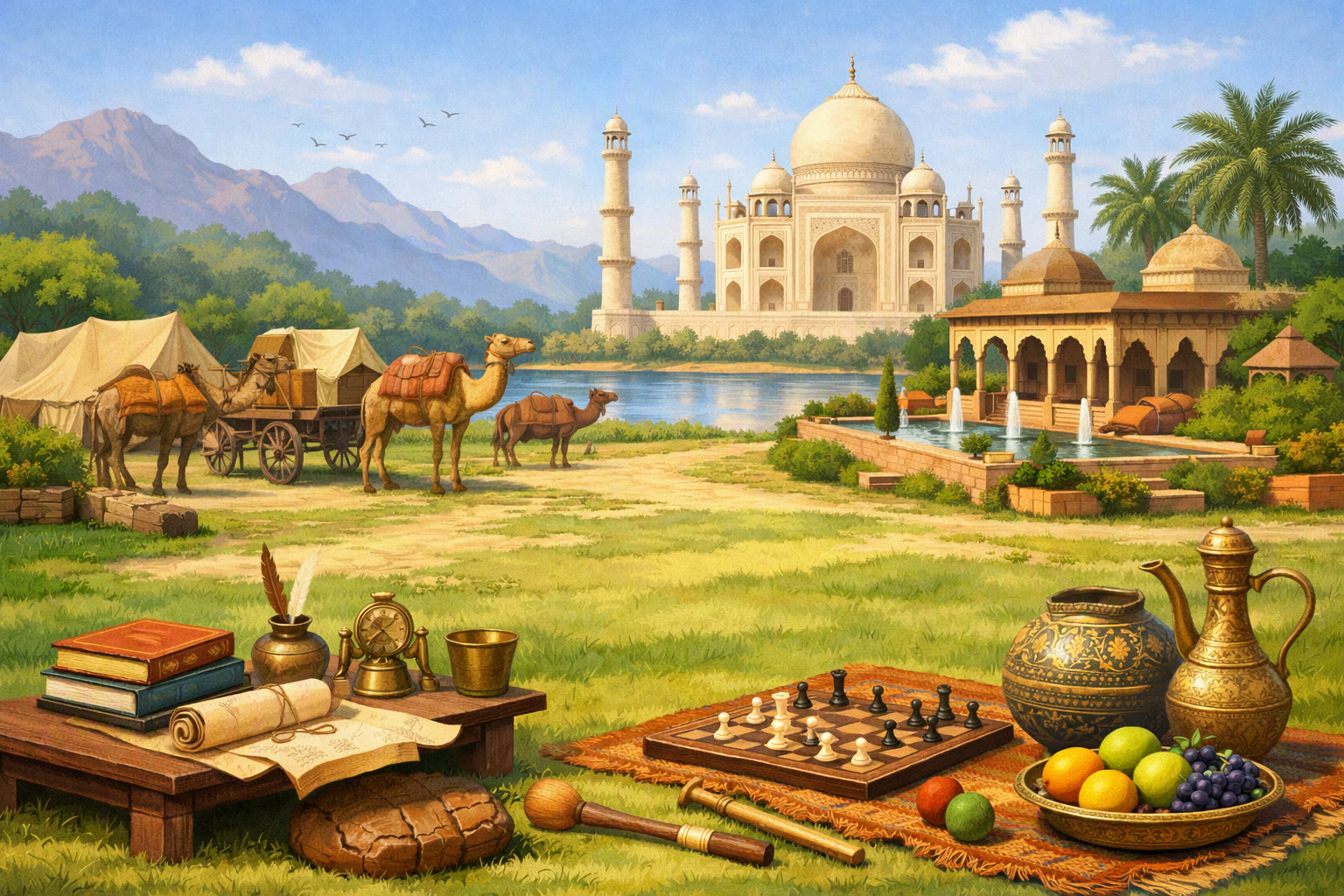
The word 'Mughal' comes from 'Mongol.' Although the Mughals weren't directly Mongols, they claimed descent from Genghis Khan, a famous Mongol leader. It’s kind of like saying you’re related to a famous sports star!
Key Mughal Emperors
- Babur: The founder of the Mughal Empire. He was a skilled warrior and a great leader.
- Akbar: Babur's grandson, known for his wisdom, fairness, and religious tolerance. He tried to unite different religions.
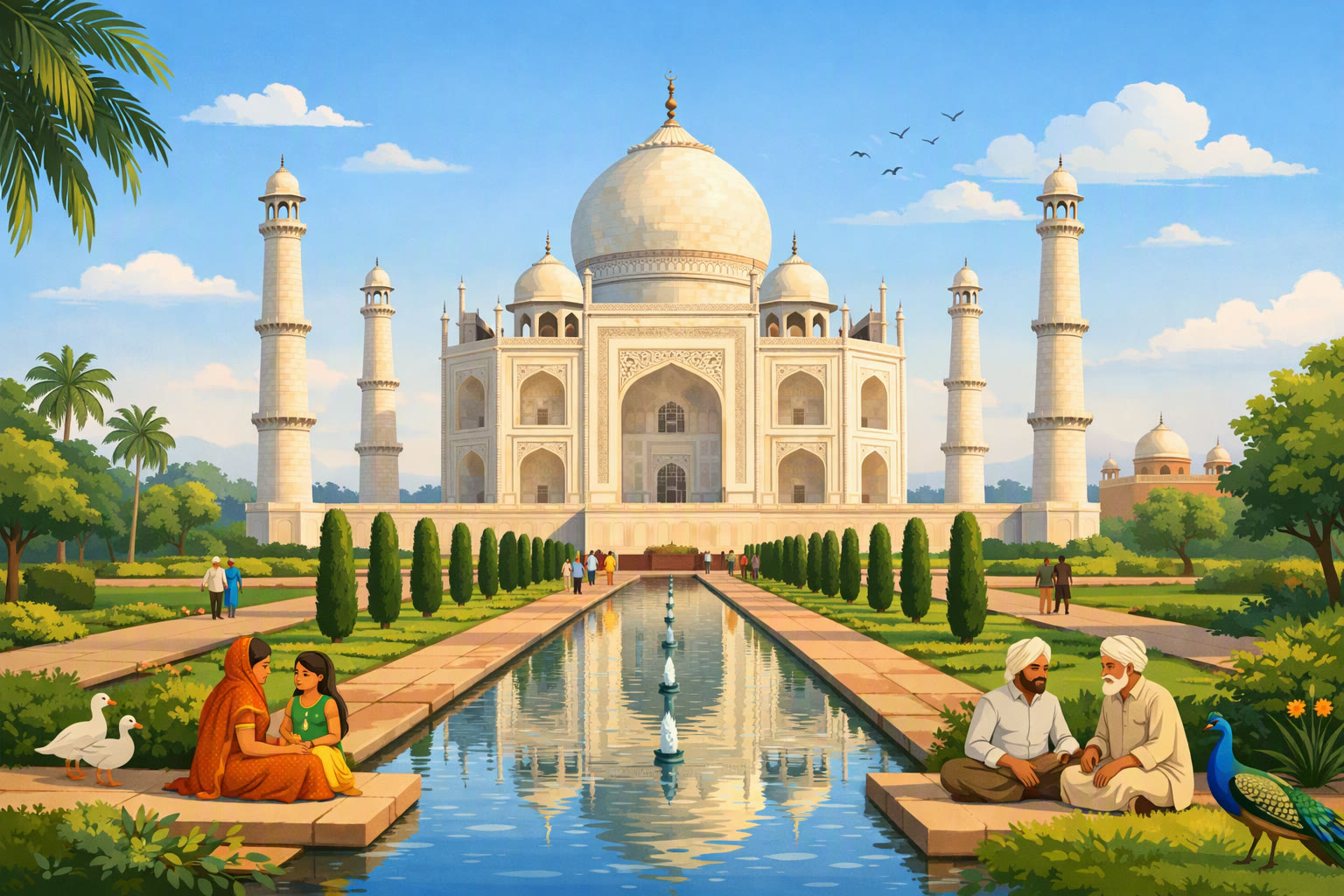
- Shah Jahan: Famous for building the Taj Mahal, a beautiful monument to his wife.
- Aurangzeb: The last of the major Mughal emperors.
What Did the Mughals Do?
- Expanded their Empire: They conquered many kingdoms and brought them under their rule.
- Built Great Monuments: They constructed magnificent buildings like the Taj Mahal, forts, and mosques.
- Promoted Art and Culture: They encouraged painting, music, literature, and architecture.
- Developed a System of Administration: They created rules and laws to govern the empire effectively.
Why Did the Mughal Empire Decline?
- After Aurangzeb, the Mughal Empire became weaker due to several reasons:
- Succession issues: Problems with who should be the next ruler.
- Weak rulers: Later emperors weren’t as strong or effective as the earlier ones.
- Rebellions: Local rulers and groups fought against Mughal control.
Key Vocabulary
- Empire: A large territory ruled by an emperor or empress.
- Emperor: The ruler of an empire.
- Monument: A building or statue built to remember a person or event.
- Administration: The way a country or organization is managed.
And that's your basic introduction to the Mughal Empire! They left a lasting impact on India, and we can still see their influence today through their buildings, art, and culture.
Keep learning, free
Create a free Syllabax account to unlock practice questions and games for this topic.
Visual Learning Enhanced! 🚀
To help you master this topic, we use Advanced Syllabax AI to generate detailed diagrams and visual models.
Note on Visuals: The AI sometimes makes spelling errors in image labels. Please refer to the lesson text for the correct terminology.