Understanding bills (Money)
Watch this topic in 60 seconds
Free preview · Lesson 1
Understanding Understanding bills (Money)
Understanding Bills: Your Money's Journey!
Welcome, super savers! Today, we're going on an exciting adventure to learn all about bills. Bills are like special papers or messages that tell us how much money we need to pay for things or services we use. Think of them as a shopping list for grown-ups, but instead of telling you what to buy, they tell you what you owe!
What is a Bill?
Imagine you go to the ice cream shop and buy a delicious triple-scoop cone. The person at the counter doesn't just give you the ice cream and say, "Thanks!" They hand you a little slip of paper that says how much your yummy treat costs. That slip of paper is a mini-bill!
In the grown-up world, bills are often bigger and come in the mail or through email. They are official records from companies that provide services like electricity (the power that makes your lights turn on!), water (for drinking and baths!), and internet (for watching your favorite shows!). These companies send you a bill to let you know how much you need to pay them for using their amazing services.
Why Do We Get Bills?
Think about your favorite toy. Did it just appear magically? Probably not! Someone had to buy the materials, build it, and then sell it to your parents. The same goes for the services grown-ups use every day. Companies spend a lot of money to provide things like:
- Electricity: They have power plants and wires to bring energy to your home.
- Water: They have pipes and treatment plants to get clean water to your faucet.
- Internet: They have special cables and technology to connect you to the world wide web.
- Phone: They have towers and networks to help you make calls and send messages.
- Rent/Mortgage: This is money paid to live in a house or apartment.
- Groceries: This is money spent on food to eat.
When you use these services or buy things, you agree to pay for them. Bills are the way companies track what you've used and how much you owe. It's like saying "thank you" for the service by paying for it!
Different Kinds of Bills
Bills can look different depending on what they are for. Let's explore some common ones:
The Electricity Bill: Powering Your Fun!
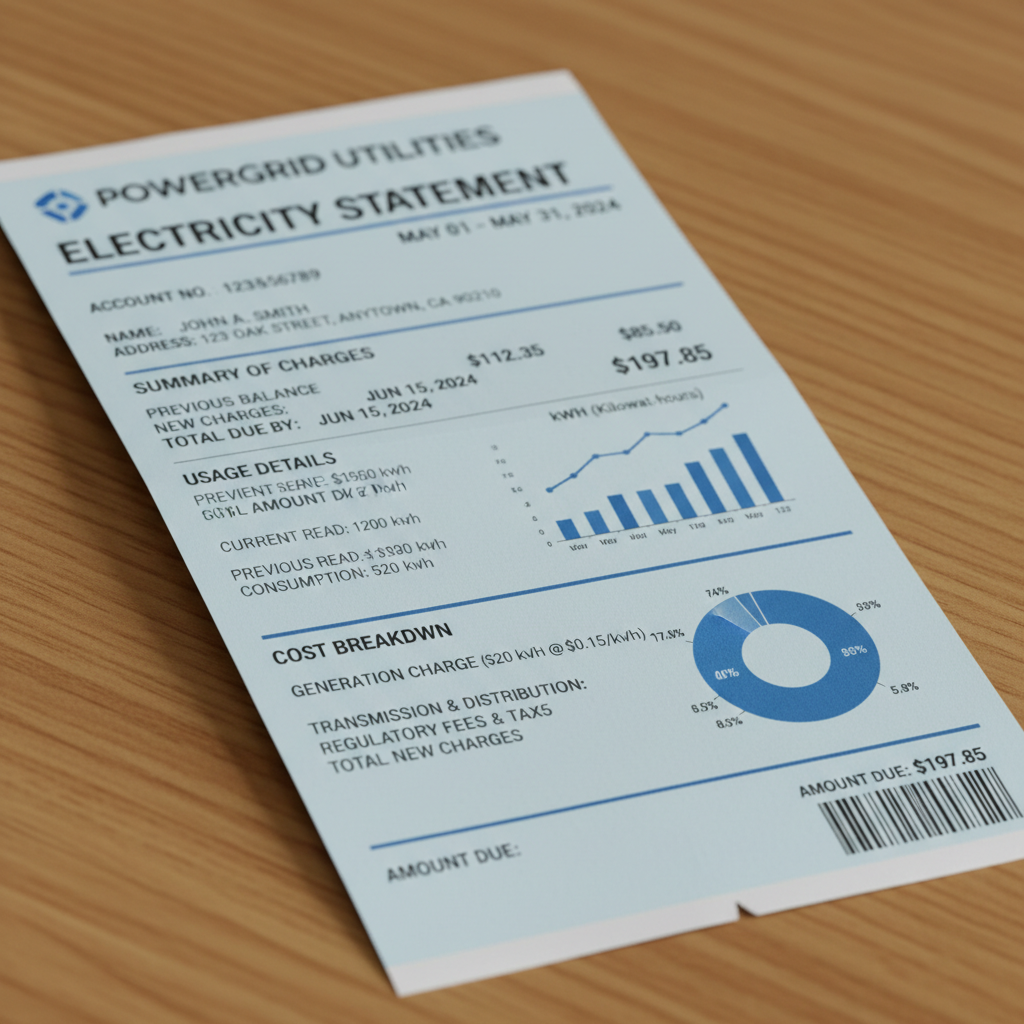
This bill tells you how much electricity you used to power your lights, your TV, your video games, and maybe even your refrigerator. It’s like measuring how much energy your house used, just like you might count how many toys you played with.
 ⚠️ This picture may have spelling mistakes. Trust the words in the lesson.
The electricity company reads a special meter at your house that counts how much power you've used. They then send you a bill based on that reading. It’s important to turn off lights when you leave a room to save electricity – and save money!
The Water Bill: Quenching Your Thirst!
This bill is for the water you use to drink, brush your teeth, take baths, and flush the toilet. Just like electricity, there's a meter that measures how much water flows into your house. If you take super long showers, you’ll use more water, and your water bill will be higher!
Analogy: Imagine a faucet with a little counter on it. Every time water comes out, the counter goes up. The water bill is based on that counter's final number!
The Internet Bill: Connecting to the World!
For many families, the internet is like a magical doorway to games, learning, and talking to friends and family. The internet bill is for the service that lets you connect to this amazing digital world. It’s like paying for your ticket to ride the information superhighway!
The Phone Bill: Talking and Texting!
This bill is for using your phone to call people or send text messages. If you have a home phone or a cell phone, this bill covers those services. It’s like paying for your chat time!
Other Bills: Food, Fun, and Home!
Besides utility bills (like electricity and water), there are other important bills:
- Grocery Bills: When your grown-ups go to the store to buy food, they get a receipt, which is like a bill for the groceries.
- Rent or Mortgage Bills: These are bills for having a place to live. Rent is paid to someone who owns the house, and a mortgage is a special loan to buy a house.
- Credit Card Bills: Sometimes, grown-ups use a special card to buy things, and they get a bill later to pay back the money they borrowed.
Reading Your Bill: What to Look For
Bills might seem a little confusing at first, but they usually have the same important information. Let's break it down:
1. The Company's Name and Logo
This tells you who the bill is from (e.g., the Power Company, the Water Department).
2. Your Name and Address
This makes sure the bill is for the right person at the right house.
3. The Billing Period
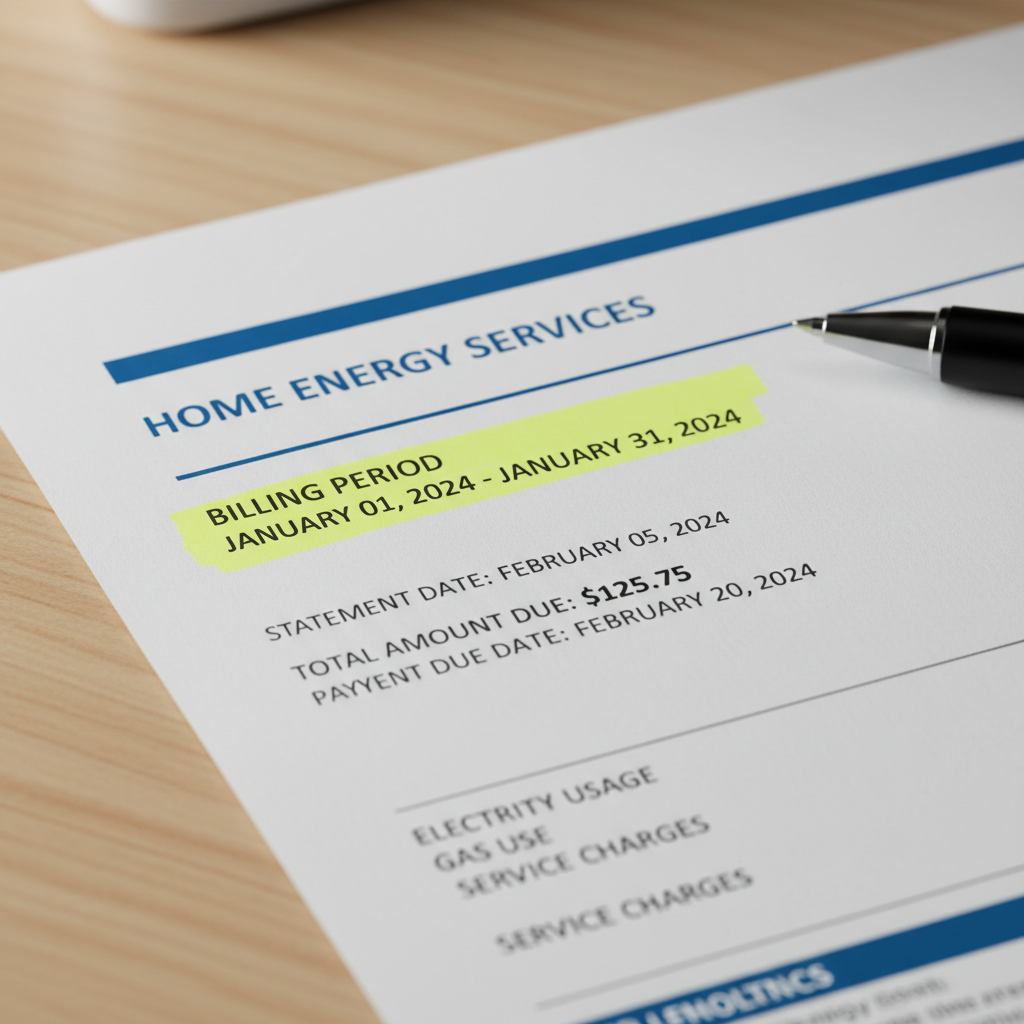
This shows you the dates for which you are being billed. For example, it might say "January 1st - January 31st." It’s like saying "This is for everything you used last month."
 ⚠️ This picture may have spelling mistakes. Trust the words in the lesson.
4. Amount Due
This is the big, important number that tells you how much money you need to pay!
5. Due Date
This is the last day you can pay the bill without any extra charges. It’s super important to pay bills on time!
6. Usage Details
This part might show you how much electricity, water, or internet data you used. It helps you understand how the total amount was calculated.
Paying Your Bills: The Final Step!
Once you know how much you owe and when it’s due, it's time to pay! Grown-ups have different ways to pay bills:
- Online: Many companies let you pay through their website or an app on a phone or computer.
- By Mail: You can write a check or send money through the mail.
- In Person: Some companies let you pay at their office or at certain stores.
- Automatic Payments: Some grown-ups set it up so the money comes out of their bank account automatically each month. This is like setting a reminder for the money to pay itself!
It’s important for grown-ups to keep track of their bills and make sure they pay them on time. This helps them keep their lights on, water running, and internet working!
Why is Paying Bills Important?
Paying bills on time is like being a responsible superhero for your household! Here’s why:
- Keeps Services On: If you don't pay your electricity bill, the power might get turned off!
- Avoids Extra Fees: Paying late can sometimes mean paying extra money, called late fees.
- Good Credit: For grown-ups, paying bills on time helps them build something called "good credit," which helps them borrow money for big things like a house or a car in the future.
So, understanding bills isn't just about numbers; it's about making sure your home has everything it needs to be comfortable and fun!
Keep learning, free
Create a free Syllabax account to unlock practice questions and games for this topic.
Visual Learning Enhanced! 🚀
To help you master this topic, we use Advanced Syllabax AI to generate detailed diagrams and visual models.
Note on Visuals: The AI sometimes makes spelling errors in image labels. Please refer to the lesson text for the correct terminology.