Fair and Unfair Games
Watch this topic in 60 seconds
Free preview · Lesson 1
Understanding Fair and Unfair Games
Understanding Fair and Unfair Games: A Guide for 8th Graders
Have you ever played a game and felt like something just wasn't right? Maybe you played against a friend who always seemed to win, or perhaps you noticed that the game's rules somehow favored one player over another. If so, you've probably stumbled upon the idea of fair and unfair games without even realizing it! In this lesson, we're going to dive deep into what makes a game fair or unfair, why it matters, and how you can spot the difference like a pro.
What is a Game, Anyway?
Before we talk about fairness, let's quickly define what a game is. At its heart, a game is an activity with rules, where people (or teams) compete to achieve a specific outcome, like winning a prize, scoring points, or reaching a goal. Think about your favorite board game, a card game, or even a sport like basketball. They all have rules, players, and a way to determine a winner.
The Heart of the Matter: What Makes a Game Fair?
Imagine you and a friend are about to flip a coin to decide who gets the last slice of pizza. You call 'heads,' they call 'tails.' You toss the coin, it spins in the air, and lands. What are your chances of winning? Exactly 50%! What are your friend's chances? Also 50%! This is the perfect example of a fair game.
Definition of a Fair Game:
A game is considered fair when every player has an equal chance of winning or achieving a favorable outcome. It means that no one has a built-in advantage, and the rules, equipment, and setup of the game are balanced for all participants.
Analogies for Fair Games:
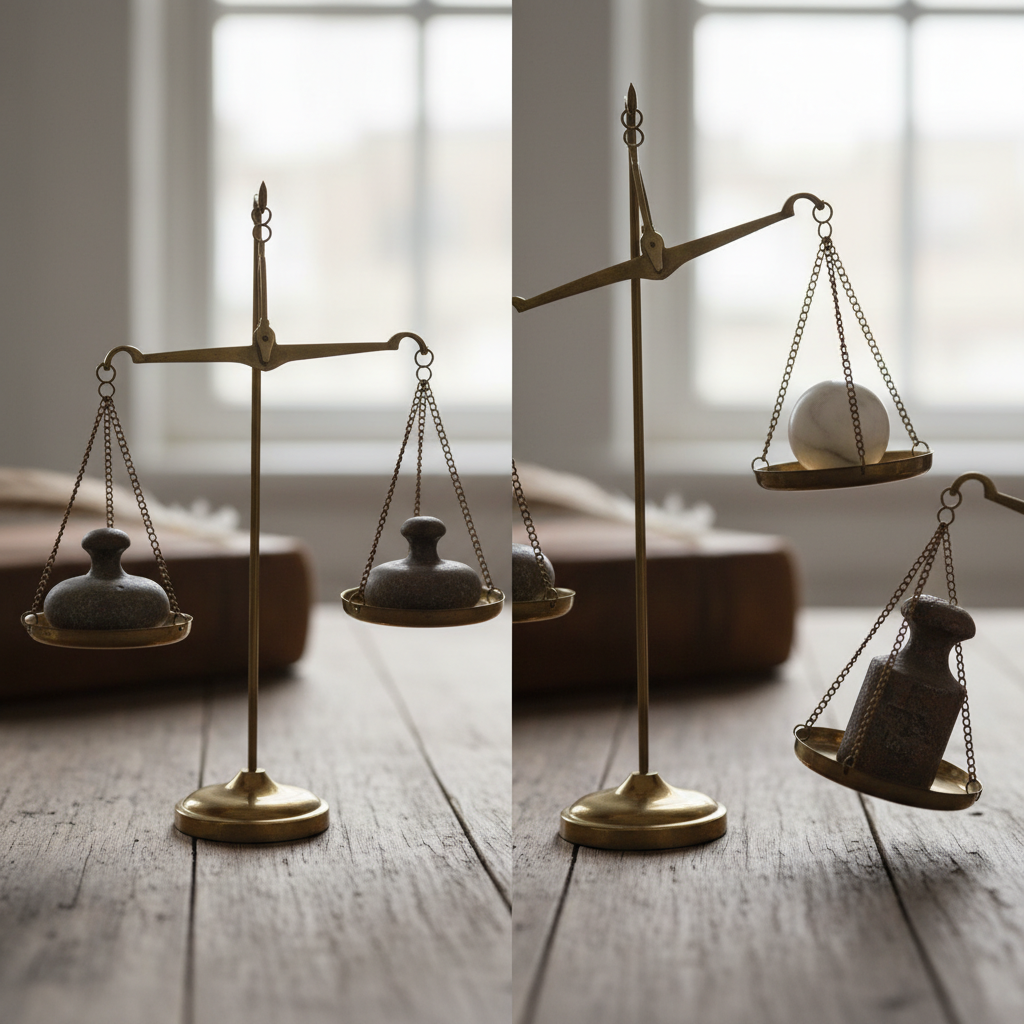
- The Perfectly Balanced Scale: Think of a balanced scale where two identical weights are placed on each side. Neither side tips; they are perfectly equal. That's how a fair game feels – everyone's chances are equally weighted.
- The Starting Line of a Race: In a fair foot race, every runner starts at exactly the same line. No one gets a head start, and no one is forced to start behind. Everyone begins with an equal opportunity to win.
- Drawing Names from a Hat: If you're picking a name out of a hat for a prize, and everyone's name is written on an identical slip of paper and thoroughly mixed, then everyone has an equal chance of being chosen.
- A Standard Deck of Cards: When you play a card game with a complete, shuffled deck, every player has the same probability of being dealt any particular card over many rounds.
In a fair game, the element of chance (like a coin flip or dice roll) or skill (like in chess) operates on a level playing field. The outcomes, when they depend on random events, are equally likely for all players involved.
The Other Side of the Coin: What Makes a Game Unfair?
Now, let's imagine that same coin flip for the pizza, but this time, you don't know that your friend is using a special coin that has 'heads' on both sides. You call 'tails,' they call 'heads.' What are your chances of winning? Zero! What are your friend's chances? 100%! This is a clear example of an unfair game.
Definition of an Unfair Game:
A game is considered unfair when one player or side has a built-in advantage, making their chance of winning significantly higher (or lower) than others. This advantage can come from manipulated rules, biased equipment, or a setup that favors one participant.
Analogies for Unfair Games:
- The Loaded Die: Imagine rolling a six-sided die, but it's weighted so that it lands on a '6' almost every time. If winning means rolling a '6', the person with the loaded die has a massive, unfair advantage.
- The Rigged Carnival Game: Ever played a carnival game where it feels impossible to win? Often, these games are designed with hidden mechanisms or probabilities that are extremely low for the player, giving the game operator an unfair edge.
- A Race with a Head Start: If one runner in a race gets to start 100 meters ahead of everyone else, it's pretty obvious that the race isn't fair. They have a built-in advantage that significantly increases their chance of winning.
- The Stacked Deck: In a card game, if someone secretly arranges the cards so they always get the best hand, that's a stacked (or unfair) deck.
Probability: The Math Behind Fairness
At the heart of fair and unfair games is a concept you might have heard of: probability. Probability is simply the measure of how likely an event is to happen. We usually express it as a fraction, decimal, or percentage.
- In our fair coin flip, the probability of 'heads' is 1/2 (or 50%), and the probability of 'tails' is 1/2 (or 50%). Since both outcomes have an equal probability, the game is fair.
- In the unfair coin flip with two 'heads' sides, the probability of 'heads' is 1 (or 100%), and the probability of 'tails' is 0 (or 0%). The probabilities are not equal for both players' desired outcomes, making it unfair.
For a game to be fair, the probability of each player winning or achieving their goal must be the same. If these probabilities are different, the game is unfair.
How to Be a Fairness Detective: Spotting Fair vs. Unfair Games
So, how can you tell if a game is fair or unfair? Here are some clues to look for:
-
Examine the Rules:
- Are the rules the same for everyone? Do they apply equally to all players?
- Are there any special rules that give one player an advantage they didn't earn? (Like always going first in a game where going first is a huge advantage).
-
Inspect the Equipment:
- Is the equipment balanced and unbiased? (e.g., standard dice, an unweighted coin, a spinner with equal-sized sections).
- Are there any hidden modifications to the game pieces? (Like the loaded die or the two-headed coin).
-
Analyze the Outcomes/Chances:
- When you think about all the possible outcomes, does each player have the same probability of achieving a winning outcome?
- If you were to play the game many times, would each player win roughly the same number of times (assuming similar skill levels where skill is a factor)?
Examples to Ponder:
- Rock-Paper-Scissors: This is generally a fair game. Each option (rock, paper, scissors) has an equal chance of beating one, being beaten by another, and tying. Over many rounds, wins should be distributed fairly evenly.
- A Board Game with Unequal Starting Resources: If one player starts a board game with significantly more money or better resources than others, it's likely an unfair game from the start, unless those resources were earned in a fair pre-game process.
- A Spinner Game: If you spin a spinner with 6 sections, and Player A wins if it lands on 1, 2, or 3, while Player B wins if it lands on 4, 5, or 6, then it's fair. Both have a 3/6 (or 1/2) chance. But if Player A wins on 1, 2, 3, 4, and Player B wins on 5, 6, then it's unfair (Player A has a 4/6 chance, Player B has 2/6).
Why Does Fairness Matter in Games?
You might be thinking, "Who cares if a game is fair? It's just a game!" But fairness is actually really important, not just for fun, but for bigger lessons too:
- Sportsmanship and Fun: A fair game is more enjoyable for everyone. When players know they have an equal chance, they're more engaged and less likely to feel cheated or frustrated. It fosters good sportsmanship.
- Trust and Respect: If a game is unfair, it breaks trust. Players won't want to play with someone who rigs the game, and it can damage relationships.
- Learning About Chance and Probability: Understanding fairness helps you grasp important mathematical concepts like probability and statistics. It teaches you to analyze situations critically.
- Real-World Connections: The idea of fairness extends far beyond games. It applies to rules in society, legal systems, and even economic opportunities. Learning about fairness in games is a simple way to understand a complex real-world concept.
Conclusion
So, the next time you sit down to play a game, whether it's with friends, family, or online, take a moment to consider its fairness. Ask yourself: Are the chances equal for everyone? Is the equipment honest? Are the rules unbiased? Becoming a fairness detective will not only make you a savvier player but also help you understand a fundamental principle that applies to many aspects of life. Remember, a truly fun game is almost always a fair game!
Keep learning, free
Create a free Syllabax account to unlock practice questions and games for this topic.
Visual Learning Enhanced! 🚀
To help you master this topic, we use Advanced Syllabax AI to generate detailed diagrams and visual models.
Note on Visuals: The AI sometimes makes spelling errors in image labels. Please refer to the lesson text for the correct terminology.