Statement & Conclusions – Logical Deduction
Watch this topic in 60 seconds
Free preview · Lesson 1
Statement & Conclusions – Logical Deduction (Foundational)
Statement & Conclusions – Logical Deduction (Foundational)
Hey there, future detectives! Ever played a game where you had to figure something out based on clues? That's kind of what logical deduction is all about! In this lesson, we'll learn how to use clues, called statements, to reach smart conclusions.
What are Statements?
A statement is a sentence that is either true or false. Think of it as a piece of information. For example:
- "All cats have fur." (This is a statement we know is generally true.)
- "The sky is green." (This is a statement we know is false.)
What are Conclusions?
A conclusion is what you figure out based on one or more statements. It's like solving a mini-mystery! To make good conclusions, we need to think carefully about what the statements tell us.
How to Make Conclusions:
- Read the Statements: Understand what each statement is saying.
- Look for Connections: See if the statements relate to each other.
- Draw a Conclusion: What can you figure out based on the connections?

Let's Try an Example:
Statement 1: All dogs bark.
Statement 2: Buddy is a dog.
Conclusion: Therefore, Buddy barks.
See how we used the two statements to figure something out about Buddy?
Important Things to Remember:
- Logical: Conclusions should be based on the statements, not just guesses.
- Possible vs. Certain: Sometimes you can only say a conclusion is likely, not 100% certain.
- Assumptions: Be careful about adding your own ideas that aren't in the statements.
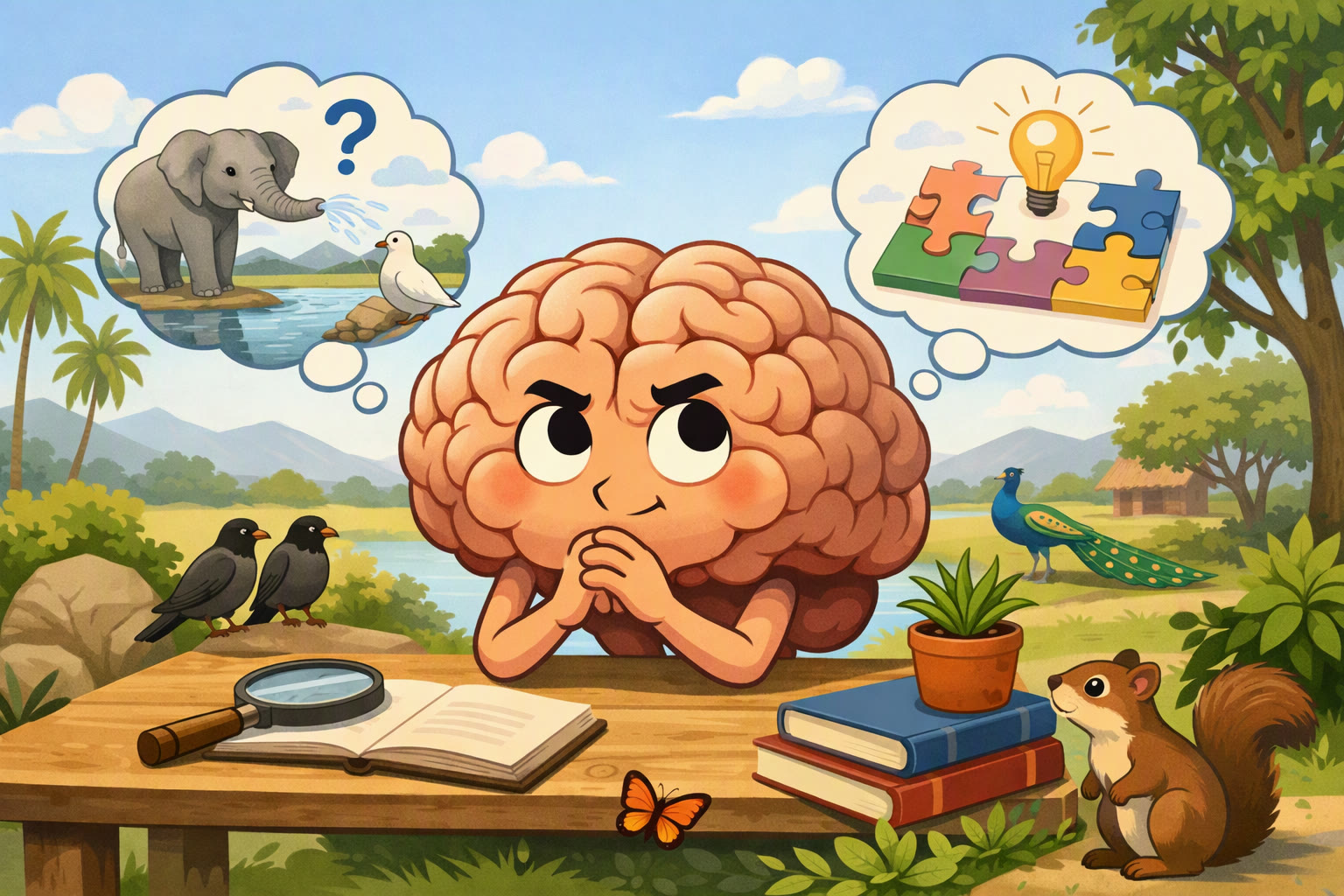
Keep practicing, and you'll become a master of logical deduction!
Keep learning, free
Create a free Syllabax account to unlock practice questions and games for this topic.
Visual Learning Enhanced! 🚀
To help you master this topic, we use Advanced Syllabax AI to generate detailed diagrams and visual models.
Note on Visuals: The AI sometimes makes spelling errors in image labels. Please refer to the lesson text for the correct terminology.