Learning Journey
Free preview · Lesson 1
Social & Religious Reform Movements – Indian History (Foundational)
Social & Religious Reform Movements – Indian History (Foundational)
During the 19th and early 20th centuries, India witnessed significant social and religious reform movements. These movements aimed to address various social evils and promote religious reforms within different communities. They sought to modernize Indian society and promote equality, justice, and rational thinking.
What were these movements about?
These movements were all about changing things for the better. They aimed to get rid of bad practices and promote good values in society and religion. Think of it like cleaning up a messy room – these reformers wanted to clean up society's problems.
Key Ideas Behind the Movements
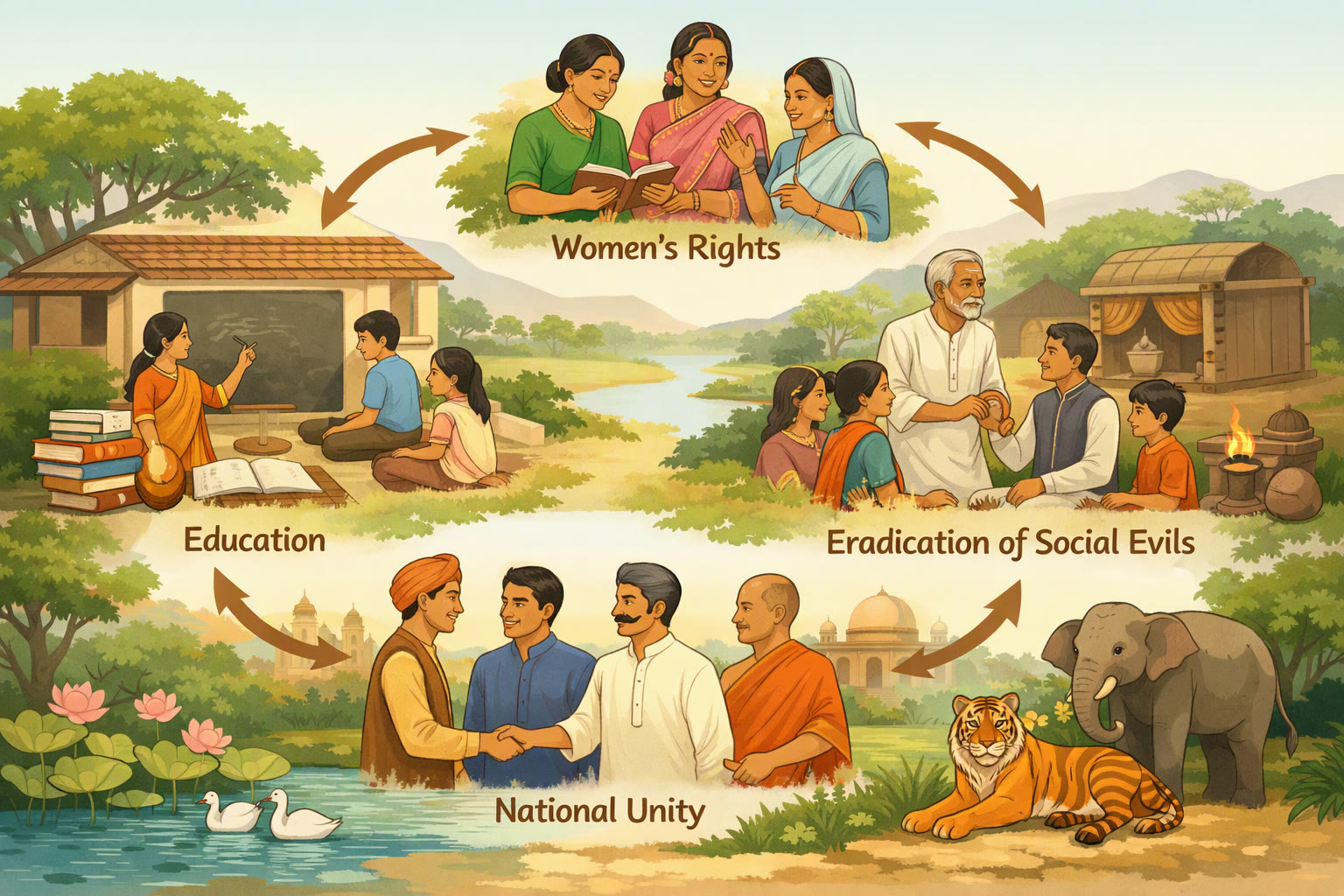
- Challenging Social Evils: Many reformers spoke out against practices like child marriage, the caste system, and the mistreatment of women.
- Promoting Education: Reformers believed that education was crucial for progress. They opened schools and colleges to spread knowledge.
- Religious Reform: Some reformers questioned old religious beliefs and practices. They promoted monotheism (belief in one God) and rational thinking.
Important Reform Movements and Leaders
1. Brahmo Samaj
Founded by Raja Ram Mohan Roy, the Brahmo Samaj aimed to purify Hinduism and promote monotheism. Roy advocated for the abolition of sati (the practice of widow immolation) and promoted Western education.
2. Arya Samaj
Swami Dayanand Saraswati founded the Arya Samaj, which sought to revive Vedic learning and combat what it saw as corruption in Hinduism. The Arya Samaj also promoted education and social reform.
3. Ramakrishna Mission
Established by Swami Vivekananda, the Ramakrishna Mission focused on social service and spiritual development. Vivekananda emphasized the importance of serving humanity and promoting universal brotherhood.
4. Theosophical Society
Founded by Helena Blavatsky and Henry Steel Olcott, the Theosophical Society aimed to study and promote ancient religions and philosophies, particularly Hinduism and Buddhism. It played a significant role in the Indian cultural renaissance.
Impact of the Reform Movements
The social and religious reform movements had a profound impact on Indian society:
- Social Change: They helped to reduce social inequalities and improve the status of women.
- Educational Advancement: They promoted education and helped to modernize the Indian education system.
- National Awakening: They contributed to the growth of Indian nationalism by promoting a sense of unity and identity.
Keep learning, free
Create a free Syllabax account to unlock practice questions and games for this topic.
Visual Learning Enhanced! 🚀
To help you master this topic, we use Advanced Syllabax AI to generate detailed diagrams and visual models.
Note on Visuals: The AI sometimes makes spelling errors in image labels. Please refer to the lesson text for the correct terminology.