Learning Journey
Free preview · Lesson 1
Understanding Metals & non-metals (basic properties)[CHEMISTRY]
Metals and Non-metals: A Shiny Introduction
Welcome, young scientists! Today, we're going on an exciting adventure to explore two fundamental categories of elements that make up our world: **metals** and **non-metals**. You encounter these materials every single day, even if you don't always realize it!
What are Elements?
Before we dive into metals and non-metals, let's quickly remember what elements are. Elements are the basic building blocks of all matter. Think of them like different types of LEGO bricks – you can combine them in countless ways to build amazing things. Each element is unique and cannot be broken down into simpler substances by ordinary chemical means. We have a special chart called the Periodic Table that lists all the known elements.
Metals: The Strong, Shiny Performers!
Let's start with metals. Imagine a knight's armor, a shiny bicycle, or even the wires that carry electricity to your home. These are often made of metals!
Key Properties of Metals:
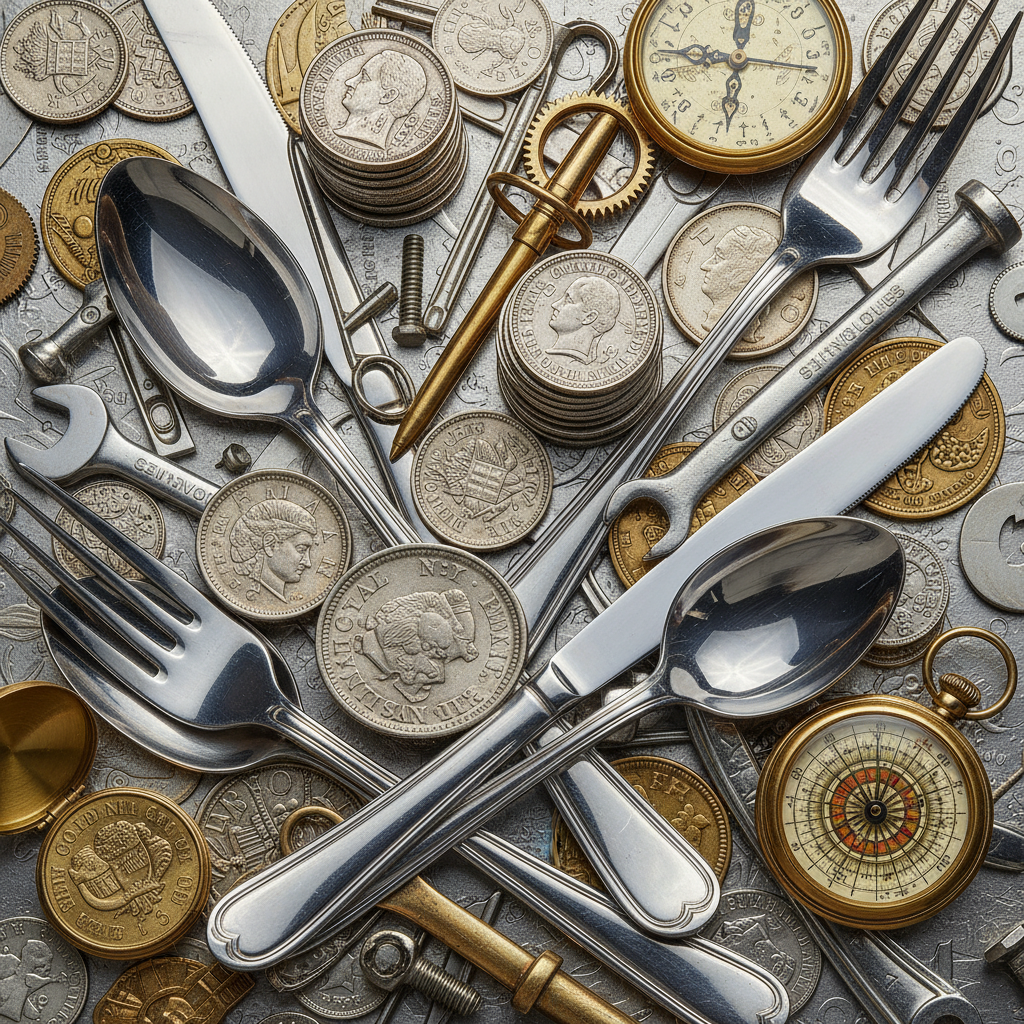
- Lustrous (Shiny): When you polish a piece of metal, it gleams! Think of a polished silver spoon or a gold coin. This shininess is a property called 'lustre'. It's like metal having a built-in sparkle!
- Malleable (Can be hammered into sheets): Imagine a playdough. You can squish and flatten it into different shapes. Metals are like a super-strong, bendable playdough. You can hammer them into thin sheets without them breaking. This is why we can make things like aluminum foil for wrapping your lunch.
- Ductile (Can be drawn into wires): Think about a rubber band. You can stretch it and pull it into a long, thin strand. Metals are similar, but much stronger! They can be stretched and pulled into long, thin wires. This is how we get copper wires for electricity and even thin gold wires used in some electronics.
- Good Conductors of Heat: Have you ever touched a metal spoon that was left in hot soup? Ouch! It gets hot very quickly. Metals are excellent at transferring heat. This is why pots and pans are often made of metal – they can quickly transfer the heat from the stove to your food. Think of it like a fast train carrying heat energy from one place to another.
- Good Conductors of Electricity: Metals are also super highways for electricity. The electrical wires in your house are made of metal (usually copper) because they allow electricity to flow easily and safely. Without this property, your lights, TV, and video games wouldn't work!
- Solid at Room Temperature (mostly): Most metals, like iron, copper, and aluminum, are solid when you find them at room temperature (the normal temperature in a room). There's one famous exception: mercury! Mercury is a metal that's actually a liquid at room temperature, found in some old thermometers.
- High Density: Metals are generally quite heavy for their size. If you had a block of wood and a block of iron the same size, the iron block would feel much heavier.
- High Melting and Boiling Points: It takes a lot of heat to melt or boil most metals. This means they can withstand high temperatures, which is useful in many industrial applications.
Examples of Metals:
You've probably heard of many of these:
- Iron (Fe): Used in buildings, cars, and tools.
- Copper (Cu): Used in electrical wires and coins.
- Aluminum (Al): Used in cans, foil, and airplanes.
- Gold (Au): Used in jewelry and electronics.
- Silver (Ag): Used in jewelry and photography.
- Zinc (Zn): Used to coat other metals to prevent rust.
Non-metals: The Diverse and Essential Players!
Now, let's switch gears and talk about non-metals. These elements are incredibly diverse and often have properties very different from metals. Think about the air you breathe, the water you drink, or the coal you might burn for heat. These involve non-metals!
Key Properties of Non-metals:
- Not Lustrous (Dull): Unlike metals, most non-metals don't shine. They look dull. Think of a piece of charcoal or sulfur – they don't have that metallic gleam.
- Brittle (Breakable): If you try to hammer a piece of coal or a piece of sulfur, it crumbles into powder. They cannot be hammered into sheets or stretched into wires without breaking into pieces. They are like fragile cookies!
- Poor Conductors of Heat: Non-metals are generally bad at letting heat pass through them. This is why handles on pots and pans are often made of plastic or wood (which are made from non-metals) – they don't get hot easily, protecting your hands.
- Poor Conductors of Electricity: Similarly, non-metals don't allow electricity to flow through them very well. This is why they are used as insulators to wrap around electrical wires, keeping the electricity safely inside. Think of them as little traffic controllers, stopping electricity from escaping.
- Can be Solid, Liquid, or Gas at Room Temperature: This is where non-metals get really interesting! Some are solids (like carbon in coal, or sulfur), some are liquids (like bromine), and many are gases (like oxygen, nitrogen, and hydrogen). The air we breathe is a mixture of non-metal gases!
- Lower Density: Non-metals are generally lighter than metals.
- Lower Melting and Boiling Points: It usually takes less heat to turn non-metals into liquids or gases compared to metals.
Examples of Non-metals:
You use and interact with these constantly:
- Oxygen (O): Essential for breathing!
- Carbon (C): The basis of life; found in coal, diamonds, and all living things.
- Nitrogen (N): Makes up most of the air we breathe.
- Sulfur (S): Used in making matches and gunpowder.
- Hydrogen (H): The most abundant element in the universe; found in water.
- Chlorine (Cl): Used to disinfect water.
- Helium (He): Used to fill balloons.
Metals vs. Non-metals: A Quick Comparison
Let's summarize the key differences:
| Property | Metals | Non-metals |
|---|---|---|
| Lustre (Shininess) | Shiny | Dull |
| Malleability | Malleable (can be hammered) | Brittle (crumble) |
| Ductility | Ductile (can be drawn into wires) | Not Ductile |
| Heat Conductivity | Good | Poor |
| Electrical Conductivity | Good | Poor |
| State at Room Temp. | Mostly Solid (except Mercury) | Solid, Liquid, or Gas |
Why Does This Matter?
Understanding the difference between metals and non-metals helps us understand why different materials are used for different purposes. The strength and conductivity of metals make them perfect for building structures and carrying electricity. The diverse properties of non-metals make them essential for life, for insulation, and for creating a vast range of chemicals.
Keep your eyes open, and you'll see metals and non-metals all around you, playing their unique roles in shaping our world!
Keep learning, free
Create a free Syllabax account to unlock practice questions and games for this topic.
Visual Learning Enhanced! 🚀
To help you master this topic, we use Advanced Syllabax AI to generate detailed diagrams and visual models.
Note on Visuals: The AI sometimes makes spelling errors in image labels. Please refer to the lesson text for the correct terminology.