Simple 1-digit division (Divison)
Watch this topic in 60 seconds
Free preview · Lesson 1
Understanding Simple 1-digit division (Divison)
Understanding Simple 1-Digit Division
Welcome, young mathematicians! Today, we're going on an adventure to learn about a super important math skill called division. Don't worry, it's not as tricky as it sounds! Think of division as sharing. When we have a group of things and we want to share them equally among friends, that's division!
What is Division?
Imagine you have 6 yummy cookies, and you want to share them equally with your two best friends. You have 3 people in total (you and your two friends). How many cookies does each person get? Division helps us figure this out!
Division is like splitting a big group into smaller, equal-sized groups. We can think of it as:
- Sharing equally: Like sharing toys, snacks, or stickers.
- Making equal groups: Like putting your crayons into smaller boxes so they are tidy.
- Taking away equal amounts repeatedly: This is a bit like subtraction, but in jumps!
The Symbols We Use
In math, we have special symbols for division. The most common one looks like this: ÷. You'll also see division written like this, with a line and a dot above and below:
Example: 6 ÷ 2 = 3
This means "6 divided by 2 equals 3".
Sometimes, you might see division written using a slash (/) or in a format that looks like a small house:
- Using a slash: 6 / 2 = 3
- Using the division bracket (long division):
For now, we will focus on the ÷ symbol and understanding the idea of sharing.
Parts of a Division Problem
Every division problem has different parts, just like a team has players!
- Dividend: This is the total number of things you have to share or divide. In our cookie example, the dividend is 6 cookies.
- Divisor: This is the number of equal groups you are sharing with, or the size of each group. In our cookie example, if we share with 2 friends (plus ourselves, making 3 people total), and we want to know how many *each* person gets, the divisor would be 3. If we wanted to put the cookies into bags of 2, the divisor would be 2. Let's stick with sharing for now! So, if we share 6 cookies among 3 people, the divisor is 3.
- Quotient: This is the answer to the division problem. It's how many things each person or group gets. In our cookie example, the quotient is 2 cookies per person.
So, for 6 ÷ 3 = 2:
- 6 is the Dividend (the total cookies)
- 3 is the Divisor (the number of people sharing)
- 2 is the Quotient (how many cookies each person gets)
Analogies for Division
Let's use some fun examples to understand division better:
1. Sharing Snacks
Imagine you have 10 colorful candies. You want to share them equally with your 2 siblings. How many candies does each person get?
Here:
- Dividend: 10 candies
- Divisor: 2 siblings (plus you, so 3 people in total to share with, or if you mean 2 groups, then 2) - let's say we share with 2 siblings, so 2 groups!
- Problem: 10 ÷ 2 = ?
You can imagine lining up the 10 candies and giving one to your first sibling, one to your second sibling, then another to the first, another to the second, and so on, until all candies are gone. You'd find that each sibling gets 5 candies!
10 ÷ 2 = 5
2. Arranging Toys
Suppose you have 8 toy cars. You want to put them into 4 equal boxes so they don't get lost.
Here:
- Dividend: 8 toy cars
- Divisor: 4 boxes (the number of equal groups)
- Problem: 8 ÷ 4 = ?
You can think of distributing the cars, one by one, into each of the 4 boxes until all 8 cars are placed. Each box will have 2 cars.
8 ÷ 4 = 2
3. Planting Flowers
Let's say your mom has 12 flower seeds. She wants to plant them in rows with 3 seeds in each row.
Here:
- Dividend: 12 seeds
- Divisor: 3 seeds per row (the size of each equal group)
- Problem: 12 ÷ 3 = ?
She would count out groups of 3 seeds: one group of 3, another group of 3, and so on. She will be able to make 4 rows of seeds.
12 ÷ 3 = 4
Division and Multiplication are Friends!
Division and multiplication are like best friends who help each other out. They are inverse operations, which means they undo each other!
Remember our cookie example: 6 ÷ 3 = 2.
We can check this using multiplication: 3 (divisor) × 2 (quotient) = 6 (dividend).
If we know our multiplication facts, we can easily solve division problems!
For example, if you want to solve 15 ÷ 5:
Think: "What number, when multiplied by 5, gives me 15?"
We know that 5 × 3 = 15.
So, 15 ÷ 5 = 3.
Here's another one: 20 ÷ 4.
Think: "What number times 4 equals 20?"
We know that 4 × 5 = 20.
So, 20 ÷ 4 = 5.
Let's Practice with Pictures!
Imagine you have 8 apples and you want to share them equally among 4 friends. Let's draw it out:
We have 8 apples:
Now, we want to put them into 4 equal groups. We can draw circles around them:
Friend 1 gets 1 apple, Friend 2 gets 1 apple, Friend 3 gets 1 apple, Friend 4 gets 1 apple.
Friend 1 gets another apple, Friend 2 gets another, Friend 3 gets another, Friend 4 gets another.
If we draw it like this:
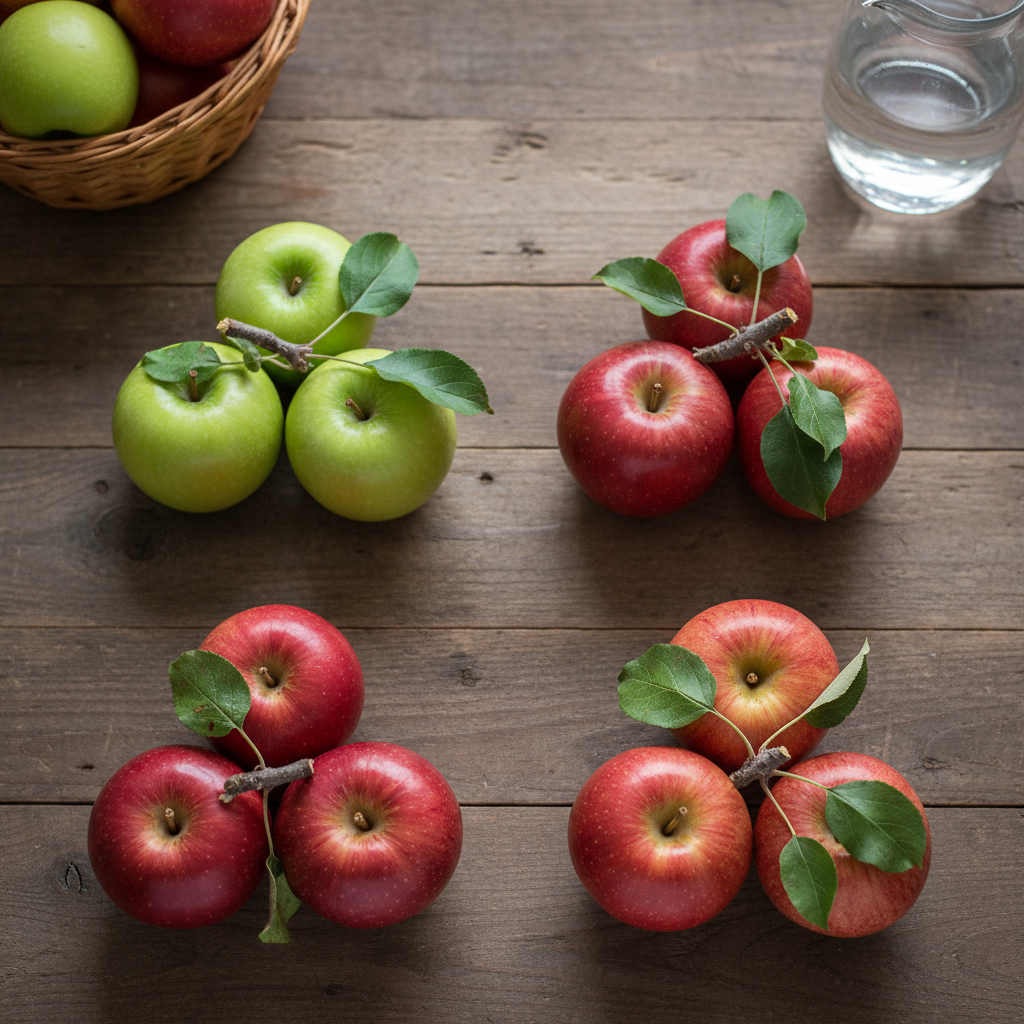
We can see that each friend gets 2 apples. So, 8 ÷ 4 = 2.
Key Ideas to Remember:
- Division is about sharing equally or making equal groups.
- The dividend is the total number.
- The divisor is how many groups or how many in each group.
- The quotient is the answer.
- Division and multiplication are related!
Keep practicing, and you'll become a division superstar!
Keep learning, free
Create a free Syllabax account to unlock practice questions and games for this topic.
Visual Learning Enhanced! 🚀
To help you master this topic, we use Advanced Syllabax AI to generate detailed diagrams and visual models.
Note on Visuals: The AI sometimes makes spelling errors in image labels. Please refer to the lesson text for the correct terminology.