Learning Journey
Watch this topic in 60 seconds
Free preview · Lesson 1
Understanding Sorting Objects by Attribute
Sorting Fun! Grouping Things by What They're Like!
Hello, amazing Second Graders! Have you ever helped put away toys, sorted your clothes, or maybe even helped sort snacks? When you do that, you're doing something super important called sorting! Sorting means putting things into groups based on what they are like. It's like finding a special 'home' for everything!
What Are Attributes? They're Like Clues!
Before we can sort, we need to know what we're looking for. The 'what they are like' part is called an attribute. Think of attributes as clues that tell you about an object. Every object has lots of attributes! Let's look at some common clues or attributes:
- Color: Is it red, blue, green, yellow?
- Size: Is it big, medium, or small?
- Shape: Is it a circle, square, triangle, or star?
- Texture: Does it feel smooth, rough, soft, or bumpy?
- Material: Is it made of wood, plastic, fabric, or metal?
- How it's Used (Function): Is it something you eat, play with, or write with?
Imagine your favorite toy. What color is it? Is it big or small? What shape is it? How does it feel? All those answers are its attributes!
Sorting by One Attribute: One Clue at a Time!
The easiest way to start sorting is to pick just ONE attribute. It's like having a treasure hunt where you're only looking for red treasure, or only looking for round treasure!
Sorting by Color: Rainbow Grouping!
Let's say you have a big pile of colorful building blocks. If you want to sort them by color, you would put all the red blocks together in one pile, all the blue blocks in another, all the yellow blocks in a third, and so on. Each pile would be a group of blocks that share the same color attribute!
Analogy: Think about your socks! When you put your clean socks away, do you just throw them all in a big pile? Probably not! You might put all your white socks together, and all your colorful pattern socks together. You're sorting them by color and pattern!
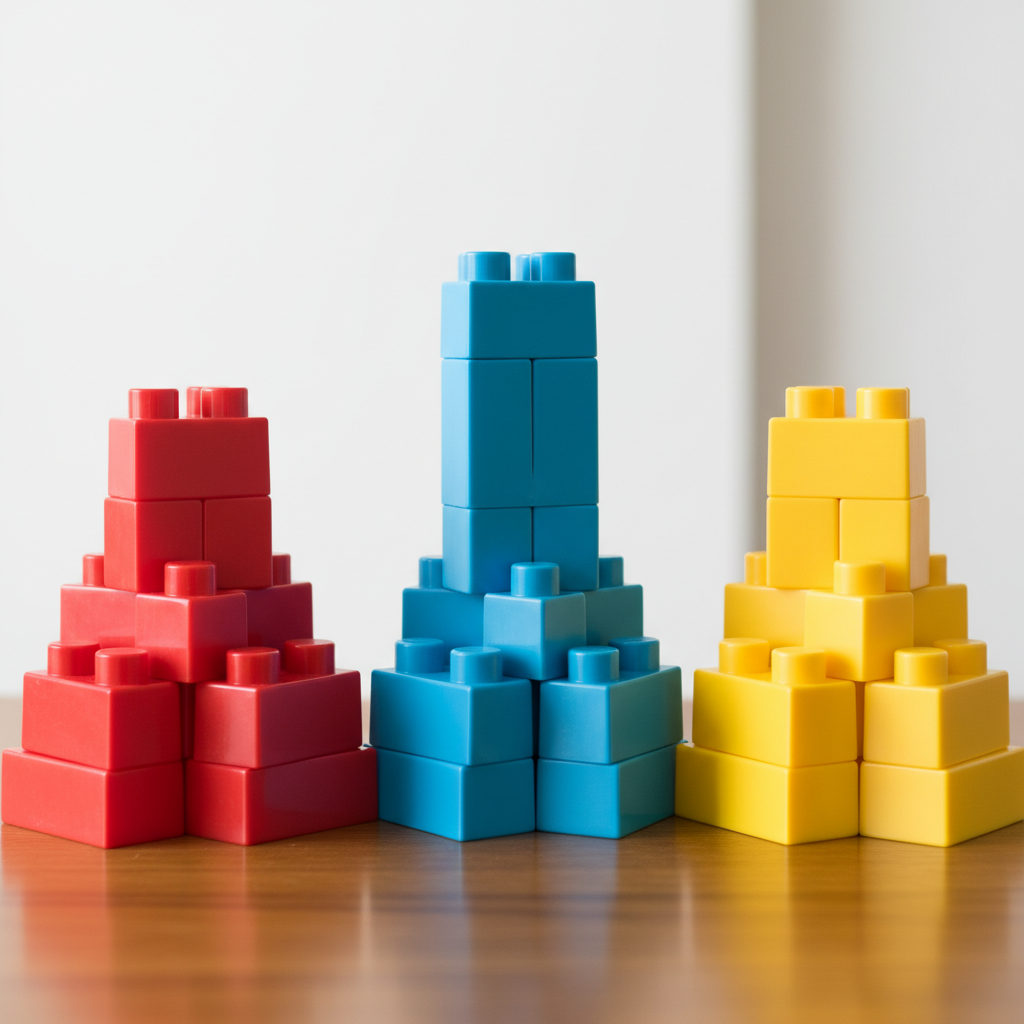
Sorting by Size: Big, Medium, and Small Homes!
What if you have a collection of different-sized balls? Some are big, like a basketball. Some are medium, like a soccer ball. And some are small, like a tennis ball. You could sort them by size! All the big balls go here, all the medium balls go there, and all the small balls get their own spot.
Analogy: Imagine a toy box with big stuffed animals and small toy cars. You wouldn't want the big animals squishing the little cars! So, you might give the big stuffed animals their own corner and the small cars their own container. You're sorting by size!
Sorting by Shape: Matching Mates!
Think about a cookie cutter collection. You might have star shapes, heart shapes, and circle shapes. If you sort them by shape, all the star cookie cutters go together, all the heart ones go together, and all the circle ones go together. Each group shares the same shape attribute.
Analogy: When you play with a shape sorter toy, you're sorting! The square block only fits in the square hole, and the circle block only fits in the circle hole. You're matching the attribute of shape!
Sorting by How it's Used (Function): What's Its Job?
Sometimes, we sort things by what they are used for. In your classroom, you might have a box for pencils, a box for crayons, and a box for markers. Even though they are all writing tools, you sort them into different groups based on their specific use or function!
Analogy: In a kitchen, forks go in one spot, spoons in another, and knives in a third. They are all 'eating tools,' but they are sorted by their specific job!
Why Do We Sort? It Makes Life Easier!
Sorting isn't just a fun game; it's super helpful! Here's why:
- It keeps things tidy: A sorted room looks much neater than a messy one!
- It helps you find things: If you know all your red shirts are in one drawer, you can find them super fast. If everything is just mixed up, it takes a long time!
- It helps us understand things: When we group similar things, we learn about them better.
Analogy: Imagine a toy store. If all the toys were just thrown together in one giant pile, it would be impossible to find a specific doll or a robot, right? But toy stores sort things – all the dolls together, all the board games together, all the action figures together. That makes it easy for you to find what you want!
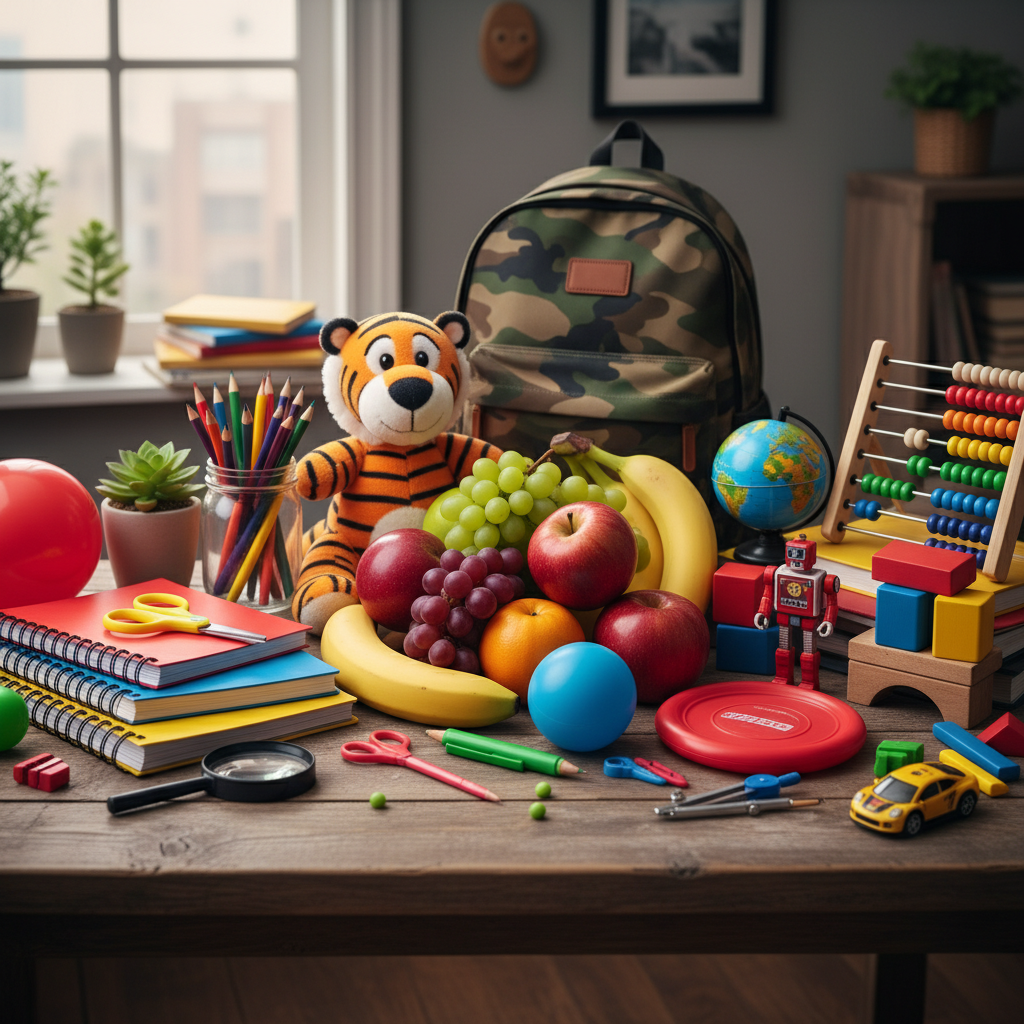
Let's Practice!
Now you know that an attribute is a clue about what something is like, and sorting is putting things into groups based on those clues. Keep an eye out for attributes everywhere you go, and happy sorting!
Keep learning, free
Create a free Syllabax account to unlock practice questions and games for this topic.
Visual Learning Enhanced! 🚀
To help you master this topic, we use Advanced Syllabax AI to generate detailed diagrams and visual models.
Note on Visuals: The AI sometimes makes spelling errors in image labels. Please refer to the lesson text for the correct terminology.