Population Distribution & Demographic Patterns -Indian Geography
Watch this topic in 60 seconds
Free preview · Lesson 1
Population Distribution & Demographic Patterns -Indian Geography (Foundational)
Population Distribution & Demographic Patterns in India - Foundational
Welcome to a basic introduction to understanding how people are spread across India and some key aspects of India's population.
What is Population Distribution?
Population distribution simply means how people are spread out over a specific area. In India, the population isn't evenly spread. Some areas have many people (densely populated), while others have very few (sparsely populated).
Factors Affecting Population Distribution
Several things influence where people choose to live. These include:
- Climate: People prefer areas with moderate climates.
- Availability of Water: Access to fresh water is essential for drinking, agriculture, and industry.
- Fertile Soil: Areas with fertile soil support agriculture, attracting larger populations.
- Job Opportunities: Cities and industrial areas offer more job opportunities, leading to higher population density.
- Government Policies: Government initiatives and infrastructure development can also influence population distribution.
Areas of High and Low Population Density in India
India has some of the most densely populated areas in the world. Examples include:
- High Density: The Indo-Gangetic plains (due to fertile soil and water), coastal regions, and major cities like Mumbai, Delhi, and Kolkata.
- Low Density: Mountainous regions like the Himalayas, deserts like the Thar Desert, and some parts of central India.
What are Demographic Patterns?
Demographic patterns refer to the statistical characteristics of a population, such as age, gender, birth rate, death rate, and migration.
Key Demographic Indicators
- Birth Rate: The number of live births per 1,000 people in a year.
- Death Rate: The number of deaths per 1,000 people in a year.
- Sex Ratio: The number of females per 1,000 males.
- Literacy Rate: The percentage of people who can read and write.
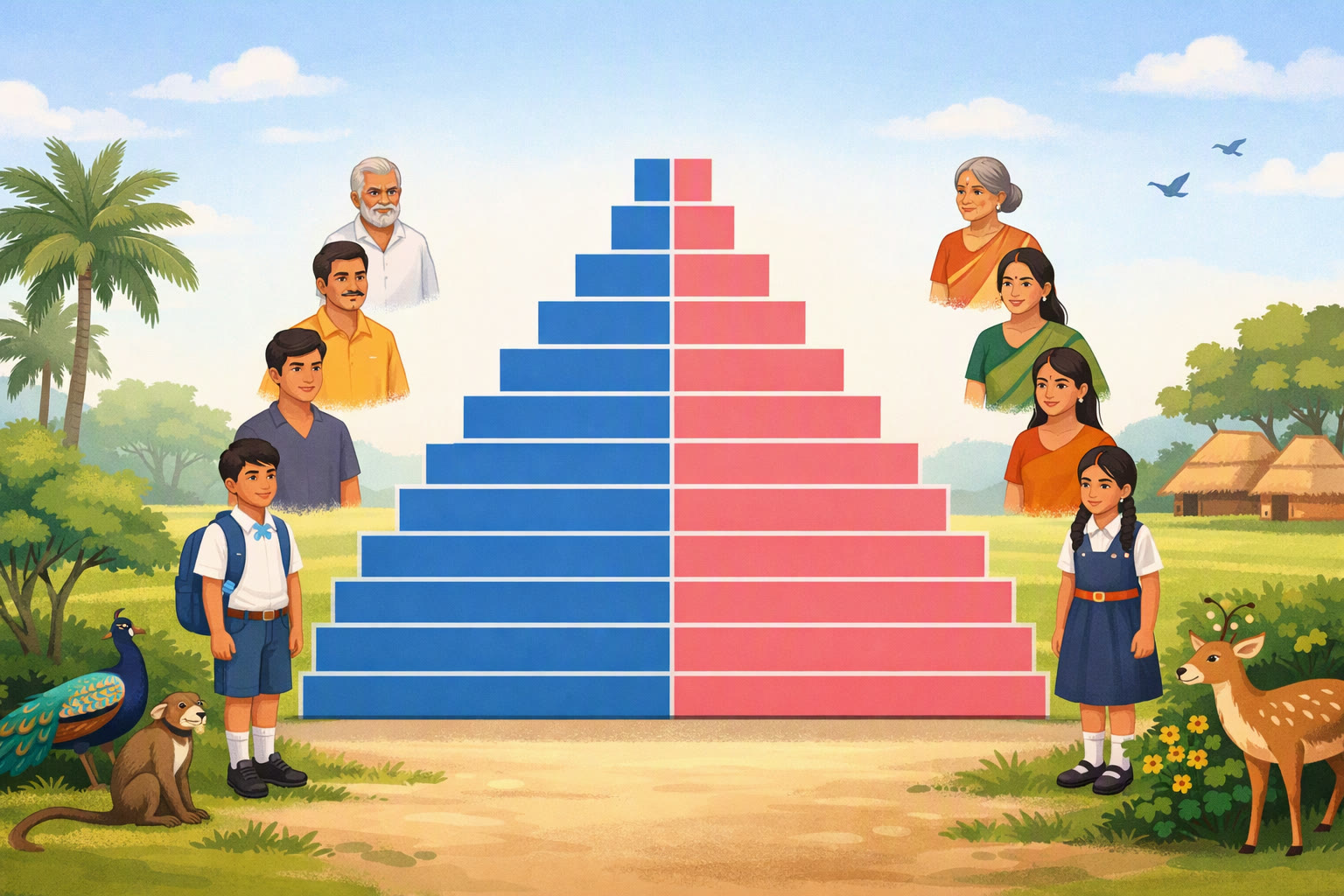
- Age Structure: The distribution of people across different age groups. This is typically represented using a population pyramid.
Importance of Studying Population Distribution and Demographic Patterns
Understanding these patterns helps us to:
- Plan for resource allocation (water, food, housing, healthcare).
- Address social and economic challenges.
- Develop effective policies for population management and sustainable development.
Migration
Migration is the movement of people from one place to another. It can be internal (within a country) or international (between countries). People migrate for various reasons, including better job opportunities, education, or to escape conflict or natural disasters. Migration significantly impacts population distribution and demographic patterns.
Keep learning, free
Create a free Syllabax account to unlock practice questions and games for this topic.
Visual Learning Enhanced! 🚀
To help you master this topic, we use Advanced Syllabax AI to generate detailed diagrams and visual models.
Note on Visuals: The AI sometimes makes spelling errors in image labels. Please refer to the lesson text for the correct terminology.