Global warming[CHEMISTRY]
Watch this topic in 60 seconds
Free preview · Lesson 1
Understanding Global warming[CHEMISTRY]
Global Warming: A Chemistry Connection
Welcome to our exploration of global warming through the lens of chemistry! Don't worry if you're new to this; we'll break it down into simple steps, using everyday examples to help you understand the amazing science behind our planet's climate.
What is Global Warming?
Imagine Earth is like a cozy house. It has a roof and walls (our atmosphere) that keep the heat inside. Global warming is like turning up the thermostat in that house, making it warmer than it should be. Specifically, it's the gradual increase in the Earth's average temperature over a long period.
The Greenhouse Effect: Earth's Natural Blanket
Our planet has a natural process called the **greenhouse effect**. Think of it like a blanket that keeps Earth warm enough for life. The Earth's atmosphere contains certain gases, called **greenhouse gases**, that act like the fibers in this blanket. When sunlight hits Earth, some of the heat bounces back into space, but these gases trap some of that heat, keeping our planet at a comfortable temperature. Without this natural greenhouse effect, Earth would be a frozen planet!
Key Greenhouse Gases:
- Water Vapor (H₂O): This is the most abundant greenhouse gas. It's like the steam you see when you boil water, but it's also present in the air all around us.
- Carbon Dioxide (CO₂): This gas is a bit like the bubbles in your soda. It's produced naturally when plants and animals breathe (respiration) and when organic matter decays.
- Methane (CH₄): Think of methane as the gas produced when cows burp or when garbage decomposes in a landfill. It's a potent greenhouse gas.
- Nitrous Oxide (N₂O): This gas comes from things like fertilizers used in farming and some industrial processes.
These gases are essential for life, but just like a blanket that's too thick can make you overheat, too much of these gases in the atmosphere can trap too much heat.
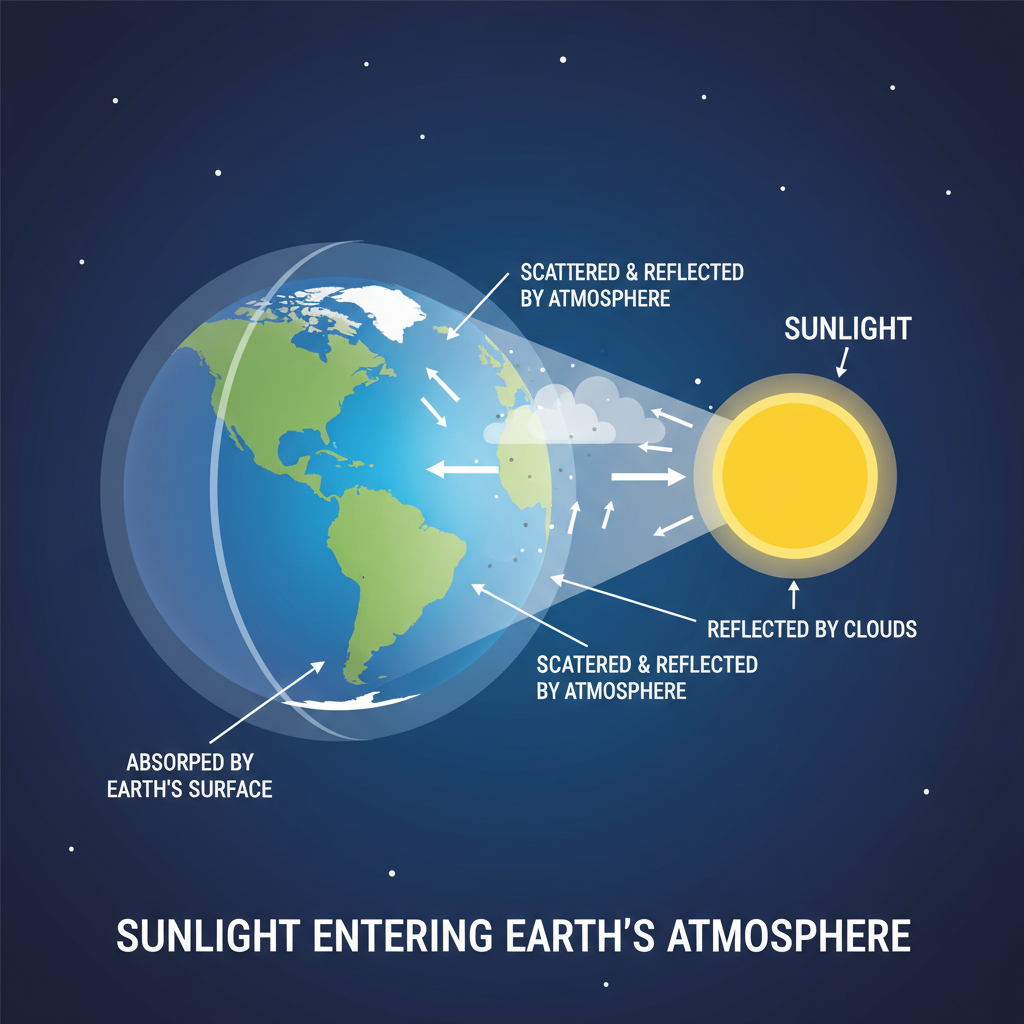
The Chemistry of Extra Greenhouse Gases
The problem of global warming arises when we add extra greenhouse gases to the atmosphere, making that natural blanket thicker and trapping more heat. Where do these extra gases come from? Mostly from human activities:
Burning Fossil Fuels:
When we burn coal, oil, and natural gas for electricity, heating our homes, and powering our cars, we release huge amounts of **carbon dioxide (CO₂) **. Imagine burning wood in a fireplace; it releases smoke (which contains CO₂) into the air. Burning fossil fuels is like a giant, continuous fireplace that releases tons of CO₂.
The chemical reaction for burning a simple fuel like methane (natural gas) is:
CH₄ (Methane) + 2O₂ (Oxygen) → CO₂ (Carbon Dioxide) + 2H₂O (Water) + Energy
This simple equation shows how methane, a greenhouse gas, is converted into carbon dioxide, another greenhouse gas, when it burns, releasing energy that we use.
Deforestation: Cutting Down the Planet's Lungs
⚠️ This picture may have spelling mistakes. Trust the words in the lesson.Trees are amazing! They play a crucial role in the carbon cycle. During photosynthesis, trees absorb CO₂ from the atmosphere and release oxygen. They are like the Earth's natural air purifiers. When we cut down large forests (deforestation), we lose these natural CO₂ absorbers. Additionally, if the trees are burned, they release the CO₂ they have stored back into the atmosphere. It's like removing air filters from your house and then burning them!
Industrial Processes and Agriculture:
Some factories release greenhouse gases as a byproduct of making things. For example, producing cement releases CO₂. In agriculture, the use of certain fertilizers can release nitrous oxide (N₂O), and raising livestock like cows produces methane (CH₄) through their digestive processes.
Consequences of Global Warming
When the Earth's average temperature rises, it can lead to many changes:
- Melting Ice: Think of ice cream on a hot day. As the planet warms, ice caps and glaciers melt, causing sea levels to rise.
- More Extreme Weather: We might see more intense heatwaves, stronger storms, and changes in rainfall patterns. It's like when a room gets too hot, it can lead to things boiling over or becoming unstable.
- Impact on Ecosystems: Plants and animals are adapted to specific climates. If the climate changes too quickly, they may struggle to survive or adapt.
What Can We Do? (The Chemistry of Solutions)
Understanding the chemistry helps us find solutions! We need to reduce the amount of greenhouse gases we release. This involves:
- Using Renewable Energy: Sources like solar and wind power don't produce greenhouse gases. Think of them as clean ways to power our homes without a smoky fireplace.
- Improving Energy Efficiency: Using less energy means burning fewer fossil fuels. Insulating your home better is like adding an extra layer to your blanket to keep the heat *in* where you want it, not escaping.
- Protecting and Planting Forests: More trees mean more CO₂ absorption.
- Developing New Technologies: Scientists are working on ways to capture CO₂ from the air or from industrial sources.
Global warming is a complex issue, but by understanding the basic chemistry, we can see how our actions affect the planet and how we can work towards a healthier future.
Keep learning, free
Create a free Syllabax account to unlock practice questions and games for this topic.
Visual Learning Enhanced! 🚀
To help you master this topic, we use Advanced Syllabax AI to generate detailed diagrams and visual models.
Note on Visuals: The AI sometimes makes spelling errors in image labels. Please refer to the lesson text for the correct terminology.