Learning Journey
Watch this topic in 60 seconds
Free preview · Lesson 1
Clauses (Foundational)
Clauses (Foundational)
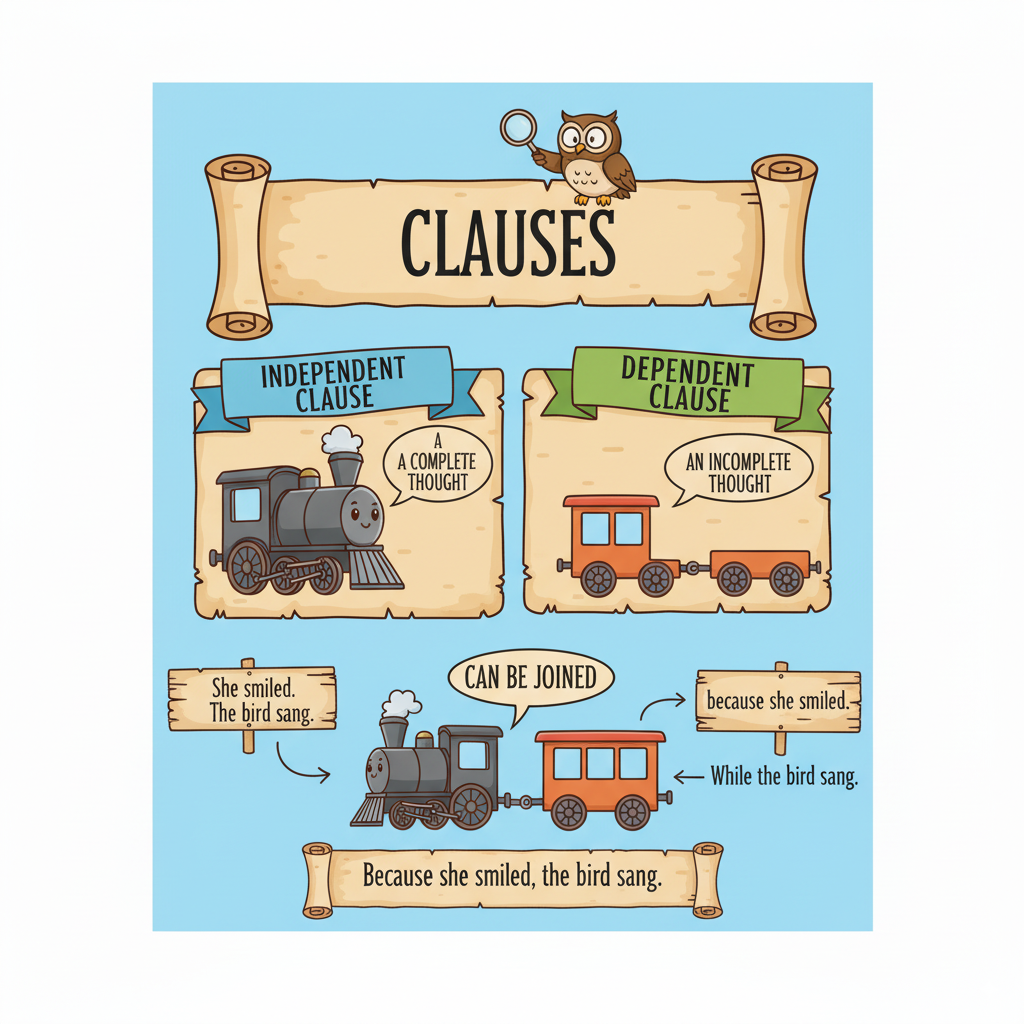
Hey science explorers! Today, we're diving into the exciting world of clauses! A clause is simply a group of words that contains a subject (who or what the sentence is about) and a verb (the action). Think of it like the basic building blocks of a sentence.
Types of Clauses:
- Independent Clause: This is a clause that can stand alone as a complete sentence. It expresses a complete thought. Example: The dog barked loudly.
- Dependent Clause: This clause cannot stand alone as a complete sentence. It needs an independent clause to make sense. It often starts with words like because, although, if, when, etc. Example: Because the dog was hungry... (This needs more to make a complete sentence.)
Let's look at an example:
The cat sat on the mat because it was tired.
In this sentence:
- The cat sat on the mat is an independent clause (it's a complete thought).
- because it was tired is a dependent clause (it needs the first part to make sense).
 Identifying Subjects and Verbs:
To find a clause, always look for the subject (who or what is doing the action) and the verb (the action itself).
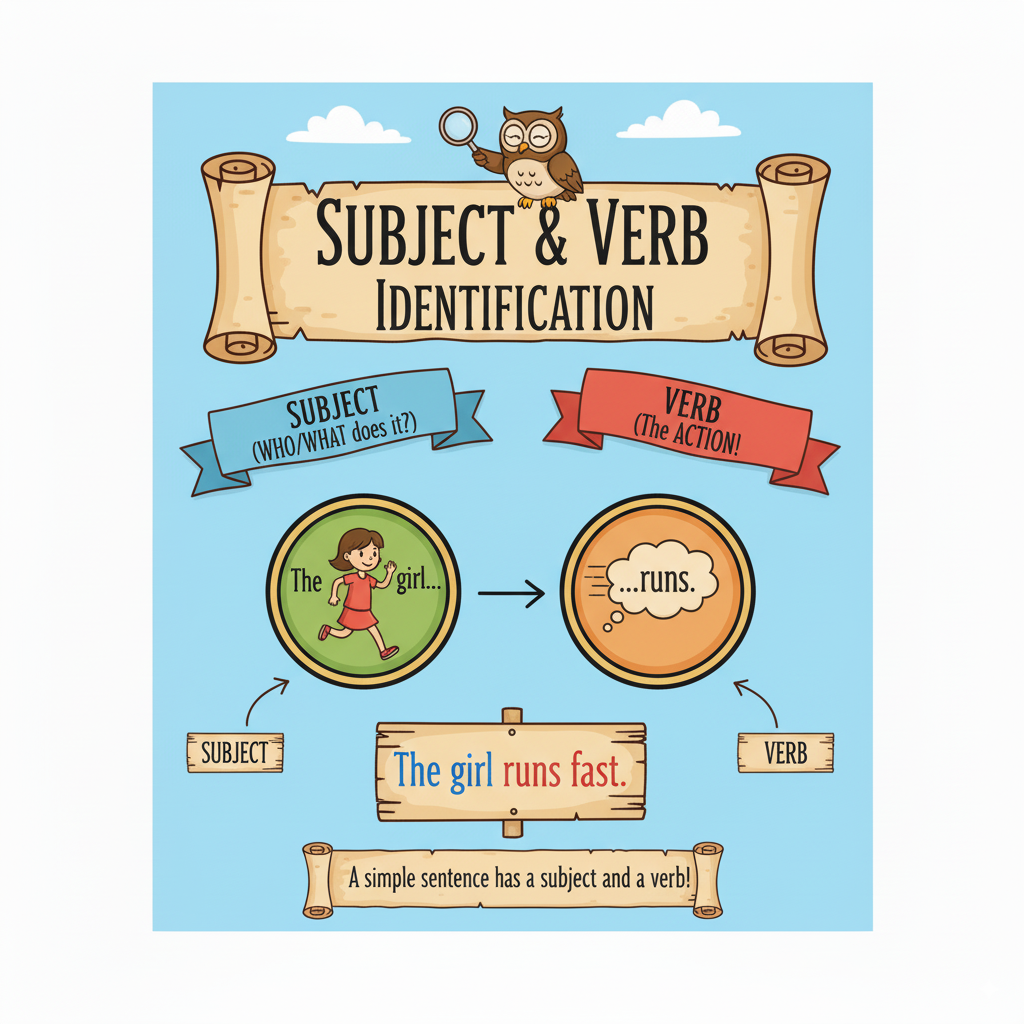 Let's practice finding the subjects and verbs in some clauses!
Keep learning, free
Create a free Syllabax account to unlock practice questions and games for this topic.
Visual Learning Enhanced! 🚀
To help you master this topic, we use Advanced Syllabax AI to generate detailed diagrams and visual models.
Note on Visuals: The AI sometimes makes spelling errors in image labels. Please refer to the lesson text for the correct terminology.