Learning Journey
Watch this topic in 60 seconds
Free preview · Lesson 1
Understanding Natural & man-made materials (Materials )
Exploring the World of Materials: Natural and Man-Made!
Hey there, young explorers! Have you ever thought about all the amazing 'stuff' around you? The chair you're sitting on, the clothes you're wearing, the book you're reading, or even the toy car you play with – they're all made of something! That 'something' is what we call a material. Today, we're going on a super fun adventure to discover where these materials come from. It's like being a detective, looking for clues to see if a material was made by Mother Nature or by clever human hands!
What Are Materials?
Think of materials as the 'ingredients' that make up everything in our world. Just like a chef uses flour, sugar, and eggs to make a cake, builders use wood, glass, and bricks to make a house. Every object you see is made from one or more materials.
Part 1: Nature's Own Creations – Natural Materials
Imagine a giant treasure chest filled with wonderful things, all made by nature itself, without any help from people! These are called natural materials. They come straight from the Earth, from plants, from animals, or from deep inside the ground. It's like nature has its own special factories, working all the time to create these amazing ingredients!
Let's look at some cool examples of natural materials:
-
Wood: This comes from trees! Think of a tall, strong tree in a forest. When it's cut down, we get wood. We use wood for so many things: making tables, chairs, houses, pencils, and even some toys. It's strong, and we can cut and shape it.
Analogy: Wood is like the tree's bones, giving it strength. When we use wood, it's like we're borrowing those strong bones to build things! -
Stone/Rock: If you've ever picked up a pebble on the beach or seen a huge mountain, you've seen stone! It comes from the ground. Stones are very hard and strong. We use them to build walls, roads, and even ancient castles that have stood for hundreds of years!
Analogy: Stone is like Earth's tough skin, protecting the ground and providing super strong building blocks. -
Cotton: Feel your t-shirt! It's probably made of cotton. Cotton comes from a fluffy plant. Farmers grow cotton plants, and then the soft, white fibers are picked and spun into thread, which is then woven into fabric. It's soft and breathable!
Analogy: Cotton is like a plant's soft, fluffy cloud, ready to be turned into comfy clothes. -
Wool: Have you ever worn a warm, cozy sweater? It might be made of wool! Wool comes from the soft, curly hair of sheep. Farmers gently shear the wool from the sheep (which doesn't hurt them, it's like getting a haircut!), and then it's cleaned and spun into yarn to make warm clothes.
Analogy: Wool is like a sheep's natural blanket, keeping it warm, and then sharing that warmth with us! -
Sand: Think of a beach or a desert. That's sand! It's made of tiny, tiny pieces of rock. Sand is a natural material, and while we often see it on its own, it's also a key ingredient in making other things (which we'll learn about soon!).
Analogy: Sand is like a giant pile of tiny, colourful sprinkles made by nature, each one a tiny rock. -
Clay: This is a special type of earth found in the ground. It feels soft and squishy when wet, and you can mold it into different shapes. When it dries and is heated very, very hot (this is called firing), it becomes hard and strong, like a pot or a brick!
Analogy: Clay is like Earth's playdough, allowing us to sculpt and create many useful things.
Here's a picture showing some of these amazing natural materials:

Part 2: Clever Creations by People – Man-Made Materials
Now, let's talk about materials that don't just appear from nature all by themselves. These are called man-made materials, and they are created or changed by people. Sometimes, people take natural materials and change them completely. Other times, they mix different things together to create something brand new!
Let's explore some fantastic examples of man-made materials:
-
Plastic: Look around you! You'll probably see lots of plastic – water bottles, toys, lunchboxes, and even parts of your computer. Plastic is made from something called oil, which comes from deep inside the Earth. But oil itself isn't plastic; people have to do many special things to change the oil into plastic. It can be made strong, bendy, colorful, and waterproof!
Analogy: Plastic is like a superhero material because people can make it do so many different things, from being super tough to super bendy, all starting from oil. -
Glass: Think of windows, drinking glasses, or mirrors. These are made of glass. Guess what one of the main ingredients is? Sand! Yes, the same sand you see at the beach. But to make glass, people have to heat sand to super-duper hot temperatures until it melts, then they cool it down quickly into a clear, hard material. It's amazing how sand can become something you can see through!
Analogy: Glass is like sand that has gone to a super hot sauna and come out totally transformed into a see-through magician! -
Paper: What are books and notebooks made of? Paper! Paper is made from wood. People take wood, grind it up into tiny pieces (called pulp), mix it with water and other things, and then press it flat and dry it out to make sheets of paper. This is a great example of taking a natural material (wood) and changing it into a man-made one (paper) for a different use.
Analogy: Paper is like a tree's story, ground up and flattened so we can write our own stories on it. -
Brick: When you see a house or school building, many are made of red or brown bricks. Bricks are made from clay. Remember clay? People take clay, mold it into block shapes, and then bake it in very hot ovens (kilns) to make it super hard and strong. These are perfect for building sturdy buildings.
Analogy: Bricks are like clay cookies, baked until they're super strong and ready to build big castles (or houses!). -
Metal (like Steel or Aluminum): Coins, car parts, kitchen pots, and even some bikes are made of metal. Many metals are found in the ground as 'ores' (which are like rocks with metal mixed in). People have to dig them up and then heat them to extremely high temperatures to get the pure metal out. Then they can shape it into all sorts of useful things. Metals can be very strong, shiny, and good at conducting heat or electricity.
Analogy: Metals are like Earth's hidden treasures, needing a lot of heat and effort to be brought out and shaped into tools and machines.
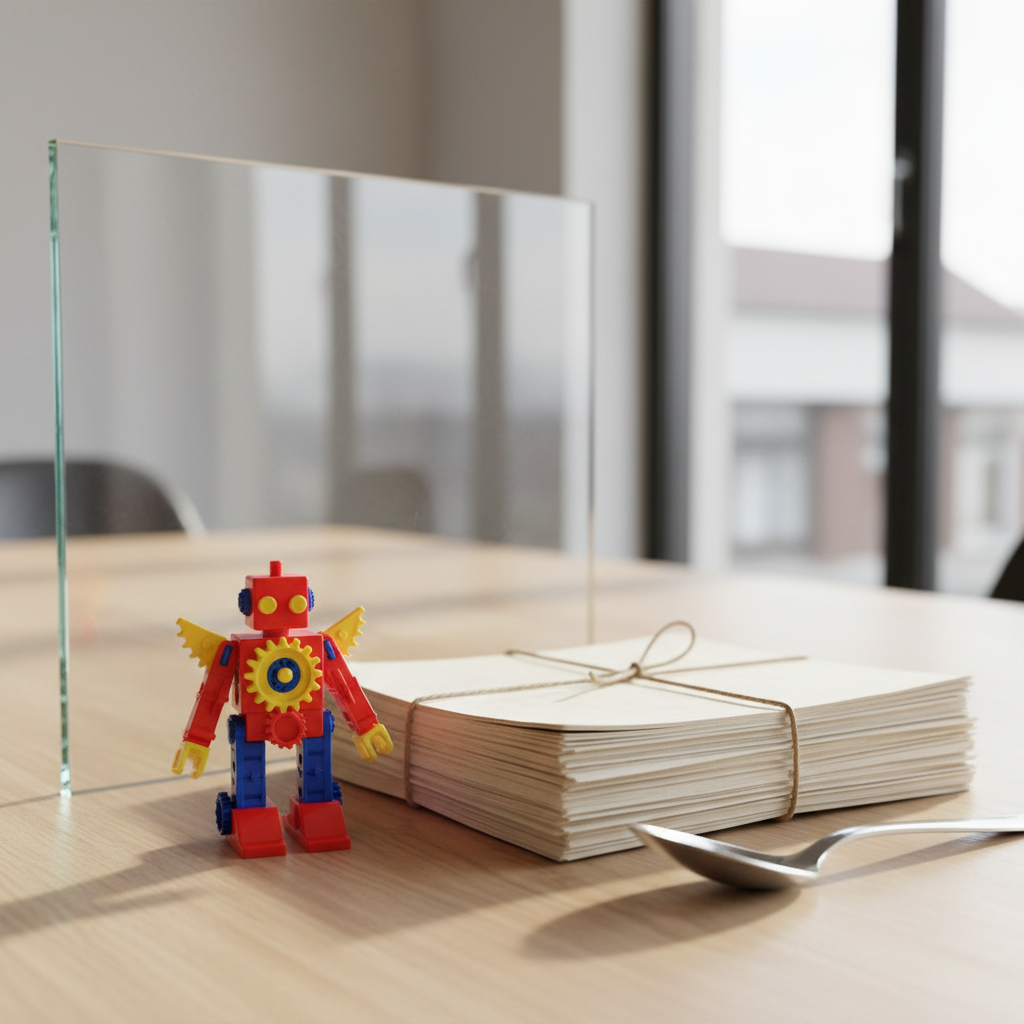
Here's a picture showing some cool things made from man-made materials:
Why Do We Have Both Natural and Man-Made Materials?
That's a great question! Think about it: a tree is strong, but you can't see through it. So, for a window, we need glass, which is man-made. Wool is warm, but it might not be the best for a rain jacket. For that, we might need a waterproof plastic or nylon, which is man-made.
People create man-made materials because sometimes natural materials don't have all the perfect qualities we need, or because we need so much of something that nature can't grow it fast enough. Man-made materials can be designed to be extra strong, waterproof, stretchy, clear, or to last a very long time.
So, we use natural materials when they are perfect for the job (like wood for furniture or cotton for comfortable clothes) and we use man-made materials when we need something special that nature doesn't quite provide (like plastic for waterproof gear or glass for clear windows).
Let's Summarize!
- Natural materials come directly from nature, like wood from trees, cotton from plants, wool from sheep, and stone from the ground.
- Man-made materials are created by people, often by changing natural materials or mixing different things together, like plastic from oil, glass from sand, and paper from wood.
- Both kinds of materials are important and used for different things because they have different qualities or 'properties'.
Now you're a material detective! The next time you pick up an object, try to figure out if it's made from a natural material, a man-made material, or even a mix of both!
Keep learning, free
Create a free Syllabax account to unlock practice questions and games for this topic.
Visual Learning Enhanced! 🚀
To help you master this topic, we use Advanced Syllabax AI to generate detailed diagrams and visual models.
Note on Visuals: The AI sometimes makes spelling errors in image labels. Please refer to the lesson text for the correct terminology.