Transport & Communication Systems -Indian Geography
Watch this topic in 60 seconds
Free preview · Lesson 1
Transport & Communication Systems -Indian Geography (Foundational)
Transport & Communication Systems - Indian Geography
This lesson introduces the fundamental concepts of transport and communication systems in India. These systems are vital for connecting people, distributing goods, and facilitating information flow across the country.
What are Transport Systems?
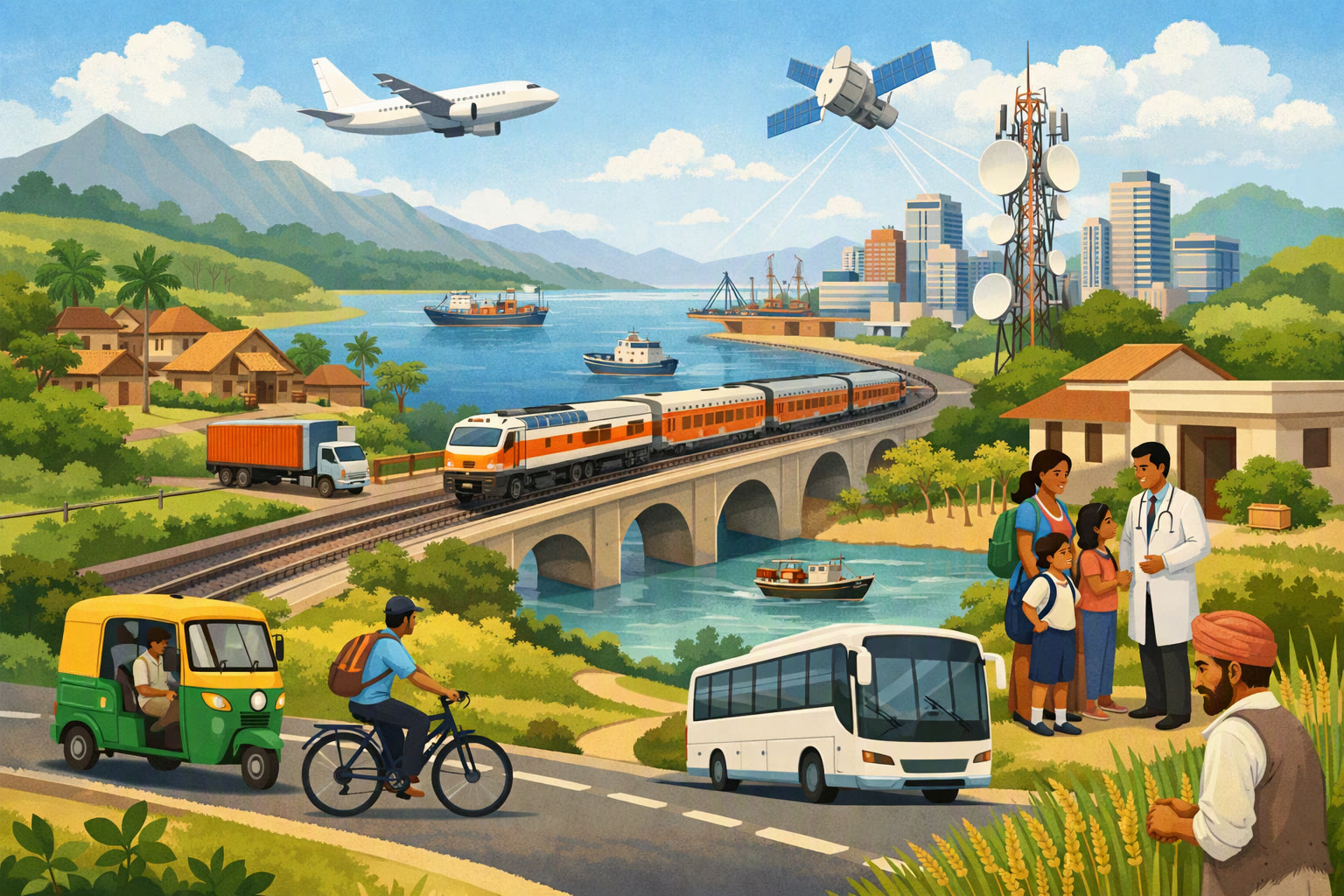
Transport systems involve the movement of people and goods from one place to another. These systems use various modes of transport, including roadways, railways, waterways, and airways.
Modes of Transport in India
- Roadways: Roads are the most common mode of transport, connecting even remote areas. They are flexible and suitable for short distances.
- Railways: Railways are ideal for long-distance travel and transporting bulky goods. The Indian Railways is one of the largest railway networks in the world.
- Waterways: Waterways include inland rivers and canals, as well as sea routes. They are a cost-effective mode for transporting heavy goods.
- Airways: Airways are the fastest but also the most expensive mode of transport. They are crucial for connecting distant regions and for emergency services.
What are Communication Systems?
Communication systems involve the exchange of information between individuals or groups. These systems use various means, including postal services, telecommunications, and mass media.
Types of Communication Systems in India
- Postal Services: The Indian postal network facilitates the delivery of letters and parcels across the country.
- Telecommunications: Telecommunications include telephones, mobile phones, and the internet, enabling instant communication.
- Mass Media: Mass media includes newspapers, radio, television, and the internet, providing information to a large audience.
Importance of Transport and Communication Systems
These systems are essential for:
- Economic development: Facilitating trade, commerce, and industrial growth.
- Social development: Connecting people and cultures, promoting education and healthcare.
- Regional development: Reducing disparities between regions and integrating remote areas.
Keep learning, free
Create a free Syllabax account to unlock practice questions and games for this topic.
Visual Learning Enhanced! 🚀
To help you master this topic, we use Advanced Syllabax AI to generate detailed diagrams and visual models.
Note on Visuals: The AI sometimes makes spelling errors in image labels. Please refer to the lesson text for the correct terminology.